OSSR: Tome of Battle
Chapter 5: Prestige Classes

Your musical accompaniment will be the
Baddest Man Alive.
AncientH
I'm not feeling very well, but I haven't sneezed up any blood since this morning, so let's do this...
Prestige classes are important because by and large they are one of the major entry points for established characters looking to dip into a NEW THING, and as a major goal for new characters looking to develop their characters based around NEW THING. As such, it is almost critical in D&D3 that prestige classes exist and have something awesome if NEW THING is going to be A THING.
Because otherwise, what the fuck's the point?
Frank
At 36 pages you'd think this chapter would be almost as important to the book as the 38 page maneuvers chapter. You'd be wrong. This is 36 pages to cover 8 prestige classes. That's more than four pages per class. There isn't even one class per sword for their nine swords paradigm.
We've talked about how ridiculously poor the
coverage was for Prestige Classes in the reviews of other 3.5 books. And that tradition carries over to Tome of Battle
in full. If you think of the number of directions you could plausibly want to take even a class as myopic and rail-fixed as the Crusader at high level, you'd need an absolute truckload of prestige classes to cover even a tiny percentage of it all. What if you want to be a Crusader that is a leader of men, or one who summons Angels? What if you want to be a Crusader who does Crusader shit with one of the
six martial disciplines that Crusaders don't normally get? And so on and so on and so on. You could sit in a bathtub and think for 10 minutes and come up with twenty high level concepts for martial adepts, but at four and a half pages per prestige class that would be 90 pages of shovelware just to cover a single naked brainstorming session.
Prestige classes as 3rd edition defined them were not the way forward and
couldn't be the way forward. It wasn't a matter of people not making enough prestige classes or that the prestige classes they made were shit, or that there was too much shovelware filler text padding out each class – though of course all of those criticisms are totally fair. It's that on a deep conceptual level you are never ever going to be able to write enough character classes to cover the design space.
Lest we forget, the argument for Prestige Classes is inherently self refuting. If after six levels of being a Ranger you want to punch out and become a Lord of Beasts or something, why wouldn't you want to punch out
again before completing the 10 level Lord of Beasts progression? The Elothar Warrior of Bladereach was made as a
joke, but it was also serious criticism of the prestige class concept and a serious statement on the nature of the biographies generated by Dungeons and Dragons campaigns. Elothar has life changing events happen every level, because that is what actually happens to D&D characters. The fact that he falls in love with a Drow sorceress and gets an artifact sword is presented
humorously, but we weren't
kidding. That's what it's actually like. Each Prestige Class tries to take a single life changing event and drag it out for 5 or 10 levels, but actual D&D characters are going to go fighting Giants among the clouds next level and travel to the bottom of the sea to save the Sea Sluts from the disciples of the Devil Shark the level after that.
AncientH
I don't know when exactly the rot set in, but at some point either they thought they were making
too many prestige classes, or that the prestige classes weren't getting enough
roleplaying development. The problem being that there was no single setting, this shit was all being brought out of the blue, and...and they really never wanted to cover what classes and prestige classes meant
within the game. D&D3 was the ultimate success of roll vs. role, and I think a lot of the fucking
designers either didn't get it, or found out they couldn't sell it.
You just can't introduce yourself as a 3rd level Swordsage in D&D like you could be a 3rd level Swordmaster in Earthdawn. You could call yourself an
assassin regardless of whether you had any levels in the Assassin prestige class, and no-one would look at you funny. They assumed that a lot of the difference between, say, wizard and sorcerer made it into the in-game dynamics, but there wasn't any real reason for it to do so, in-game. Fuck, they never talk about the development of classes in-game the way that Vampire could talk about the dudes that invented certain Disciplines. Who created the Archmage prestige class? Fuck knows! Doesn't matter!
So before we even get started, there's a certain amount of suspension of disbelief that goes into these things. You have to have a level of commitment into wanting something that the martial adept prestige classes have to offer. There needs to be, at minimum, a killer app or payoff to investing in these things.
For the most part, there isn't.
Frank
Our presented 8 prestige classes are:
- Blood Claw Master – for people who want to get a little more pseudo-mystical with their Tiger Style. Complicated math to try to make double-dagger style work. It still doesn't work for reasons we've already mentioned.
- Bloodstorm Blade – for Warblades who want to throw their swords at people. Surprisingly terrible at this.
- Deepstone Sentinel – If you've managed to go ten levels deep as a fucking Stone Dragon specialist, you can pick up some actual earth-themed magic and still not care. You're 11th level and fighting Giants with melee attacks that go twenty feet, and you can make the ground difficult terrain for 5 feet all around you.
- Eternal Blade – as an 11th level Elf Crusader or Warblade, you can cherry pick some maneuvers off the Warblade or Crusader lists.
- Jade Phoenix Mage – poorly combine martial maneuvers and arcane spellcasting.
- Master of Nine – attempt to take maneuvers from at least six different disciplines, which is basically impossible to do in a level appropriate way.
- Ruby Knight Vindicator – attempt to be a Cleric of Wee Jas and a Crusader at the same time. This doesn't work at all.
- Shadow Sun Ninja – attempt to multiclass as a Monk/Swordsage, which is basically as bad an idea as that sounds.
Aside from the fact that pretty much none of these classes are particularly good, there's the unsubtle reality that if you read out the character concept at
second level, no one would think it was really weird. The Shadow Sun Ninja is just a Sword Sage that hits people with unarmed attacks. Conceptually that's a first level character concept.
AncientH
I already mentioned that dabbling into martial maneuvers with feats is possible-but-difficult; qualifying for these classes generally requires at least two maneuvers and a stance. So while it's
just possible to dip into some of these without taking a level in Warblade, Crusader, or Swordsage, odds are against it.
The question you really might have for these is
why. The Bloodclaw Master kinda evokes the Shifter nonsense from Eberron, but it's a parallel development to your regular martial adept class, not an exact extension - so you can actually gain
fewer maneuvers this way than if you continued as a straight Swordsage.
The Bloodstorm Blade's highest ability is:
Blade Storm (Ex): At 10th level, you can hurl your weapon as a full-round action to make it seem as if you are attacking a dozen foes at once. You become the center of a storm of steel as your thrown weapon flies out to strike a foe, returns to ricochet harmlessly off you, then flies out to attack another foe. You can make a ranged attack with a thrown weapon at your highest attack bonus against as many targets as you wish. You can attack each target just once with this attack, calculating range and cover penalties from your position on the battlefield.
This is the level 8 Warblade maneuver Lightning Throw, minus the damage bonus. It's literally a shittier version of a maneuver you might already have if you hadn't taken this class and just pumped levels into Warblade.
I'm not sure how they managed to fuck up Jade Phoenix Mage. A martial adept/arcane spellcaster gish seems like a no-brainer: focus on touch spells, throwing fire or lightning on your sword, etc. And to be fair, they do give you Arcane Wrath (Su) at 1st level, which lets you channel arcane spells directly into melee damage. Other than that...meh. Top level ability lets you blow yourself up (but you get better). Nifty, but willing to give up two caster levels?
Also, I'd like to point out something: you think, with the direct equivalency they've been pushing between caster levels, manifester levels, and initiator levels, that they'd be the same in the classes - that the Jade Phoenix Mage would have +1 caster level/+1 initiator level. This is not the case. Instead you have one (1) initiator level, but your total maneuvers/stances known/prepared i a cumulative fustercluck determined by all the classes you have taken. So if you're a Fighter 8 and take a level in Swordsage, you still have the maneuvers known/ready as a level 1 Swordsage - but you can pick which maneuvers you want as though your initiator level was 5. I can see why they did that, but it's wrong and I hate them for it.
Master of Nine, if you add it up, in five levels you get 8 maneuvers and 2 stances, and can ready an additional 5 maneuvers. If you're a mid-level Swordsage, that might look attractive. You don't actually care about most of the class abilities. They're gravy on just having more maneuvers available, provided you somehow manage to squeeze into the class prerequisites.
Ruby Knight Vindicator...has anyone
ever played one of these? I mean, Wee Jas is the goddess of magic and death. She doesn't
have many paladin to begin with, much less Paladin/Crusaders, but that's pretty specifically what they want it to be. Not even a Blackguard/Crusader option, shit. Bitching aside, there's enough not-terrible abilities for a 3-level class, stretched out to ten levels.
Shadow Sun Ninja isn't really compatible with the Ninja class. Boo, hiss. On the other hand, this is completely within normal D&D parameters of not knowing what the fuck to do with ninjas. There are some very weird abilities in this class which would be much niftier at lower levels:
Flame of the Shadow Sun, for example, would be great at 2nd-or-3rd level (in character), because your sorcerer could ping you with a
ray of frost and next turn you could fry somebody. But at 6th-or-7th level?
The top power of the Eclipse Ninja is to maybe turn into a vampire, which
they say is a straight ticket to NPCdom and
I say sounds like free character advancement.
Frank
The interesting thing about these shitty things is not how they mostly don't work or how they hilariously fail to give out level appropriate abilities, it's the extent to which the writers bend over backwards to prevent themselves from accidentally giving a player a meaningful ability. It's not just that they are waiting to let people cast extremely limited 1/day
passwall spells until they get to 11th level (note: actual Wizards
could cast
passwall 3 times per day without limitations at 9th level
and they don't do that because
passwall isn't actually very good). That is a thing they taunt you with, but the real kick in the nuts is the bizarre mental gymnastics this book goes through to keep the Eternal Blade's spirit guide from being remotely useful. It's a little floating spirit guide that talks to you, and for no fucking reason it can't see around corners. I mean,
what the actual fuck?
This sort of preemptive nerfing of anything that might possibly have any utility outside the combat minigame where people are hitting each other with hammers is fucking mind blowing. It's so incredibly bad. It's like these assholes were deadly allergic to making a role playing game.
It's totally incomprehensible. It's not like they were making a computer game and had to come up with bullshit reasons why things couldn't have non-combat utility. They were, nominally at least,
making a fucking role playing game. Things could just be allowed to affect the world around them in normal ways. You have a fucking Dungeon Master who can adjudicate shit like that, you don't have to pre-program every possible interaction.
This right here is why 4th edition was terrible. Because the people
making 4th edition thought this was a reasonable thing to do. They thought spending time actively thinking up ways to reduce the interactability of the world around the player characters was an important thing that they needed to be doing. This is the worst thing in any edition of Dungeons & Dragons other than the racist bits, and these dumb assholes were sitting around brainstorming ways to impose it on more parts of the game.

AncientH
As long as we're on the subject of prestige classes...my earlier rant about initiator nonsense is a good an excuse as any as to why Crusaders/Swordsages/Warblades generally
don't go in for prestige classes: because the opportunity cost of not straight leveling is that you don't get any more maneuvers. It's not like a Sorcerer or Wizard where you can dip into Eldritch Knight and everything is cool even though you lose a level of casting ability: your growth as a martial adept basically
stops, because of the wonky way they worded all the maneuver abilities. Sure, your
initiator level and Base Attack Bonus might continue to increase, but you don't gain any more maneuvers until you slink back to one of the core classes.
They actually designed a system where multiclassing was
worse than normal...and I don't even know if that was deliberate.
Frank
The rules for how prestige classes that increased your access to maneuvers and stances work are confusing. A big part of that is that they are incomplete. Important questions that do not appear to be answered include:
- If you take a Prestige Class that increases your initiator level for a Martial Adept Class, are you allowed to trade-up one of your known maneuvers like you would be able to had you gained an actual Martial Adept level? That's a really big deal, because after a few levels, more than half the maneuvers you know are trade-ups, and if the prestige classes stop you from getting those they are extremely terrible.
- If you take a Prestige Class that increases your initiator level for a Martial Adept Class and you have more than one Martial Adept Class, what the fuck happens?
These aren't obscure questions, several of the prestige classes only really make sense for multi-classed Martial Adepts, and
every Martial Adept leans heavily on maneuver tradeups. A typical Martial Adept will get
one 4th level Maneuver as a newly learned maneuver, but they will have
two opportunities to buy a 4th level Maneuver as a trade-up. So if you have the option of going into one of these classes when 4th level Maneuvers are the cutting edge thing, it's a pretty fucking important question whether you get one or not.
AncientH
We haven't talked about any of the fluff surrounding these classes because it's rubbish, really. You don't care, the people writing this obviously didn't care, no one cares because basically no one is going to play these things, and even if they did they wouldn't care about the fluff because the inherent concepts are all weak as shit. Seriously, of all the combat-oriented gods in the Greyhawk pantheon,
Wee Jas was their go-to for a divine/martial adept mix. Piss off.
Chapter 6: The Nine Swords
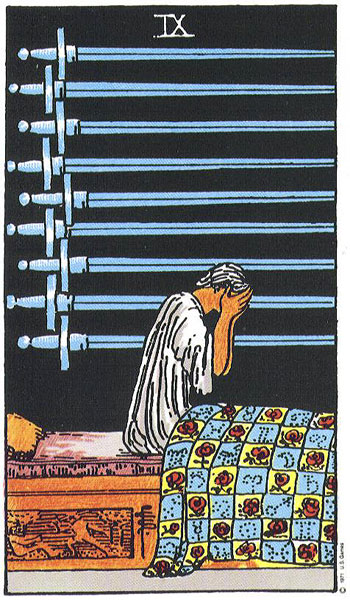 Where we again expect that there will be some kind of literary reference to the fact that “Nine Swords” means
tragedy
and we are again disappointed.
Frank
One of the fundamental issues with a Dungeons and Dragons-like game is that of the magic item treadmill. Characters need a series of events and a series of power-ups to maintain tension and player interest. But to keep the game from devolving into player-side smackdowns the
threat is constantly increased as well. You keep fighting bigger giants and older dragons, so if you
don't keep getting access to more powerful magical swords you are falling behind.
For better or worse, the game
allows you to replace your +2 magic sword with a +3 magic sword and
assumes you are going to. Which can be fun, but sometimes rubs people the wrong way when the +2 magic sword had emotional significance. Or to put it another way:
getting a new shiny magic sword is fun, but
having to get a new shiny magic sword is a source of stress.
Also, sometimes people want to keep the magic items they get at low level. They have sentimental value and shit. So if people need to have a +3 magic sword later in the game, why not just give them a +3 magic sword right away and have
that be the first
and the last sword upgrade? Well you get a problem because the game doesn't expect you to have a +3 sword early on – leaving you “too powerful” against the early opposition and then if you aren't getting
more powerful swords (because you already have your forever sword), the opposition gradually catches up to you, meaning that over the levels where you get to the point it expects you to get the +3 sword you're actually making negative progress.

It's a thorny problem, and one which doesn't actually have solutions that can please everyone. Give out new slightly more magical swords “on time” and people who grow attached to any of those swords in particular will feel like things are being taken from them. Give out slightly more magical swords too fast or too slow and the game becomes easier or harder. Give out slightly more magical swords
exactly on time and people don't even feel thrilled when they get sword upgrades because they become expected. There's simply no way to please everyone.
The Weapons of Legacy was an attempt to please everyone. The concept was that you get a magic weapon early, and then
it levels up with you. Which means you ideally aren't getting magic items too fast or too slow and you aren't having to throw away your prized possessions because it's still good to go eight levels later. And... that didn't actually work out. There's a bunch of reasons for that, partially it's just that the math was bad and the weapons of legacy weren't
actually appropriate weapons at higher levels. Elothar, Warrior of Bladereach gets an artifact sword that is far beyond what the wealth by level guidelines offer
because that is the kind of thing you actually need at high level to keep up with the Jones. But it's also the same problem we talked about with the Prestige Classes – that things
change as you go up in level and have new adventures and fight new enemies, so things that you might expect to be important in a few levels could end up irrelevant to where you actually are. It's a cooperative storytelling game, and there are five or six contributing authors, your plot outline that you wrote at level 4 isn't very likely to match up with where you're at at level 12. I had a game that started in Lithuania and ended up doing huge temple raiding scenarios – in
Borneo. Every descision made sense at the time, but by the time you make enough group decisions you wouldn't really be able to predict where anything was going to go.
So for a lot of reasons, Weapons of Legacy mostly get thrown away and replaced with shinier new magic swords anyway, which is worse than the status quo because there's an extra flavoring of betrayal because the Weapons of Legacy were explicitly sold to you with the idea that you wouldn't ever have to throw them away.
AncientH
Earthdawn tried to solve this issue by having thread magic items: the items had powers that unlocked dependent on how many XP you invested in them, and theoretically
any item could be a thread item if you Named it and wove a thread to it and used it to do awesome stuff. There's a literal magic item that's a sock that one dude used to kick a Horror with, and the sock started giving a bonus to kicking Horrors.
D&D though, is a bit more like
ChronoTrigger: the expectation was that as you went along, you could just buy or find better weapons. And at any given time you might actually debate whether you want the one that had less attack power but more damage, or offered a higher critical chance or whatever. D&D, though, likes to pretend that magic is still mysterious and rare despite the overwhelming evidence to the opposite.
But why did you throw ice on his sword?
Because he's immune to fire!
So, Weapon of Legacy. Which was crap and no-one used it, and appear here because...I don't know. Seriously, straight artifacts would be better.
Frank
Among the many sins of Weapons of Legacy was to try to somehow convince people that the weapons were “balanced” against weapons that didn't grow and explicitly got thrown away after a few adventures when the player characters got a golden tridents to replace their silver one or whatever the fuck.
 Just sayin.
So there's all kinds of really complicated math shit with these fucking weapons, and no one fucking cares. At the end of all of it, the weapons in question are actually hot garbage, but that's not even the point. You wouldn't use weapons this
complicated in a D&D game even if they were well made.
AncientH
Just to make things confusing, the sword name is the name of the Discipline...sometimes. I don't pretend to understand why they did that, except that maybe different people were writing these independently and not everybody got the memo.
Some of the sword abilities actually reference a few of the maneuvers from the associated disciplines. You'd still never use these things. FFS,
Umbral Awn (Shadow Hand) tops out as a
+2 ghost touch dagger. THat's not even a goddamn sword!
Chrono has a goddamn sword!
The thing is, they treat these weapons like they're badass, but
Tiger Fang (Tiger Claw) tops out as a
+1 keen kukri. You'd be wary of that at 3rd level.
And the thing is...all of this shit is totally unnecessary. You didn't have to name the nine styles after nine specific blades, and you didn't have to stat those blades out. They could have just been mythical. Anything you came up with at your tabletop is better than the crap that these assholes were paid to write.
Frank
Next Up: Moar Magic Items.


