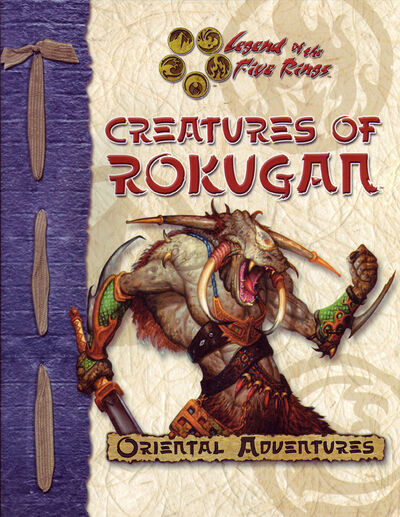
[OSSR]Creatures of Rokugan
Posted: Tue Apr 29, 2014 11:23 pm
OSSR: Creatures of Rokugan
Oriental Adventures
Our musical inspiration for this review is the opening theme to Ghost in the Shell.
Today's OSSR is going to come at you in five parts. It's Creatures of Rokugan, produced by AEG under license from Wizards of the Coast, a product which is an expansion to a product made by Wizards of the Coast under license from AEG. Sound confusing? Yeah, it is. AEG made what was the most successful CCG that wasn't Magic before the era of Yu-gi-oh. It was called Legends of the Five Rings (L5R), and it was set in a miscellaneously Asian-but-mostly-Japanese fantasy world where the empire that was kind of like China but mostly like Japan was called Rokugan. It had factions that played really differently, it had a storyline that advanced between expansions, it had multiplayer that wasn't completely terrible while still doing 2 player well, it had multiple routes to victory, and was in general a cut above most of the Magic clones that came out during that period (that period being 1995).

And it had nice art.
Here's where it gets unnecessarily complicated. The intellectual property of the Rokugan setting (but not the rights to continue making the card game) was split off into a separate company called Five Rings Publishing, which promptly got sold to Wizards of the Coast. Wizards of the Coast decided to make Rokugan their primary campaign setting for Oriental Adventures in 2000. Then after doing that, they sold the IP back to AEG, thus making AEG the sole company able to make official supplements for an official 3rd edition setting.
Creatures of Rokugan was made in 2001, shortly after AEG had bought the rights to their own setting back from WotC. The rules are based on the OGL, but it's content is based on IP that WotC owned and expanded upon but which AEG invented and repurchased. Figuring out what they were and were not allowed to put into this book must have been a nightmare. The last couple pages of the book are Open Gaming License legalese, and I have no idea if their version is correct or not.
People have long speculated as to what exactly the fuck was going on with WotC to make them decide to use Rokugan instead of one of their older Oriental Adventures settings, and further if they were going to do that, what possessed them to then sell away their ability to make supplements for the setting they committed themselves to. But as far as I know, we can indeed only speculate because WotC has never come clean as to their thought process or motivation for pulling such a complicated maneuver.
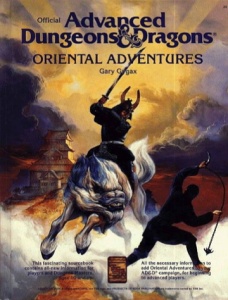
We don't like to talk about the original Oriental Adventures. Apparently, neither does WotC.
The whole book is 109 pages, and we'll try to do it in 5 posts. So that's about 22 pages a post.
Unlike Frank, I can kinda see why Wizards of the Coast might not have gone with their native settings for OA: the original product from TSR was more than vaguely racist, and Kara-Tur had been established as part of the Forgotten Realms, which the FR team already had dibs on. Unapproachable East came out in 2003, so it's not impossible that FR already had it on its timeline of splats to churn out when OA came out, but I rather suspect that the sequence of events was something like: someone pitched OA, the FR team didn't want to deal with immediately and also didn't want to surrender any control of the setting, and someone else popped up and suggested Rokugan as this alternate property they already owned with an established fanbase...and then you have a left-hand-not-talking-to-writes-the-check-hand bit later where AEG buys back the property.
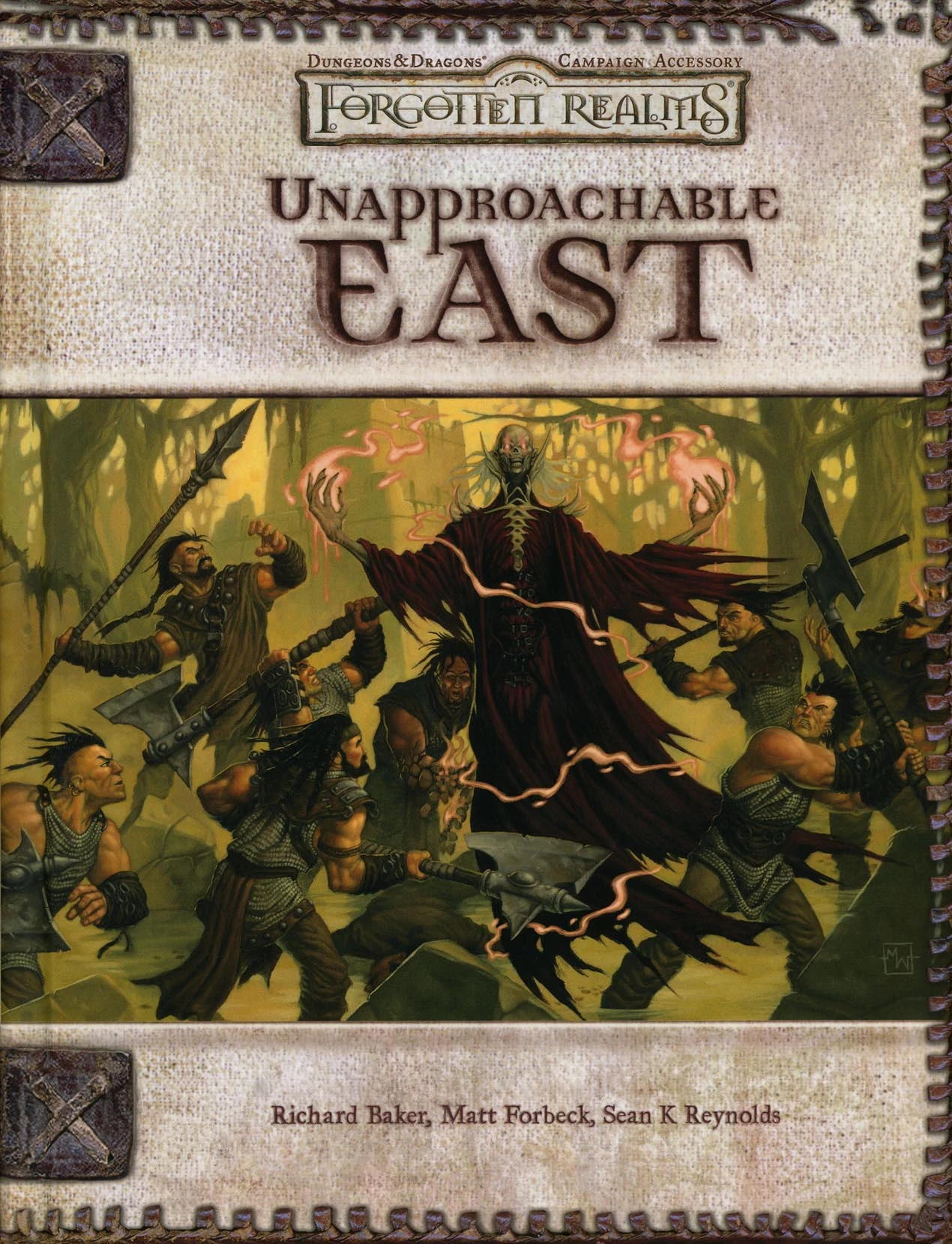
This is more like Eastern Europe-sliding-into-Central-Asia. Faerun never really had an India subcontinent analogue.
Believe it or not, this was before the fecal matter really hit the oscillator, because this book is laid out along string D&D3.0 guidelines and ruleset; later products from AEG decided to go for a hybrid thing where their L5R sourcebooks present the stats in both d20 and the setting's native d10 ruleset and...uh...yeah, the "hybrid d20" era was weird. Not as weird as when they decided to try releasing Legend of the Burning Sands as an RPG, but pretty damn weird.

So obscure no torrent exists of it.
Legend of the Five Rings already had an RPG produced for it in 1997. It was a pile of d10s “roll and keep” system. That means you roll a pile of d10s, select some, do some addition, and get a result. And like Cthulhutech, the procedure is long and cumbersome and the probability curves are totally insane. Between the years 2000 and 2005, almost all Rokugan books were printed with side by side rules for two systems: 2nd edition Roll-and-Keep and 3rd edition D&D. This proved that AEG authors could be equally non-proficient with two rulesets. Creatures of Rokugan, the book we have in our hands, is actually one of the very few that AEG made during this period for only one system: and that system was D&D. Really, I'm just contextualizing the lack of apparent game mechanical familiarity that comes in the later pages.
This book actually has a quite manageable number of writers. Seven “writers” with two “additional writing” makes for nine total people who wrote on this book. That would be a little much for most titles, but we're talking about a monster book. Monster books are inherently anthologies, with lots of stand alone pieces. So nine authors is totally fine. I think there might only be one interior artist. The credits say “Interior Artists” (plural) but there's only one name listed. I don't know why they would do that. For that matter, I don't know why they bothered doing new art at all for a lot of these pieces. Really seems like they could have recycled card art for a lot of entries and people would have been fine with that.

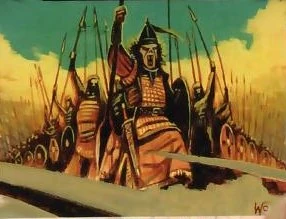
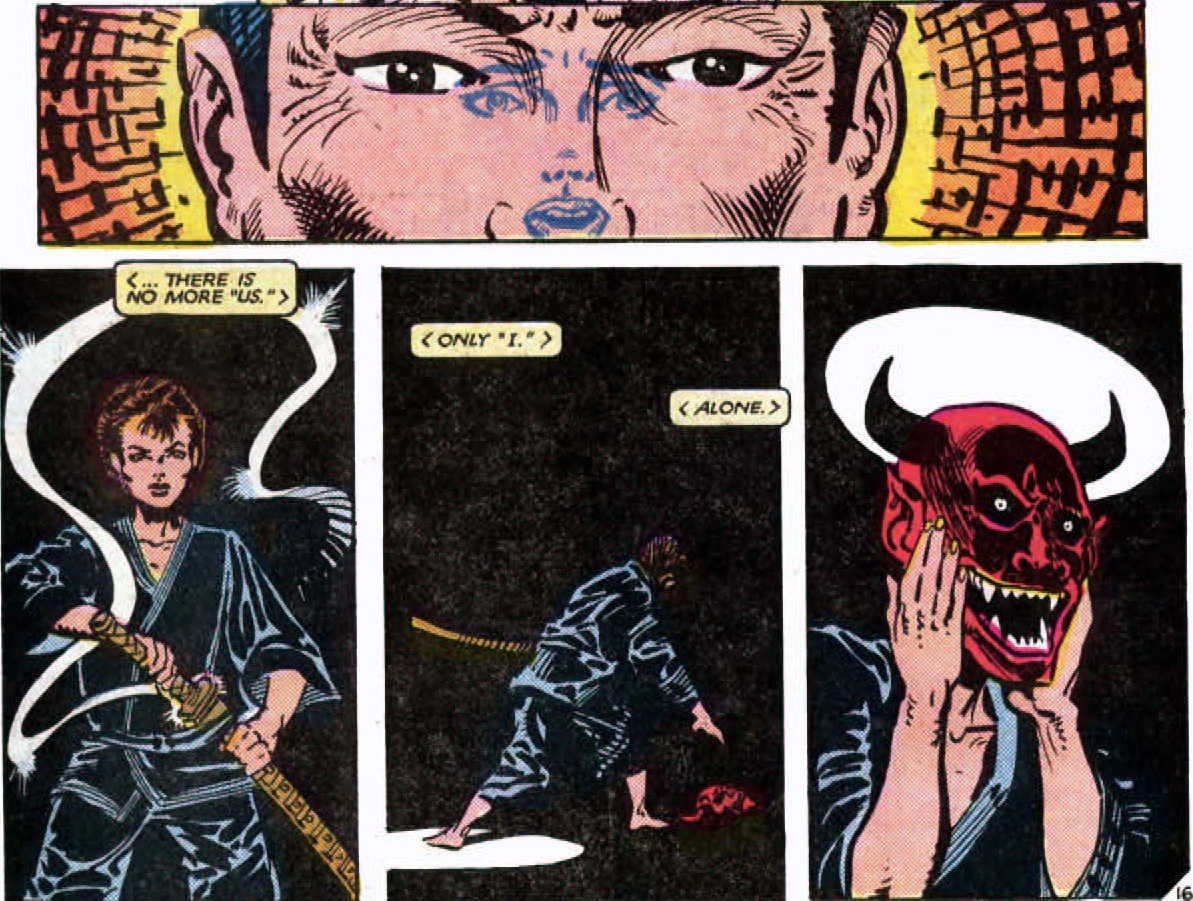
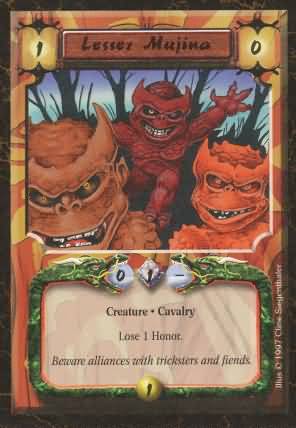
This is the card
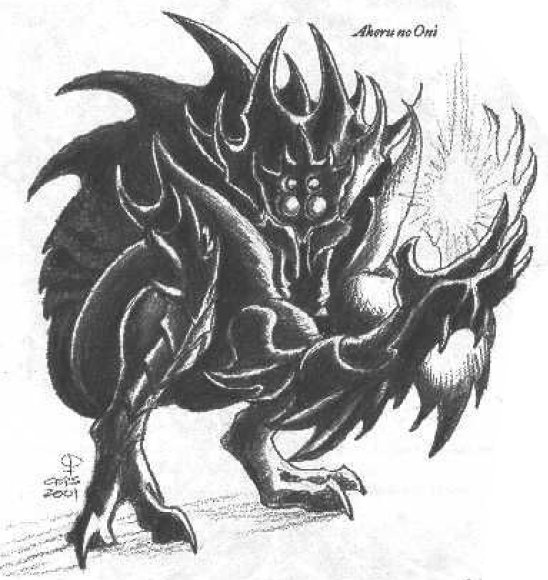
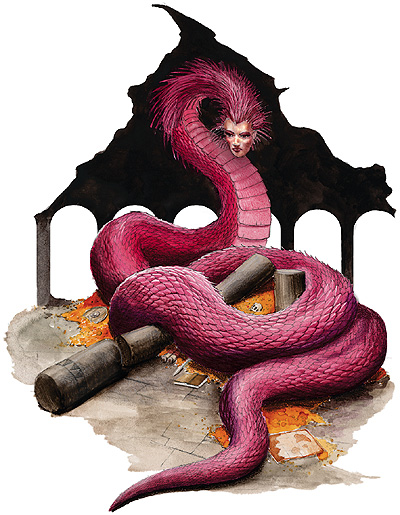
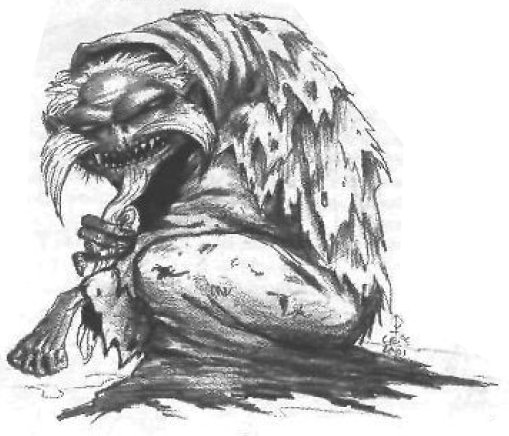
This is the new art they commissioned for this book.
Shrug.
Call it Magic: the RPGathering Syndrome - or maybe Inverse Spellfire Disease. One of the popular trends when TSR was dying was to try and monetize a large chunk of their standing art by throwing it into a CCG (Spellfire, Rage, Jyhad/Eternal Struggle, etc.), and theoretically the inverse would be true for any CCGs-transitioning-to-RPGs...but it never materialized. My guess is "Look, we gave you an art budget, use it." was half the reason; the other half might be that they didn't actually own the rights to the CCG artwork, which is weird but not improbable.

Creatures of Rokugan was released after Monster Manual and Monstrous Compendium: Monsters of Faerun, but before Fiend Folio, so it really represents another incremental step in the development of the 3.5 monster book learning curve and was essentially regarded as Monster Book III for a couple years.

Hell, maybe the FR team was still hoping MC:MoF would make enough money they could get away with this shit again.
For reasons unknown to me, all of the monsters have a listed Honor score. Because they're monsters, this is essentially 0. So I don't know why they bothered.
In Rokugan, jade and certain kinds of crystals that are unhelpfully named “crystal” inherently have the ghost touch property. Except the way they decide to try to explain it is by introducing a new subtype that works exactly like incorporeal except that they are still touched normally by jade and crystal and then replacing all instances of the old incorporeal with the new one. This is definitely the most roundabout manner I can think of to affect this rather trivial setting fact.
Actual rules for jade and crystal that are written in the jade and crystal section totally exist, and they are overly complicated. There's stuff involving jade counting as being of a different “plus” for purposes of penetrating DR of certain creatures. It's important to remember that this is for 3rd edition, not 3.5. So most DR requires a specific weapon bonus to penetrate rather than a specific material or alignment like in 3.5. This bonus accounting is overly complex even for its time, but when you factor in the time it was made it's only somewhat overly complex. If this had happened four years later, we would have just had DR X/Rocks and we all would have been happier.
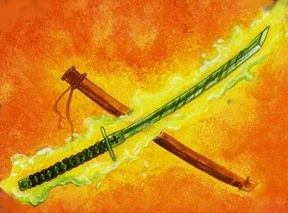
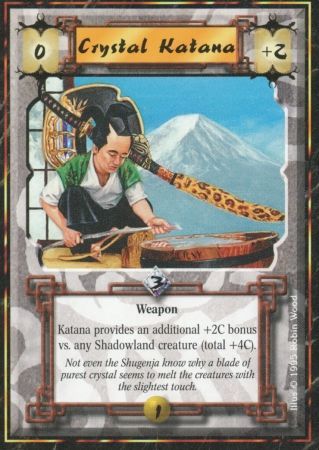
L5R really tried to get you to care about jade and crystal weapons, but mostly you didn't.
Let us also not forget Taint rules, which after WotC lost control of the setting was one of the many sub-systems rolled into Unearthed Arcana.
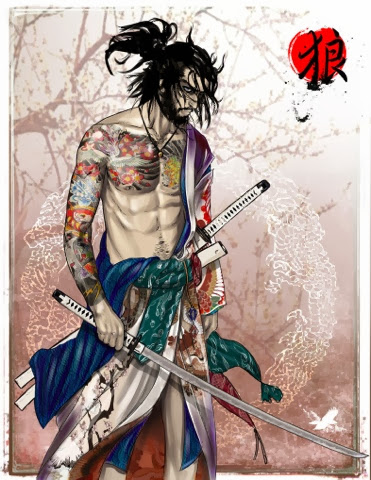
Did someone say...taint?
Taint was somewhere between radiation exposure and your own personal evil-meter, and it was supposed to be Bad and caused you mutations and corruption until you were a slavering, soulless shell of yourself. But on the other hand, Taint was the primary casting ability score you cared about if you were a maho magician, so you kinda wanted that as high as possible.

Well, that's a good start.
Jade had some special abilities to protect you from Taint, and Taint was important in Taint-based spellcasting or maho, which was a lot like Oriental Adventures telling the Tome & Blood Blood Magus to suck its veiny, throbbing, demon-headed, oozing-flourescent-green-pus cock.

Wait, so is that like demon syphilis?
There are a couple problems with this. First up, maho in OA was hideously overpowered for anyone that took a fancy to it; second off, it was hard to protect against Taint, especially if you didn't have any of the setting's native magic to protect you. The thing is, while theoretically this is a setting about more-or-less normal human samurai and conscript peasant warriors holding off armies of goblins bakemono and demons oni, outside of the novels and metastoryline normal humans don't do well going up against supernatural evil, especially when they decide it's time to emphasize the "magic is rare, no magic katanas for you!" line.

What do you mean, no firearms? They're in the DMG!
There is also a Void subtype. It gets its own paragraph, but it literally has no game effects.
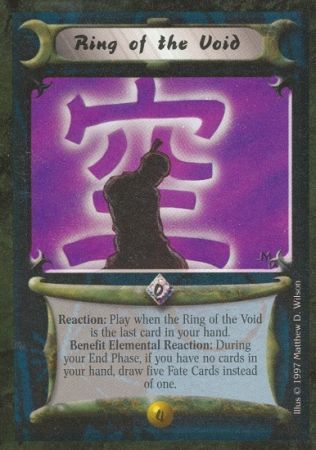
It was important in the setting, it just didn't have any rules.
I won't say that all of the standard D&D classes weren't welcome in Rokugan, but defining classes like paladin, cleric, wizard, and sorcerer weren't really compatible with the setting, which mainly reduced you to a couple samurai, a monk, a shugenja/wujen, and a rogue yakuza with no honor. A lot of the more iconic monsters of the setting relied on some element of the OA ruleset (mainly for spell-like abilities) to use, and relied on the Rokugan setting to keep PCs from killing them out of general principle...of course, given that they lacked setting-specific protections, the PCs could easily end up dying or being horribly Tainted just from an encounter with a drop-in monster-of-the week.
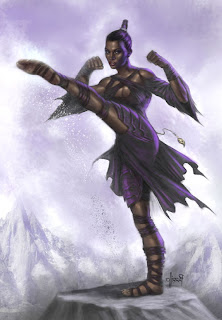
Sadly, this setting predates Afro Samurai.
The Creatures
Pages 6-20 have 17 monsters, which works out to just slightly better than 1 per page.
The first monster is not off to a good start. It's the Ashalan. The Ashalan are not, in fact, from Rokugan. They are from a different setting that the Five Rings Publishing people tried to get people to care about in the late nineties. It was called “Legend of the Burning Sands” and was sort of Arabic-themed rather than miscellaneously Asian. I'm sure there are some fans of Legend of the Burning Sands, but I don't know any of them. As far as I know, the distinctive characteristic of Ashalan is that they are blue, but in this book they are described as albinos who get a lot of tattoos.
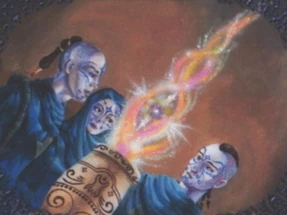
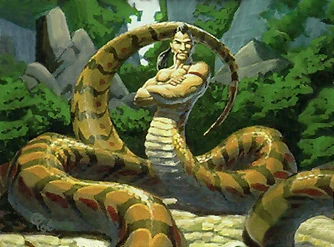
These are the Ashalan, not that they look all that much like what's pictured in this book.
Mechanically speaking, the Ashalan are just humanoids who have regular character classes and some weird abilities that really sound like class abilities like secret tattoo knowledge and shit. They can apparently be Paladins, which is fascinating because that character class does not exist in Oriental Adventures.
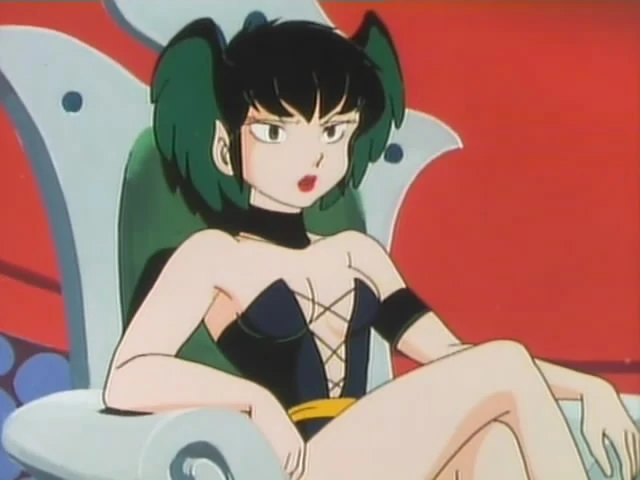
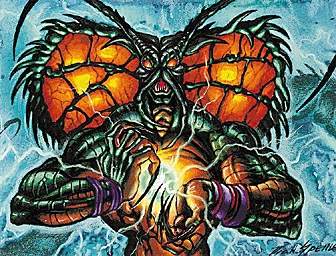
The Ashura are flying evil samurai demons that will wreck your shit. Also, when you kill them they explode in a ball of green flame.

Technically the Ashura are from the RPG set "1,000 Years of Darkness" which is sort of an alternate reality where the Big Bad won and set up an eternal rule on planet toilet-on-fire.

In this world the bad guys can win. Well, no, they're going to nerf the tournament outcome to their storyline, but theoretically.
For reasons unknown, under "Immunities" they've lumped in abilities like "Can see in darkness." My guess is they were copy-pasting from "Special Qualities" or were otherwise just new at this whole d20 thing.
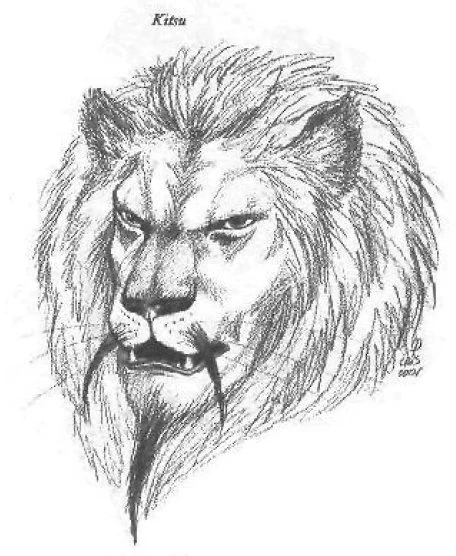
Bakeneko are spirit-cats. Now, your normal cat in regular D&D has a better-than-average chance of killing a peasant (1st-level commoner); these things are CR 1 and shapeshift and wield katanas and shit. I have no idea why they don't rule the world, except that they're nominally chaotic good.

Okay, I'm not even a furry and right away this looks like a better game than OA.
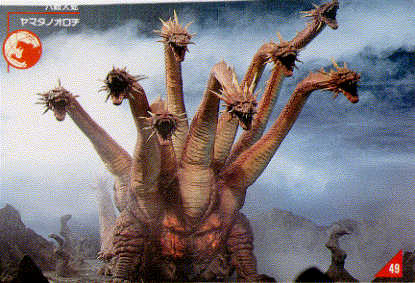
The mighty Baku, guardian of dreams is kind of a clusterfuck to begin with. Baku are actual legendary creatures, which are tapirs that defend your good dreams and eat your nightmares. Some Baku turn evil and eat your good dreams. Anyway, the real pictures of Baku look this:


Yes, really. It's a genuine mythological creature. Shut up.
And the real animal it is based on looks like this:

But for reasons that don't make any sense to me, they show the Baku with a lion head and a rhino horn. Maybe it's to make it look less like it came from a different card game?
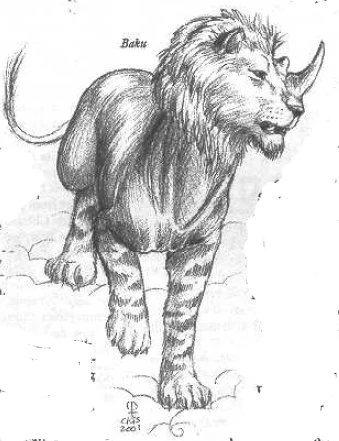
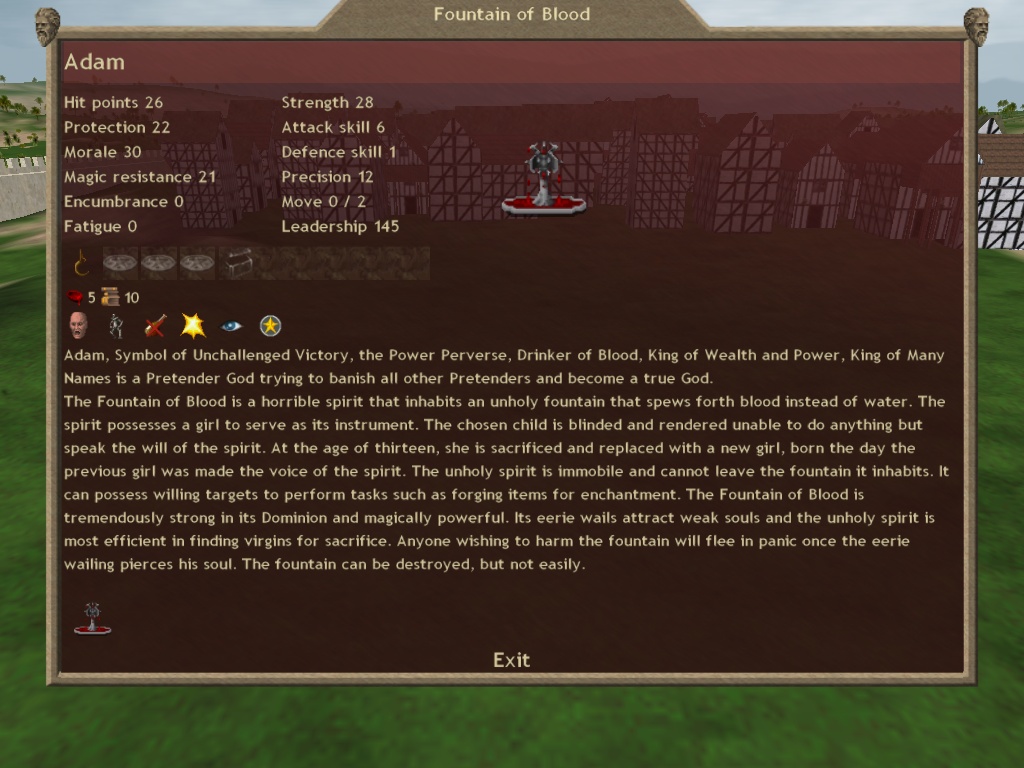
This is the L5R Baku, and they are sticking by it.
But I think the real failure here is that the Baku they envision is CR3. This book is supposed to be running on the 3rd edition D&D engine, and in that ruleset, interacting with the dreamworld at all doesn't really come online until character level 9. So any dreamworld monster that is less than CR 7 is basically a piñata. When they eat your bad dreams, you get the benfits of bless as cast by a 16th level Cleric when you wake up. Bless lasts for 1 minute a level, so that won't even get you through the toothbrushing ritual that is spell slot preparation. That shit takes an hour.
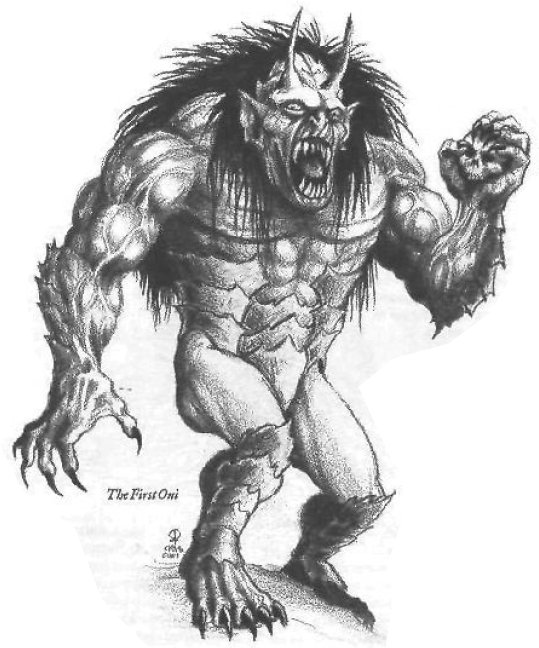
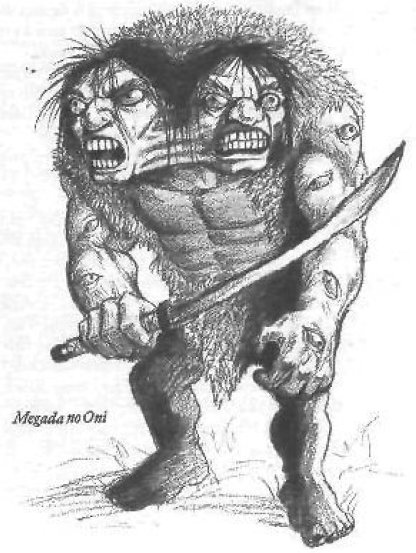
The demons/evil spirits in Oriental Adventures are the Oni, represented by the title ____ no Oni. They're summoned like demons and can make more of themselves, and if they steal your name (it's complicated and doesn't happen much) they become super powerful.
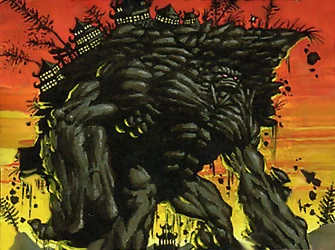
 There are a lot of oni in this game, which go from "mooks I can't kill without magic" to "according to the flavor text I should be shitting my pants in terror, but it's CR 13."
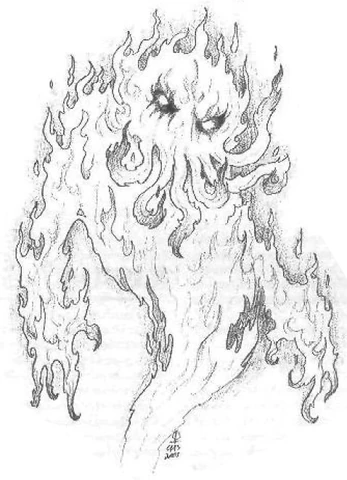
The Elemental Terrors probably need a bit of explanation. L5R was inspired in large part by Miyamoto Musashi's Book of Five Rings. That book is divided into five sections: Earth, Water, Fire, Wind, Void. These are sort of the five great elements in Japanese Buddhist philosophy, but the “void” is really supposed to be “Heavenly Purity” and the other elements are really nothing at all like the Aristotelian elements we are used to in RPGs. For fuck's sake, in that system plants are water and animals are fire. But in L5R we have a very superficial reading of those things, so our elements are basically the Fantastic Four plus Galactus. Le sigh.
Anyway, one of the ways to win the game is to become enlightened by putting out all five “rings.” These are cards that require you to do something weird in order to trigger being allowed to play them, and then once you have them they give you a lasting benefit. It is generally very difficult to put out all five rings, because their various triggers are in different parts of the game, thus requiring you to win duels, win battles, cast spells, and empty your hand all while having different specific cards in your hand at the right triggering moment. Naturally, in some of the later expansions there were ways to make that considerably easier in a number of ways, but the point is that the “ring victory” was originally a lofty and rather difficult goal.
But there was also the “bad guys.” The Shadowlands were full of monsters doing bad stuff, and one of the things they introduced early on was oni whose shtick was that they were associated with one of the elements of enlightenment, but totally corrupt and evil instead of enlightened. And because they had already sort of binned the Musashi or Buddhist “enlightened” meaning from these elements in favor of more traditional Gaijin RPG elements, we ended up with something not unlike Ravenloft Elementals.
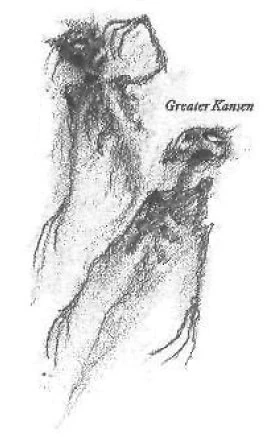
Originally, there were just Terrors for each element, but at some point they decided that there should be lesser terrors and greater terrors and shit. This section provides ten monster writeups, which are the “greater” and “lesser” varieties. We are also told that there are “true” elemental terrors somewhere, but they don't have stats. What do you think this is, a monster book?
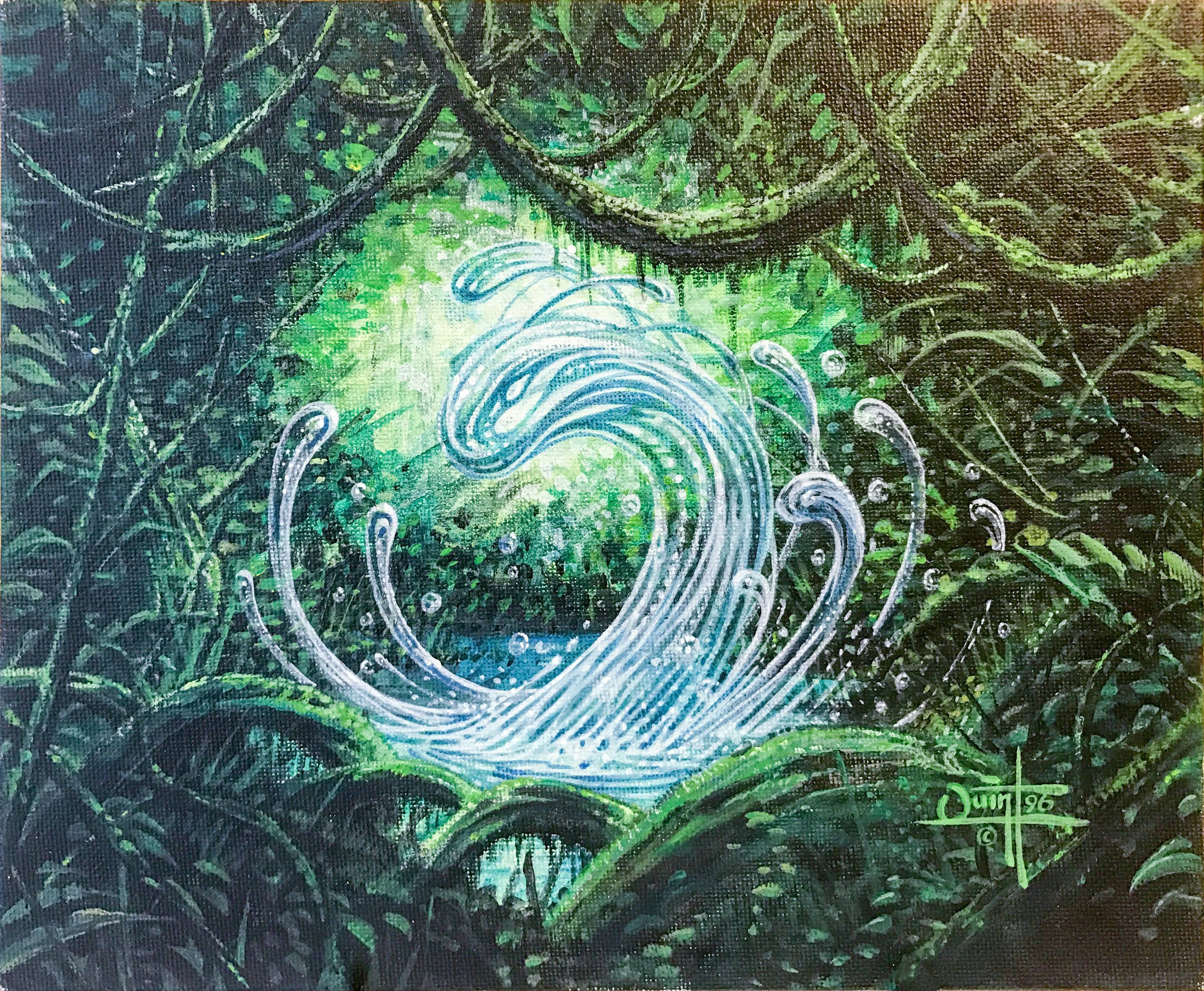
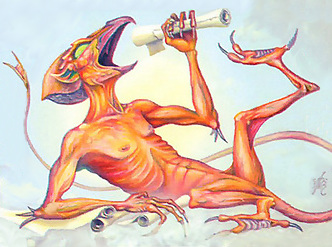
Some of the elemental terrors seem pretty badass, others appear to be aborted chickens who can't even stand.
It doesn't help that as the setting got older, more shit was added to the mix. So you had the Lying Darkness/Tomorrow, and the crystal magic of the Burning Sands, and the magic of the Nezumi/ratkin, and the great dreaming hive-mind of the Nagas, and whatever crap the Unicorn Clan brought back with them after playing Mongol for a couple generations, and then there were Dragons and the Oracle of Jade and the Oracle of Thunder and the Oracle of Obsidian and...well, you get the idea. A lot of this stuff was defeated/retconned/downvoted into setting oblivion in later editions, and it barely makes any appearance here at all.

Seriously, you have an entire empire where magic is a thing. Craft a couple Jade Golems, march into the Shadowlands and wreck the place. Of course, that would be a decadent gaijin's thought process...
All of the Elemental Terrors get the Elemental Type in this book, because why wouldn't they? Well, the reason they wouldn't is because the elemental type is written for what amounts to oozes made out of air or water – creatures with no discernible anatomy and bodies made out of pure whatever. The Elemental Terrors are really obviously not like that, having what appears to be joints and sinews and presumably stomachs and spleens. So really, the model for these creatures should be Genies, not Elementals. But they aren't Outsiders, they are Elementals because the authors don't really understand the ins and outs of 3rd edition creature typing. But then, just to insult you, the greater Void oni actually are Outsiders, so they had to have known that was an option. They just didn't do it because no reason.
On the plus side, that means your ring of elemental command is a lot more useful in this setting than you thought it would be.
Oriental Adventures
Our musical inspiration for this review is the opening theme to Ghost in the Shell.
FrankT:
Today's OSSR is going to come at you in five parts. It's Creatures of Rokugan, produced by AEG under license from Wizards of the Coast, a product which is an expansion to a product made by Wizards of the Coast under license from AEG. Sound confusing? Yeah, it is. AEG made what was the most successful CCG that wasn't Magic before the era of Yu-gi-oh. It was called Legends of the Five Rings (L5R), and it was set in a miscellaneously Asian-but-mostly-Japanese fantasy world where the empire that was kind of like China but mostly like Japan was called Rokugan. It had factions that played really differently, it had a storyline that advanced between expansions, it had multiplayer that wasn't completely terrible while still doing 2 player well, it had multiple routes to victory, and was in general a cut above most of the Magic clones that came out during that period (that period being 1995).
And it had nice art.
Here's where it gets unnecessarily complicated. The intellectual property of the Rokugan setting (but not the rights to continue making the card game) was split off into a separate company called Five Rings Publishing, which promptly got sold to Wizards of the Coast. Wizards of the Coast decided to make Rokugan their primary campaign setting for Oriental Adventures in 2000. Then after doing that, they sold the IP back to AEG, thus making AEG the sole company able to make official supplements for an official 3rd edition setting.
Creatures of Rokugan was made in 2001, shortly after AEG had bought the rights to their own setting back from WotC. The rules are based on the OGL, but it's content is based on IP that WotC owned and expanded upon but which AEG invented and repurchased. Figuring out what they were and were not allowed to put into this book must have been a nightmare. The last couple pages of the book are Open Gaming License legalese, and I have no idea if their version is correct or not.
People have long speculated as to what exactly the fuck was going on with WotC to make them decide to use Rokugan instead of one of their older Oriental Adventures settings, and further if they were going to do that, what possessed them to then sell away their ability to make supplements for the setting they committed themselves to. But as far as I know, we can indeed only speculate because WotC has never come clean as to their thought process or motivation for pulling such a complicated maneuver.
We don't like to talk about the original Oriental Adventures. Apparently, neither does WotC.
The whole book is 109 pages, and we'll try to do it in 5 posts. So that's about 22 pages a post.
AncientH:
Unlike Frank, I can kinda see why Wizards of the Coast might not have gone with their native settings for OA: the original product from TSR was more than vaguely racist, and Kara-Tur had been established as part of the Forgotten Realms, which the FR team already had dibs on. Unapproachable East came out in 2003, so it's not impossible that FR already had it on its timeline of splats to churn out when OA came out, but I rather suspect that the sequence of events was something like: someone pitched OA, the FR team didn't want to deal with immediately and also didn't want to surrender any control of the setting, and someone else popped up and suggested Rokugan as this alternate property they already owned with an established fanbase...and then you have a left-hand-not-talking-to-writes-the-check-hand bit later where AEG buys back the property.
This is more like Eastern Europe-sliding-into-Central-Asia. Faerun never really had an India subcontinent analogue.
Believe it or not, this was before the fecal matter really hit the oscillator, because this book is laid out along string D&D3.0 guidelines and ruleset; later products from AEG decided to go for a hybrid thing where their L5R sourcebooks present the stats in both d20 and the setting's native d10 ruleset and...uh...yeah, the "hybrid d20" era was weird. Not as weird as when they decided to try releasing Legend of the Burning Sands as an RPG, but pretty damn weird.
So obscure no torrent exists of it.
FrankT:
Legend of the Five Rings already had an RPG produced for it in 1997. It was a pile of d10s “roll and keep” system. That means you roll a pile of d10s, select some, do some addition, and get a result. And like Cthulhutech, the procedure is long and cumbersome and the probability curves are totally insane. Between the years 2000 and 2005, almost all Rokugan books were printed with side by side rules for two systems: 2nd edition Roll-and-Keep and 3rd edition D&D. This proved that AEG authors could be equally non-proficient with two rulesets. Creatures of Rokugan, the book we have in our hands, is actually one of the very few that AEG made during this period for only one system: and that system was D&D. Really, I'm just contextualizing the lack of apparent game mechanical familiarity that comes in the later pages.
This book actually has a quite manageable number of writers. Seven “writers” with two “additional writing” makes for nine total people who wrote on this book. That would be a little much for most titles, but we're talking about a monster book. Monster books are inherently anthologies, with lots of stand alone pieces. So nine authors is totally fine. I think there might only be one interior artist. The credits say “Interior Artists” (plural) but there's only one name listed. I don't know why they would do that. For that matter, I don't know why they bothered doing new art at all for a lot of these pieces. Really seems like they could have recycled card art for a lot of entries and people would have been fine with that.
This is the card
This is the new art they commissioned for this book.
Shrug.
AncientH:
Call it Magic: the RPGathering Syndrome - or maybe Inverse Spellfire Disease. One of the popular trends when TSR was dying was to try and monetize a large chunk of their standing art by throwing it into a CCG (Spellfire, Rage, Jyhad/Eternal Struggle, etc.), and theoretically the inverse would be true for any CCGs-transitioning-to-RPGs...but it never materialized. My guess is "Look, we gave you an art budget, use it." was half the reason; the other half might be that they didn't actually own the rights to the CCG artwork, which is weird but not improbable.
Creatures of Rokugan was released after Monster Manual and Monstrous Compendium: Monsters of Faerun, but before Fiend Folio, so it really represents another incremental step in the development of the 3.5 monster book learning curve and was essentially regarded as Monster Book III for a couple years.
Hell, maybe the FR team was still hoping MC:MoF would make enough money they could get away with this shit again.
For reasons unknown to me, all of the monsters have a listed Honor score. Because they're monsters, this is essentially 0. So I don't know why they bothered.
FrankT:
In Rokugan, jade and certain kinds of crystals that are unhelpfully named “crystal” inherently have the ghost touch property. Except the way they decide to try to explain it is by introducing a new subtype that works exactly like incorporeal except that they are still touched normally by jade and crystal and then replacing all instances of the old incorporeal with the new one. This is definitely the most roundabout manner I can think of to affect this rather trivial setting fact.
Actual rules for jade and crystal that are written in the jade and crystal section totally exist, and they are overly complicated. There's stuff involving jade counting as being of a different “plus” for purposes of penetrating DR of certain creatures. It's important to remember that this is for 3rd edition, not 3.5. So most DR requires a specific weapon bonus to penetrate rather than a specific material or alignment like in 3.5. This bonus accounting is overly complex even for its time, but when you factor in the time it was made it's only somewhat overly complex. If this had happened four years later, we would have just had DR X/Rocks and we all would have been happier.
L5R really tried to get you to care about jade and crystal weapons, but mostly you didn't.
AncientH:
Let us also not forget Taint rules, which after WotC lost control of the setting was one of the many sub-systems rolled into Unearthed Arcana.
Did someone say...taint?
Taint was somewhere between radiation exposure and your own personal evil-meter, and it was supposed to be Bad and caused you mutations and corruption until you were a slavering, soulless shell of yourself. But on the other hand, Taint was the primary casting ability score you cared about if you were a maho magician, so you kinda wanted that as high as possible.
Well, that's a good start.
Wait, so is that like demon syphilis?
There are a couple problems with this. First up, maho in OA was hideously overpowered for anyone that took a fancy to it; second off, it was hard to protect against Taint, especially if you didn't have any of the setting's native magic to protect you. The thing is, while theoretically this is a setting about more-or-less normal human samurai and conscript peasant warriors holding off armies of goblins bakemono and demons oni, outside of the novels and metastoryline normal humans don't do well going up against supernatural evil, especially when they decide it's time to emphasize the "magic is rare, no magic katanas for you!" line.
What do you mean, no firearms? They're in the DMG!
FrankT:
There is also a Void subtype. It gets its own paragraph, but it literally has no game effects.
It was important in the setting, it just didn't have any rules.
AncientH:
I won't say that all of the standard D&D classes weren't welcome in Rokugan, but defining classes like paladin, cleric, wizard, and sorcerer weren't really compatible with the setting, which mainly reduced you to a couple samurai, a monk, a shugenja/wujen, and a rogue yakuza with no honor. A lot of the more iconic monsters of the setting relied on some element of the OA ruleset (mainly for spell-like abilities) to use, and relied on the Rokugan setting to keep PCs from killing them out of general principle...of course, given that they lacked setting-specific protections, the PCs could easily end up dying or being horribly Tainted just from an encounter with a drop-in monster-of-the week.
Sadly, this setting predates Afro Samurai.
The Creatures
Pages 6-20 have 17 monsters, which works out to just slightly better than 1 per page.
FrankT:
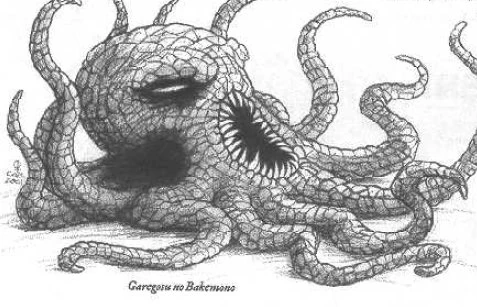
The first monster is not off to a good start. It's the Ashalan. The Ashalan are not, in fact, from Rokugan. They are from a different setting that the Five Rings Publishing people tried to get people to care about in the late nineties. It was called “Legend of the Burning Sands” and was sort of Arabic-themed rather than miscellaneously Asian. I'm sure there are some fans of Legend of the Burning Sands, but I don't know any of them. As far as I know, the distinctive characteristic of Ashalan is that they are blue, but in this book they are described as albinos who get a lot of tattoos.
These are the Ashalan, not that they look all that much like what's pictured in this book.
Mechanically speaking, the Ashalan are just humanoids who have regular character classes and some weird abilities that really sound like class abilities like secret tattoo knowledge and shit. They can apparently be Paladins, which is fascinating because that character class does not exist in Oriental Adventures.
AncientH:
The Ashura are flying evil samurai demons that will wreck your shit. Also, when you kill them they explode in a ball of green flame.
Technically the Ashura are from the RPG set "1,000 Years of Darkness" which is sort of an alternate reality where the Big Bad won and set up an eternal rule on planet toilet-on-fire.
In this world the bad guys can win. Well, no, they're going to nerf the tournament outcome to their storyline, but theoretically.
For reasons unknown, under "Immunities" they've lumped in abilities like "Can see in darkness." My guess is they were copy-pasting from "Special Qualities" or were otherwise just new at this whole d20 thing.
Bakeneko are spirit-cats. Now, your normal cat in regular D&D has a better-than-average chance of killing a peasant (1st-level commoner); these things are CR 1 and shapeshift and wield katanas and shit. I have no idea why they don't rule the world, except that they're nominally chaotic good.
Okay, I'm not even a furry and right away this looks like a better game than OA.
FrankT:
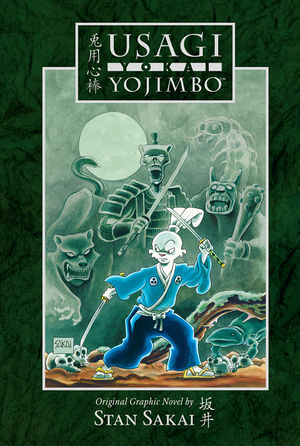
The mighty Baku, guardian of dreams is kind of a clusterfuck to begin with. Baku are actual legendary creatures, which are tapirs that defend your good dreams and eat your nightmares. Some Baku turn evil and eat your good dreams. Anyway, the real pictures of Baku look this:
Yes, really. It's a genuine mythological creature. Shut up.
And the real animal it is based on looks like this:
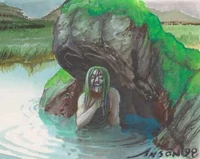
But for reasons that don't make any sense to me, they show the Baku with a lion head and a rhino horn. Maybe it's to make it look less like it came from a different card game?
This is the L5R Baku, and they are sticking by it.
But I think the real failure here is that the Baku they envision is CR3. This book is supposed to be running on the 3rd edition D&D engine, and in that ruleset, interacting with the dreamworld at all doesn't really come online until character level 9. So any dreamworld monster that is less than CR 7 is basically a piñata. When they eat your bad dreams, you get the benfits of bless as cast by a 16th level Cleric when you wake up. Bless lasts for 1 minute a level, so that won't even get you through the toothbrushing ritual that is spell slot preparation. That shit takes an hour.
AncientH:
The demons/evil spirits in Oriental Adventures are the Oni, represented by the title ____ no Oni. They're summoned like demons and can make more of themselves, and if they steal your name (it's complicated and doesn't happen much) they become super powerful.
FrankT:
The Elemental Terrors probably need a bit of explanation. L5R was inspired in large part by Miyamoto Musashi's Book of Five Rings. That book is divided into five sections: Earth, Water, Fire, Wind, Void. These are sort of the five great elements in Japanese Buddhist philosophy, but the “void” is really supposed to be “Heavenly Purity” and the other elements are really nothing at all like the Aristotelian elements we are used to in RPGs. For fuck's sake, in that system plants are water and animals are fire. But in L5R we have a very superficial reading of those things, so our elements are basically the Fantastic Four plus Galactus. Le sigh.
Anyway, one of the ways to win the game is to become enlightened by putting out all five “rings.” These are cards that require you to do something weird in order to trigger being allowed to play them, and then once you have them they give you a lasting benefit. It is generally very difficult to put out all five rings, because their various triggers are in different parts of the game, thus requiring you to win duels, win battles, cast spells, and empty your hand all while having different specific cards in your hand at the right triggering moment. Naturally, in some of the later expansions there were ways to make that considerably easier in a number of ways, but the point is that the “ring victory” was originally a lofty and rather difficult goal.
But there was also the “bad guys.” The Shadowlands were full of monsters doing bad stuff, and one of the things they introduced early on was oni whose shtick was that they were associated with one of the elements of enlightenment, but totally corrupt and evil instead of enlightened. And because they had already sort of binned the Musashi or Buddhist “enlightened” meaning from these elements in favor of more traditional Gaijin RPG elements, we ended up with something not unlike Ravenloft Elementals.
Originally, there were just Terrors for each element, but at some point they decided that there should be lesser terrors and greater terrors and shit. This section provides ten monster writeups, which are the “greater” and “lesser” varieties. We are also told that there are “true” elemental terrors somewhere, but they don't have stats. What do you think this is, a monster book?
Some of the elemental terrors seem pretty badass, others appear to be aborted chickens who can't even stand.
AncientH:
It doesn't help that as the setting got older, more shit was added to the mix. So you had the Lying Darkness/Tomorrow, and the crystal magic of the Burning Sands, and the magic of the Nezumi/ratkin, and the great dreaming hive-mind of the Nagas, and whatever crap the Unicorn Clan brought back with them after playing Mongol for a couple generations, and then there were Dragons and the Oracle of Jade and the Oracle of Thunder and the Oracle of Obsidian and...well, you get the idea. A lot of this stuff was defeated/retconned/downvoted into setting oblivion in later editions, and it barely makes any appearance here at all.
Seriously, you have an entire empire where magic is a thing. Craft a couple Jade Golems, march into the Shadowlands and wreck the place. Of course, that would be a decadent gaijin's thought process...
FrankT:
All of the Elemental Terrors get the Elemental Type in this book, because why wouldn't they? Well, the reason they wouldn't is because the elemental type is written for what amounts to oozes made out of air or water – creatures with no discernible anatomy and bodies made out of pure whatever. The Elemental Terrors are really obviously not like that, having what appears to be joints and sinews and presumably stomachs and spleens. So really, the model for these creatures should be Genies, not Elementals. But they aren't Outsiders, they are Elementals because the authors don't really understand the ins and outs of 3rd edition creature typing. But then, just to insult you, the greater Void oni actually are Outsiders, so they had to have known that was an option. They just didn't do it because no reason.
AncientH:
On the plus side, that means your ring of elemental command is a lot more useful in this setting than you thought it would be.