OSSR: Call of Cthulhu (5.6)
Posted: Wed Aug 13, 2014 10:39 pm
OSSR: Call of Cthulhu
Horror Roleplaying
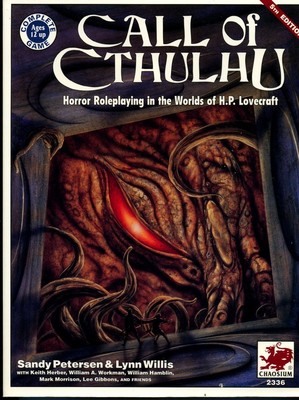
There are a lot of editions of this game, which don't actually differ that much.
Theme music for this tome is Cacophony by Rudimentary Peni
Call of Cthulhu the Roleplaying game lurched into life in 1981, and as we speak in 2014 is on the cusp of its 7th edition. It's been a long, weird ride, and CoC has had a devoted fanbase that has stuck to the almost-unchanging game for decades, though publisher shenanigans and card games, often finding success in bizarre places and staggering forward like an old lich stumbling forth from the crypt one more time. While we at the Den often like to compare it to a living fossil among RPGs, the veritable coalecanth of the gaming aisle, it's still hanging on, and even flowering somewhat; besides the new edition off-brands like Trail of Cthulhu and The Laundry RPG continue to shine.

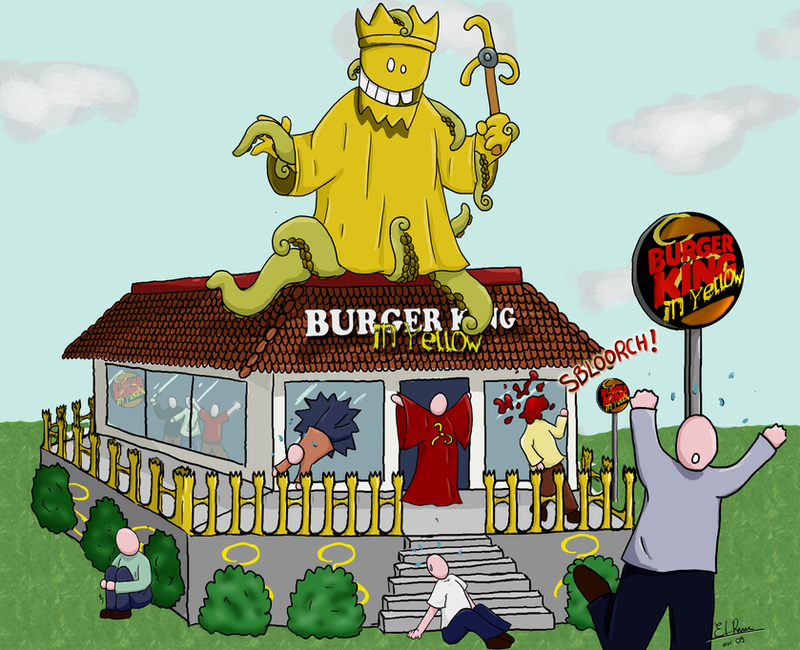
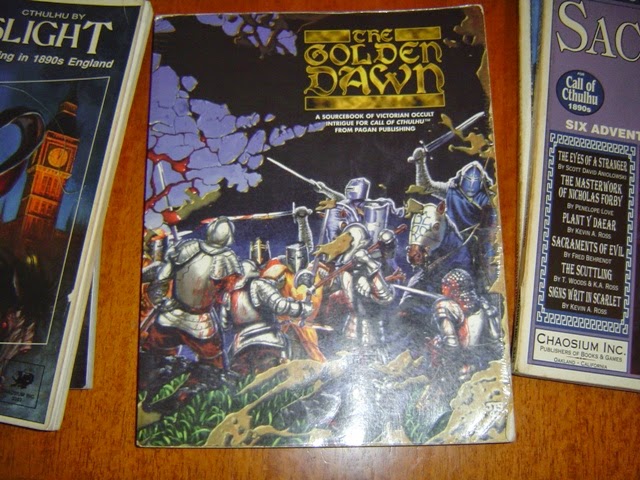
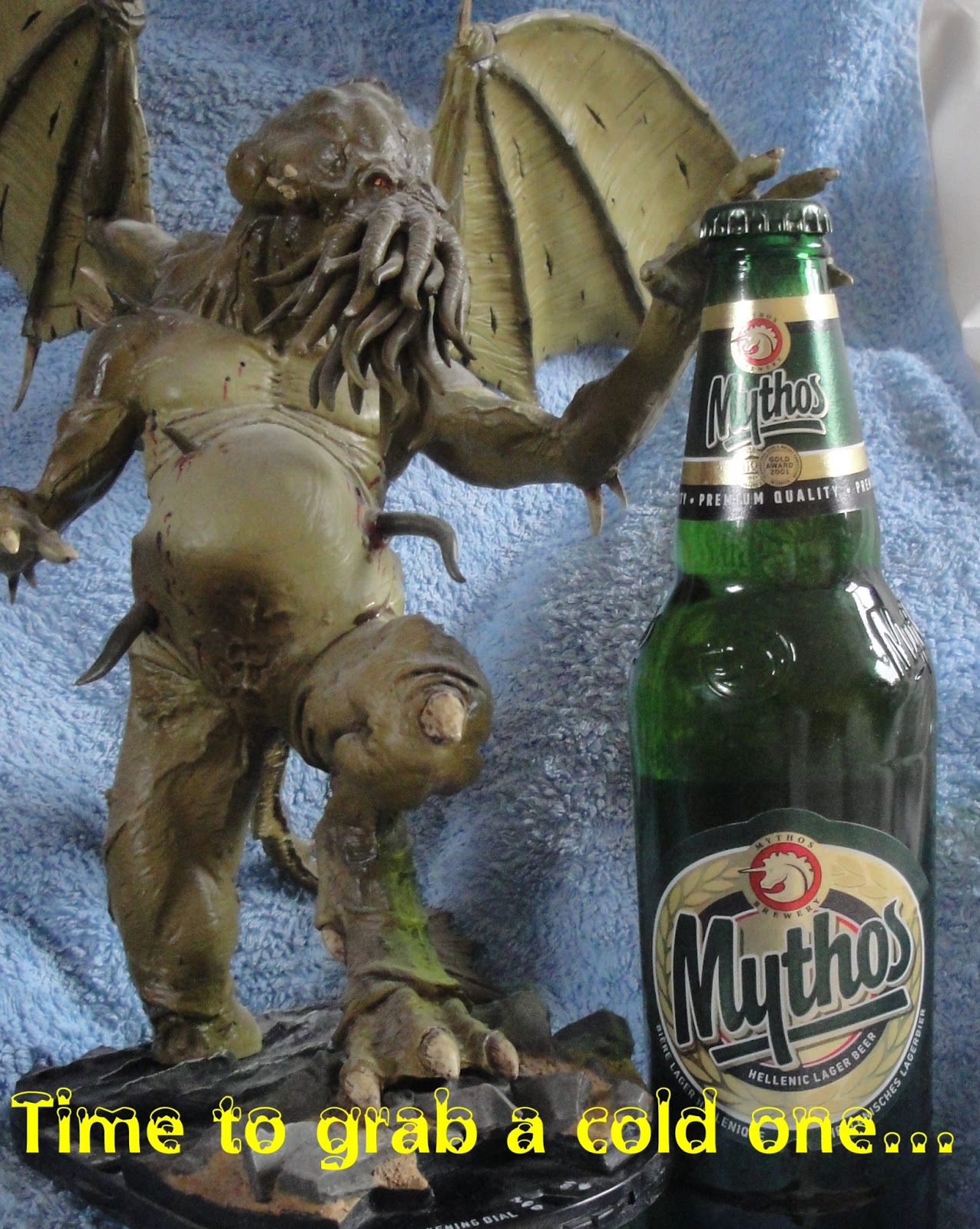
Which is even more impressive when crap like this gets released. You just know that cover cost somebody a SAN point.
My copy is version 5.6. The copyright note says it is ©1999, but I think it came out in 2000. Publishing delays happen all the time. It has the same number of pages as version 5.5 which came out 2 years earlier, and I'm not really sure what the differences are. Frankly, I don't know what the differences are in any of the editions or sub-editions of Call of Cthulhu. All of the editions are kinda-sorta compatible, and few supplements bother to tell you what edition they are nominally written for. This is kind of amazing, because the first Call of Cthulhu box set came out in 2001, and the 7th edition coming out later this year is supposed to be vaguely compatible with it despite 33 years having come and gone.
Really, the fact that the rules haven't changed much is as much hubris as anything. Can you honestly imagine someone claiming that their first typewritten draft of an RPG back in 1981 got things basically right and didn't need any major overhauls? And yet, that's pretty much what Chaosium is claiming and has claimed for over three decades. And the fans, for the most part, seem to be pretty much OK with it, which paradoxically has to do mainly with the fact that Call of Cthulhu players almost universally acknowledge that the rules aren't very good.
Basically how this works is that Call of Cthulhu comes from the 1st edition AD&D era, when expectations of rules quality and consistency were pretty low. So Call of Cthulhu players have been pretty much expected to house rule and mind caulk everything together from the beginning. But unlike the players of other games, Call of Cthulhu players never actually stopped. Just as it's always the 1920s for the characters, it's always 1989 for the players; and everyone is still pretending that it makes any sense to try to play AD&D together with 2nd Edition AD&D and the inconsistencies and shit rules don't matter because the MC can and will change it all anyway. As far as Call of Cthulhu gaming culture is concerned, the 21st century never really happened – which is as good a reason to choose the edition copyright 1999 as any. Retroactively, let's say we planned that rather than that this version happened to be close at hand for a review.
To hang out my nostalgia cred, my early nineties gaming group had a Call of Cthulhu period right around the time of our RIFTS period. It scratched a similar itch, honestly: frankly bad rules with a cool setting that we could take or leave dim sum style. At that time of my life, my expectations from a game system were pretty low, and Call of Cthulhu exceeded them.
Most of the rule changes have been...eh...I don't want to say minor, but the essential mechanics of the game haven't progressed much in three decades (7th edition is supposed to have some tweaks), and with the exception of spell multipliers and whatnot the guys playing in 1989 can play pretty much the same campaigns in 1999 or 2009...and that's by design. GURPS and d20 and whatnot trade on their system, Call of Cthulhu trades on Cthulhu. They release new material, sure, but the basic stats and conceptions of the game are pretty much identical because there's a large desire among the playerbase to keep things compatible with the classic old campaigns like Shadows of Yog-Sothoth or Horror on the Orient Express. It's a bit like people that show up to Rocky Horror showings in costume with buttered toast in that respect.

Anyway, Call of Cthulhu uses a slight variant of the Basic Roleplaying System, which underlies...oh, at least 75% of all Mythos-related roleplaying games at this point, even if Chaosium doesn't publish it. I suspect Frank will want to get his rant on about that when we get to the actual systems, and I would never deny him that outlet. The main take away is that as weird and stupid as it is, BRP was influential because of Call of Cthulhu. The whole Sanity mechanic (i.e. "mental hitpoints") by Sandy Petersen has influenced from d20 Sanity to Unknown Armies. So if nothing else, consider this gaming anthropology, a look at one of the common ancestors of modern gaming.
The book doesn't look terribly modern or professional. Part of this is that they are going for an “archaic” look, but partly this is because compared to the 90s output of TSR, White Wolf, or FASA, this is pretty much a garage printing. The main credits are for Sandy Petersen for writing most of the 1983 text, and for Lynn Willis for writing most of the fifth edition text. Why the 1983 text? I don't really know. That's the second edition, but considering how hard it is to get your grubby hands on either a first edition boxed set from 1981 or a limited run “designer's edition” from 1982, I assume that Lynn Willis happened to have a 2nd edition boxed set to crib off of, and was citing it so it's not plagiarism. There's also a quite extensive sidebar that cites exactly what every minor contributor contributed, which would be really helpful if CoC was the kind of game where the fans expected the opinions of individual writers to matter. As is, it just seems like a kind of nice thing to do. They also namecheck a bunch of mythos fiction that they are referencing with permission running from 1932 to 1993. I think it important to note that the amount that is being used from these books would constitute fair use, and they don't have to do this. But they want to, and I am personally OK with it.

Playtesting happened! Seemingly some time in the early 80s or late 70s.
There are playtesters credited, but they are divided into two groups: the “Utah playtesters” for the first edition, and the “Chaosium playtesters.” The Chaosium playtesters apparently included a single keeper and a pile of disposable bodies players, one of whom was Lynn Willis – who went on to write most of the text in this edition. Notably absent of course, is any apparent playtesters of any new ideas that might have come up in the decade and a half between the first Chaosium releases and this book.
They also acknowledge that Call of Cthulhu was originally a RuneQuest hack based on the original 1978 engine.
Chaosium has always benefited in that it's more or less a licensed game for a unique collaborative fiction effort which has a huge fanbase. This means there's a very diverse and dedicated audience built right in, there's a shit-ton of art they can probably license that goes directly with the setting, and they can do one-off projects like the Call of Cthulhu Fiction line which is probably more profitable than the game itself.
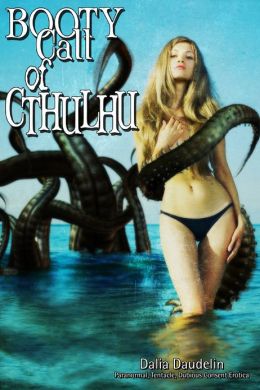
Which means they've never had to do a sex supplement!
Anyway, this book being 28-ish years in, there's actually a vast supply of art just sitting around in the archives for them to use, and unlike with D&D or FASA they have no qualms with using it nor does it look especially dated even after 20 years. Or at least, no more dated than the layout and typography. Seriously, I don't know how they did it, when White Wolf tries to make a book look "old skool" it looks like hammered shit, but Chaosium makes it look like a weird but somehow appropriate blend of computer-aided design and I-did-this-in-my-basement-with-a-letterpress-and-xeroxed-it.
The foreword is mostly just Sandy Petersen congratulating himself for how many awards Call of Cthulhu has received. It has in fact received a lot of them. Many of those were even ones it deserved to win. But here's the thing: then as now, industry awards were a sham. And RPGs as a segment of the game industry are very small. Winning an award for best adventure handed out by some guys who help organize a gaming convention is not even as big of an achievement as winning an AVN for “Best Specialty Release – Foot Fetish.” You literally just impressed like three nerds who are bribable with beer. If you sent a sexy lady with a cooler full of beer to
lobby on your behalf, you could probably win yourself an Origins Award, an Enny, and an Indie RPG Award for a new edition of FATAL. Call of Cthulhu has a dedicated following and is probably the only game from its era still standing, but pointing to a shelf covered with participation trophies awarded by your mom is not the way to get that across.
And finally, before we get to the table of contents, we get an alphabetical listing of everyone they could remember who wrote supplemental material. The list of people is crazy long, but it doesn't include the people who wrote Green and Pleasant Land, which is probably for the best but is itself proof that even these massive credits to try to acknowledge everyone in Call of Cthulhu history are themselves incomplete.
The table of contents hasn't changed much in 25 years. I seriously doubt they did more than update the page numbers. I know it seems like I'm trying to turn steak into beef, but you have to understand that CoC is such a constant in the gaming world that pretty much everybody has resisted change on it as much as possible. Don't like the rules? Go make your own home rules. I bet you can get those published in a fanzine. No fanzine? Well, start your own. Hey, you did a good job at that, why don't we put out our own supplement? Sure, let's ask Chaosium for permission.
...and that shit happened. Pagan Publishing is the more gratuitous example, but it's really a DIY system with vast and obscure and twisting branches. Nobody knows all of it, and I really doubt much of it gets used, but it's sort of breathtaking in its sheer scope. I mean, there are two separate fucking spin-offs involving cats, an they were released at about the same time.


This game is insane.
The Call of Cthulhu

That is not dead which can eternal lie.
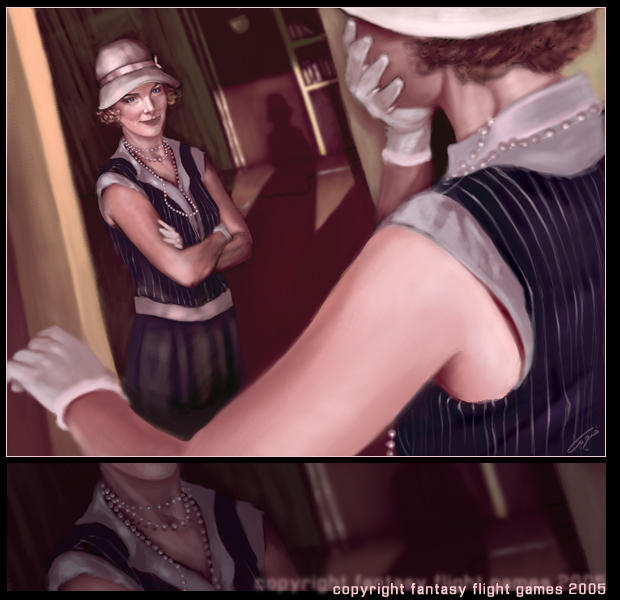
The game starts off with the full text of H. P. Lovecraft's story, "The Call of Cthulhu." It's what gave the game it's name, but it's still a bold choice, because it's seriously 15 pages of fiction. Even Shadowrun didn't like to go beyond 5-7 pages on the intro fiction. The thing is, this is the entire setting in a nutshell. The game doesn't try to spin this as an alternate 1920s + cults and magic and Elder Gods - you're really just playing in the same world as "The Call of Cthulhu." Encountering horrors, following clues, investigating mysteries, chatting up jailbait flapper girls, drinking to forget the horrors of World War I...whatever works.

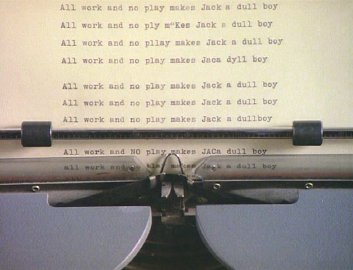
Last True Detective still, I promise.
Being primarily based on weird fiction from the 1920s, the Call of Cthulhu game has a lot of historical literature to draw upon. This edition of the book is simply prefaced with a 15 page reprint of an HPL story. We could go into big discussions of literary critique on this, and people have, but basically this is being used as filler text. We have the entire text of The Call of Cthulhu, all three chapters, from 1928, being used as the intro text.
Now obviously, you could do worse. Doing a reprint from a 1928 Weird Tales issue is certainly cheap, and obviously it's decent mood ambiance for Cthulhu-based role playing. One problem I have with it, of course, is that Cthulhu actually appears in that story, and while it's big and scary and a thoroughly bad news giant monster, it very explicitly isn't the team ending wall of madness that Cthulhu has become in the eyes of fans. Putting up this original work is basically just admitting that Great Cthulhu is way overhyped by this game. The god like being described in this book causes you to lose a d100 sanity just to see it and kills d3 investigators per turn. It's a horrible keeper penis insert that you can't possibly defeat or escape from – and yet the story itself involves someone successfully encountering it, beating it up with a boat, and getting away.
I should note that Great Cthulhu does actually kill d3 sailors in that story. But I digress.

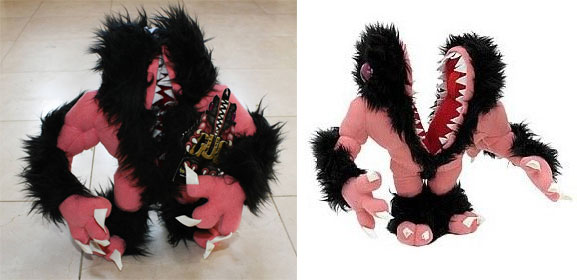
Also, the props for this game have gotten nuts.
Next Up: Game System. That's 73 pages of chargen, skill systems, sanity, magic, combat, and game conceits. So... we'll see if we get through it all. This might be a chapter that requires more than one post.
Horror Roleplaying
There are a lot of editions of this game, which don't actually differ that much.
Theme music for this tome is Cacophony by Rudimentary Peni
AncientH:
Call of Cthulhu the Roleplaying game lurched into life in 1981, and as we speak in 2014 is on the cusp of its 7th edition. It's been a long, weird ride, and CoC has had a devoted fanbase that has stuck to the almost-unchanging game for decades, though publisher shenanigans and card games, often finding success in bizarre places and staggering forward like an old lich stumbling forth from the crypt one more time. While we at the Den often like to compare it to a living fossil among RPGs, the veritable coalecanth of the gaming aisle, it's still hanging on, and even flowering somewhat; besides the new edition off-brands like Trail of Cthulhu and The Laundry RPG continue to shine.
Which is even more impressive when crap like this gets released. You just know that cover cost somebody a SAN point.
FrankT:
My copy is version 5.6. The copyright note says it is ©1999, but I think it came out in 2000. Publishing delays happen all the time. It has the same number of pages as version 5.5 which came out 2 years earlier, and I'm not really sure what the differences are. Frankly, I don't know what the differences are in any of the editions or sub-editions of Call of Cthulhu. All of the editions are kinda-sorta compatible, and few supplements bother to tell you what edition they are nominally written for. This is kind of amazing, because the first Call of Cthulhu box set came out in 2001, and the 7th edition coming out later this year is supposed to be vaguely compatible with it despite 33 years having come and gone.
Really, the fact that the rules haven't changed much is as much hubris as anything. Can you honestly imagine someone claiming that their first typewritten draft of an RPG back in 1981 got things basically right and didn't need any major overhauls? And yet, that's pretty much what Chaosium is claiming and has claimed for over three decades. And the fans, for the most part, seem to be pretty much OK with it, which paradoxically has to do mainly with the fact that Call of Cthulhu players almost universally acknowledge that the rules aren't very good.
Basically how this works is that Call of Cthulhu comes from the 1st edition AD&D era, when expectations of rules quality and consistency were pretty low. So Call of Cthulhu players have been pretty much expected to house rule and mind caulk everything together from the beginning. But unlike the players of other games, Call of Cthulhu players never actually stopped. Just as it's always the 1920s for the characters, it's always 1989 for the players; and everyone is still pretending that it makes any sense to try to play AD&D together with 2nd Edition AD&D and the inconsistencies and shit rules don't matter because the MC can and will change it all anyway. As far as Call of Cthulhu gaming culture is concerned, the 21st century never really happened – which is as good a reason to choose the edition copyright 1999 as any. Retroactively, let's say we planned that rather than that this version happened to be close at hand for a review.
To hang out my nostalgia cred, my early nineties gaming group had a Call of Cthulhu period right around the time of our RIFTS period. It scratched a similar itch, honestly: frankly bad rules with a cool setting that we could take or leave dim sum style. At that time of my life, my expectations from a game system were pretty low, and Call of Cthulhu exceeded them.
AncientH:
Most of the rule changes have been...eh...I don't want to say minor, but the essential mechanics of the game haven't progressed much in three decades (7th edition is supposed to have some tweaks), and with the exception of spell multipliers and whatnot the guys playing in 1989 can play pretty much the same campaigns in 1999 or 2009...and that's by design. GURPS and d20 and whatnot trade on their system, Call of Cthulhu trades on Cthulhu. They release new material, sure, but the basic stats and conceptions of the game are pretty much identical because there's a large desire among the playerbase to keep things compatible with the classic old campaigns like Shadows of Yog-Sothoth or Horror on the Orient Express. It's a bit like people that show up to Rocky Horror showings in costume with buttered toast in that respect.
Anyway, Call of Cthulhu uses a slight variant of the Basic Roleplaying System, which underlies...oh, at least 75% of all Mythos-related roleplaying games at this point, even if Chaosium doesn't publish it. I suspect Frank will want to get his rant on about that when we get to the actual systems, and I would never deny him that outlet. The main take away is that as weird and stupid as it is, BRP was influential because of Call of Cthulhu. The whole Sanity mechanic (i.e. "mental hitpoints") by Sandy Petersen has influenced from d20 Sanity to Unknown Armies. So if nothing else, consider this gaming anthropology, a look at one of the common ancestors of modern gaming.
FrankT:
The book doesn't look terribly modern or professional. Part of this is that they are going for an “archaic” look, but partly this is because compared to the 90s output of TSR, White Wolf, or FASA, this is pretty much a garage printing. The main credits are for Sandy Petersen for writing most of the 1983 text, and for Lynn Willis for writing most of the fifth edition text. Why the 1983 text? I don't really know. That's the second edition, but considering how hard it is to get your grubby hands on either a first edition boxed set from 1981 or a limited run “designer's edition” from 1982, I assume that Lynn Willis happened to have a 2nd edition boxed set to crib off of, and was citing it so it's not plagiarism. There's also a quite extensive sidebar that cites exactly what every minor contributor contributed, which would be really helpful if CoC was the kind of game where the fans expected the opinions of individual writers to matter. As is, it just seems like a kind of nice thing to do. They also namecheck a bunch of mythos fiction that they are referencing with permission running from 1932 to 1993. I think it important to note that the amount that is being used from these books would constitute fair use, and they don't have to do this. But they want to, and I am personally OK with it.
Playtesting happened! Seemingly some time in the early 80s or late 70s.
There are playtesters credited, but they are divided into two groups: the “Utah playtesters” for the first edition, and the “Chaosium playtesters.” The Chaosium playtesters apparently included a single keeper and a pile of disposable bodies players, one of whom was Lynn Willis – who went on to write most of the text in this edition. Notably absent of course, is any apparent playtesters of any new ideas that might have come up in the decade and a half between the first Chaosium releases and this book.
They also acknowledge that Call of Cthulhu was originally a RuneQuest hack based on the original 1978 engine.
Yes. It fucking says that. The rules in your hand are a thin coat of paint on an incomplete near-past hack on a trippy and experimentalist fantasy RPG from the seventies, but that's OK because you could always write your own fucking rules based on 1970s fantasy RPGs that would probably be just as good! Really. The game straight up tells you that you might as well go back and recompile the engine from its FORTRAN-era source code. If Call of Cthulhu wasn't a game that relied heavily on description and atmosphere to the point of most players ignoring the rules entirely – that would be a deal breaker right there. As is, the essential frank admission that they haven't really had a new idea or bothered to flesh out their game system in nearly twenty years makes the question of why you'd bother picking up this edition if you already had one of the earlier printings a pretty open one.Acknowledgments wrote:Mark Morrison has remarked that when he wishes to see how some problem of physical action is handled in a game, he turns first to RuneQuest. He is not the only one.
AncientH:
Chaosium has always benefited in that it's more or less a licensed game for a unique collaborative fiction effort which has a huge fanbase. This means there's a very diverse and dedicated audience built right in, there's a shit-ton of art they can probably license that goes directly with the setting, and they can do one-off projects like the Call of Cthulhu Fiction line which is probably more profitable than the game itself.
Which means they've never had to do a sex supplement!
Anyway, this book being 28-ish years in, there's actually a vast supply of art just sitting around in the archives for them to use, and unlike with D&D or FASA they have no qualms with using it nor does it look especially dated even after 20 years. Or at least, no more dated than the layout and typography. Seriously, I don't know how they did it, when White Wolf tries to make a book look "old skool" it looks like hammered shit, but Chaosium makes it look like a weird but somehow appropriate blend of computer-aided design and I-did-this-in-my-basement-with-a-letterpress-and-xeroxed-it.
FrankT:
The foreword is mostly just Sandy Petersen congratulating himself for how many awards Call of Cthulhu has received. It has in fact received a lot of them. Many of those were even ones it deserved to win. But here's the thing: then as now, industry awards were a sham. And RPGs as a segment of the game industry are very small. Winning an award for best adventure handed out by some guys who help organize a gaming convention is not even as big of an achievement as winning an AVN for “Best Specialty Release – Foot Fetish.” You literally just impressed like three nerds who are bribable with beer. If you sent a sexy lady with a cooler full of beer to
lobby on your behalf, you could probably win yourself an Origins Award, an Enny, and an Indie RPG Award for a new edition of FATAL. Call of Cthulhu has a dedicated following and is probably the only game from its era still standing, but pointing to a shelf covered with participation trophies awarded by your mom is not the way to get that across.
And finally, before we get to the table of contents, we get an alphabetical listing of everyone they could remember who wrote supplemental material. The list of people is crazy long, but it doesn't include the people who wrote Green and Pleasant Land, which is probably for the best but is itself proof that even these massive credits to try to acknowledge everyone in Call of Cthulhu history are themselves incomplete.
AncientH:
The table of contents hasn't changed much in 25 years. I seriously doubt they did more than update the page numbers. I know it seems like I'm trying to turn steak into beef, but you have to understand that CoC is such a constant in the gaming world that pretty much everybody has resisted change on it as much as possible. Don't like the rules? Go make your own home rules. I bet you can get those published in a fanzine. No fanzine? Well, start your own. Hey, you did a good job at that, why don't we put out our own supplement? Sure, let's ask Chaosium for permission.
...and that shit happened. Pagan Publishing is the more gratuitous example, but it's really a DIY system with vast and obscure and twisting branches. Nobody knows all of it, and I really doubt much of it gets used, but it's sort of breathtaking in its sheer scope. I mean, there are two separate fucking spin-offs involving cats, an they were released at about the same time.
This game is insane.
The Call of Cthulhu
That is not dead which can eternal lie.
AncientH:
The game starts off with the full text of H. P. Lovecraft's story, "The Call of Cthulhu." It's what gave the game it's name, but it's still a bold choice, because it's seriously 15 pages of fiction. Even Shadowrun didn't like to go beyond 5-7 pages on the intro fiction. The thing is, this is the entire setting in a nutshell. The game doesn't try to spin this as an alternate 1920s + cults and magic and Elder Gods - you're really just playing in the same world as "The Call of Cthulhu." Encountering horrors, following clues, investigating mysteries, chatting up jailbait flapper girls, drinking to forget the horrors of World War I...whatever works.
Last True Detective still, I promise.
FrankT:
Being primarily based on weird fiction from the 1920s, the Call of Cthulhu game has a lot of historical literature to draw upon. This edition of the book is simply prefaced with a 15 page reprint of an HPL story. We could go into big discussions of literary critique on this, and people have, but basically this is being used as filler text. We have the entire text of The Call of Cthulhu, all three chapters, from 1928, being used as the intro text.
Now obviously, you could do worse. Doing a reprint from a 1928 Weird Tales issue is certainly cheap, and obviously it's decent mood ambiance for Cthulhu-based role playing. One problem I have with it, of course, is that Cthulhu actually appears in that story, and while it's big and scary and a thoroughly bad news giant monster, it very explicitly isn't the team ending wall of madness that Cthulhu has become in the eyes of fans. Putting up this original work is basically just admitting that Great Cthulhu is way overhyped by this game. The god like being described in this book causes you to lose a d100 sanity just to see it and kills d3 investigators per turn. It's a horrible keeper penis insert that you can't possibly defeat or escape from – and yet the story itself involves someone successfully encountering it, beating it up with a boat, and getting away.
AncientH:
I should note that Great Cthulhu does actually kill d3 sailors in that story. But I digress.
Also, the props for this game have gotten nuts.
Next Up: Game System. That's 73 pages of chargen, skill systems, sanity, magic, combat, and game conceits. So... we'll see if we get through it all. This might be a chapter that requires more than one post.