OSSR: the Northlands Saga Complete
Posted: Mon Oct 28, 2019 7:14 am
The Northlands Saga Complete
 Note: In the interests of disclosure, the president of the publishing company for this book had several allegations levied against him at PaizoCon. I am still posting this review in part due to the fact that the book itself was the creation of a company outsider whose work was published (and modified with some notes in the second half) by Frog God Games, so to me at least the Northlands Saga is more the baby of its original author Ken Spencer. All the same, I want to forewarn others for potential purchasing decisions.
The Northlands Saga Complete is a Norse-themed sword and sorcery adventure path and campaign setting. Made for both Pathfinder and Swords & Wizardry, it is a far-ranging epic inspired by the culture and folklore of the Viking era, and for the past year I have been running it for a weekly Sunday group. Although like any level 1 to 20 Pathfinder campaign it has its system-related warts (and some questionable plot and narrative choices), it helped create a campaign that has been lots of fun, and with all the notes and work I’ve done on it I decided to make an in-depth review.
So a brief history of the publication. Back in 2011 when Skyrim was the next big thing and the hills were alive with the sounds of thu’um, Frog God Games began working on a playtest for a Viking-themed adventure. One of the chief writers, Ken Spencer, was an archeologist and history teacher who had a deep passion for medieval Scandinavia and its legends, and sought to create a setting which borrowed heavily from that region’s cultural aspects. Four adventures were made in total set in the Northlands, but the line was put on hold for five years until a successful KickStarter produced a massive book with the original adventures plus eight new ones and a complete setting to boot.
Northlands Saga Complete is split into two major sections: the Northlands Saga Campaign Guide and the Northlands Saga Adventure Path. After that are several appendices of player handouts and maps (both player-friendly and GM eyes’ only versions), pregenerated player characters, and a bonus stand-alone adventure. We are going to cover the Campaign Guide here first.
Hagalaz, Hail!
 This is the introductory chapter covering the overall feel of the world, the regions’ history, and a discussion on Kennings (compound expressions with metaphorical meanings often used in poetry). Basically the Northlands is part of the wider Lost Lands campaign setting published by Frog God Games, but the influence of the rest of the world is minimal enough that the Northlands may as well be its own. The Northlands is a low magic sword and sorcery style realm where most of civilization are villages at best and while magic is a common occurrence in the form of cunning women and folkloric charms it is rarely understood and wholly accepted. The setting has fantasy races, but is humanocentric in a Ravenloftian vein where dwarves and elves are isolated, halflings and gnomes don’t exist, and cannon fodder baddies tend rival Vikings, cultists, and various kinds of giant-kin instead of kobolds, goblins, and orcs.
The Northlands proper is sits on the northern reach of Akados, the major continent of the Lost lands, and the southern reach of the arctic continent of Boros. It has a Meditteranean-style geography where a central North Sea dominates the center and the various lands circle around it and sea travel is a vital aspect of life.
History The region has been home to thousands of years’ worth of immigration, with the ethnic Northlander humans the most recent arrival (800 years ago). The first settlers were the Andøvans, who mastered bronze-working and whose cultural legacy is only known via the large amount of haunted mountain ruins and barrow mounds left behind. They went to war against invading trolls and lost, causing their culture to cease to be. A thousand years later the next group of settlers were a tribe of elves known as the Nûk on a religious pilgrimage. With the forest the only place unclaimed by the numerous trollish tribes they and settled there in secret.
1,500 years later, a tribe of humans known as the Uln arrived and unsuccessfully warred against the trolls. They went further north and settled into newly-discovered city ruins, which had buried texts dedicated to the demon lord Althunak whose growing cult plunged the cities into bloody war. The Uln driven from the cities soon became the Ulnat, the fantasy counterpart-Inuit people of the Northlands. The Lord of Ice and Stone’s cult held sway for a time until a hero, Hvran the Half-born, earned the trust of several tribes and led a band of heroes. They fought a mighty battle against the demon-god himself, and Hvran sacrificed himself to trap Althunak beneath a frozen lake.
150 years later a group of Hel worshipers are contained in a walled-off peninsula after war with others. There was a dude named Swein Sigurdson who thought that Hel had it all wrong and fought and escaped with like-minded people into the not-Underdark, where Swein received a vision from Wotan, head of the Æsir who told him of a new place to settle which turned out to the the troll-occupied Northlands. Traveling through the Under Realms for months they finally found light and fought a war against the trolls. They won, the giants were driven off, Swein Sigurdson was declared the High King, and the society of modern Northlanders came into being.
TL;DR Barrow-building humans fight and lose against trolls, elves migrate to the forests, the not-Inuit defeat not-Sauron, not-Nordics are led by Odin through the Underdark to the Northlands and drive off the trolls. And if you’re wondering what the deal with the seeming disconnected events is, they tie into the later campaign to various extents. Especially Althunak who is more or less the BBEG of the Northlands Saga.
Kennings
Along with a pronunciation guide on Nordic spellings not present in English, the last section of the introduction discusses the concept of kennings, or word pictures expressed by skalds and reciters of oral traditions. Quite a bit of in-game text and NPC conversation makes use of such kennings, although not overly so (mostly important and well-spoken NPCs). Basically they are ways to paint a picture of common concepts via metaphors, references to godly traits, and the like. It gives a sample list of common kennings as a means of using them in your own campaign.
Chapter 1: Mannaz, The Peoples
 The chapter starts off by mentioning that in terms of D&D races the Northlands is not as varied as the typical setting or other places in the Lost Lands. Only humans and Nûklander elves have any significant population size (with a few half-elves around), and the few dwarves around are relegated in small communities in the two largest towns. Halflings, gnomes, and elves of other tribes are individual foreigners if they come into the region. Orcs, half-orcs, goblins, bugbears, and gnolls are virtually absent, but replacing their niche are all varieties of giant. Just about every type of Monster Manual giant can be found in the Northlands along with some new ones in this book, and there are many varieties of trolls. The setting mentions that giants in the Northlands are always of Evil alignment, and giant and troll-blooded people merely a strong tendency than an inherent trait. Funny enough, although the pre-generated PCs include a dwarf, there are about 200 total in the biggest towns, and are kind of a being in Norse mythology, they don’t get a write-up in this chapter at all and are more or less “invisible” in the adventure path.
There is a brief entry on languages, with some interesting notes: one, there is a “Common” tongue but it’s spoken far south in lands once dominated by an expansive empire which never touched the Northlands and so isn’t a language you start play with automatically. The lingua franca of ethnic Northlanders is Nørsk, with the written version known as Runic and treated as a separate language (literacy is rare and effectively an art all its own). Andøvan is now a dead language, and Nûklander, Seagestrelander, and Ulnat are spoken by their respective cultures. Two demonic cults, the Beast Cult and the Children of Althunak, respectively use Beast Cult Sign Language and Old Uln as secret code tongues.
The Northlanders are the most populous human cultural group in the setting and pretty much fantasy counterpart Scandinavians. Although no strangers to warfare, most Northlanders live an agricultural lifestyle of growing crops and animal husbandry. Still, their economy is supplemented by warfare, trade, and raiding and almost every family owns several weapons for self-defense and chainmail if they’re well-to-do. They have a hierarchy of social classes ranging from thralls (slaves, usually foreigners or those in debt), freemen (majority of Northlanders), and jarls (Northland leaders who have enough wealth and goodwill to get the other social classes to pledge their lives to them). Northland social structure is not ironclad; thralls can buy their freedom, and in some lands a jarl’s influence is tempered by democratic assemblies known as Things or fall out of influence if his competence falters.
The rest of the section is rather wordy, but I can point out a few interesting things: Northlanders don’t use horses for warfare (they are meant for travel); many of them have a social gathering known as a Thing where every person can cast a vote for matters of laws, crimes, and public works projects; the laws of housing where a guest and host have mutually-beneficial social contracts; and that religion is a low-key affair where local priests known as godi are a part-time local position and that actual spellcasting clerics and druids are very rare specialized godi who forged a bond with a specific deity.
Next up are the Nûk or Nûklanders, elves who are more or less fantasy counterpart-Sami. They are the descendents of a persecuted cult whose god said that he would lead his people north to a bountiful land far north. After several civil wars encouraged them to move thousands of miles to the promised land, they found that their dream destination was far from hospitable. Betrayed, the people turned against the more devout followers and leaders in a night of slaughter and forsook worship of the gods in favor of calling out to the spirits of nature.
Nûklanders primarily live in the forests and tundras of the Northlands’ northernmost reaches and beyond as nomadic reindeer herders. They have some limited trade with the Northlanders of Estenfird and are on generally positive terms with them. Nûk societies are governed entirely by direct democracy councils (the concept of one person commanding many is a strange concept to them). Their society also greatly distrusts arcane magic, and practitioners face exile or death if they cannot conceal their talents. Druids, oracles, and rangers are the most common classes, with fighters rarer but when they do show up make for amazing cavalry with war-trained reindeer.
In game terms Nûklanders share the racial traits of Pathfinder elves, save that instead of gaining typical enchantment/sleep resistance and spell resistance/spellcraft bonuses they get cold resistance 5 and the silent hunter trait (reduce stealth penalties for higher speed by 5 and can use Stealth while running at -20).
The other human ethnicity detailed are the Seagestrelanders, and I am unsure what real-world culture if any they are meant to replicate. The term “Seagestrelander” is a catch-all for the hundreds of warring tribes that live between the southwest shores of the North Sea and the southern plains of the Sea of Grass. Most of them live within the forests of their namesake and the coastal shores, with expansion blocked off by natural geography. They are mostly farmers, herders, and fishermen and their lands are poor in mineral wealth. As Northlanders have metal goods, said group is willing to trade them iron weapons and armor in exchange for amber, gold, and slaves. This last commodity exacerbated the violence among the Seagestrelanders themselves and with Northlanders, with rival tribes selling off prisoners of war and Northlander vessels come to raid as well as trade.
Seagestrelanders build their villages around god-trees, the stumps of massive hollowed-out tree trunks where idol representations of their deities are placed. Funerary and worship rites take place here, and Seagestrelander spellcasters gain automatic Maximize Spell on all spells cast within 30 feet of a god-tree. Magic is even less common among them than the Northlanders, but when it does show up they are almost always honored regardless of their type of magic. All spells, arcane or divine, are viewed as gifts from the gods.
Seagestrelander characters are usually of the martial variety. The section mentions that Seagestrelander PCs will face difficulty in the Northlands, as the vast majority of them are thralls and generally assumed to be such by the populace. It mentions the idea of a slave PC, but doesn’t go in much on actual advice beyond “role-playing challenge for experienced and mature groups.” Interesting thing is, slavery and thralldom isn’t really touched upon in the adventure path, and demographics-wise thralls make up a very small portion of the population (one to five percent in places and almost never past ten percent).
Although not detailed here, one human ethnic group I wanted to touch on are the Ulnat or fantasy counterpart Inuit. They live in the Far North, an arctic region north of the Northlands dominated by tundra and mountains. Like the Northlanders they are a heavily maritime people, relying upon the sea for their livelihood. They are a society of hunters and trappers because their native environs are unsustainable for agriculture, and their main method of transportation on land are sled dogs. The sourcebook does not make much mention of their religious and cultural traditions beyond the fact that the heroes who overthrew the Cult of Althunak are buried in small tombs with their prized possessions.
The Giant-blooded are one of the 2 entirely new races of the setting. They are like half-elves or half-orcs in that they are either the product of a human-giant union or more rarely two human parents. Giant-blooded infants not raised by giants are usually killed at birth, and those who are spared are relegated to the fringes of society on account of giants’ negative reputation. A few jarls keep giant-blooded around for their great physical strength for both farming and warfare purposes, but others treat them as freak shows to show off to entertain guests. Giant-blooded rarely if ever appear among the Seagestrelanders, and given the Ulnat’s geographic position unknown among them. They are quite likely to be adventurers on account of societal prejudices and innate wanderlust pushing them to move.
Stat-wise giant-blooded are almost entirely built to be melee warriors. They have +4 Strength, +2 Constitution, -2 Dexterity, and -2 Charisma. They are Large, have a Reach of 10 feet and speed of 40 feet on account of their large frames, and to offset the size and Dexterity penalties to AC they have +1 natural armor. Low-light Vision is their only ability not explicitly “muscle-based,” so if you’re going to be giant-blooded your role is more or less determined for you unless you’re going for a self-imposed challenge.
The other new race are the Troll-blooded who are much like the giant-blooded save they are even rarer, more physically monstrous, even more vilified, and have a strong persistent hunger that is a drain on larders during wintertime. Those not slain at birth are either hidden away from the rest of society or treated as expendable thralls to be thrown in battle against one’s enemies. Troll-blooded adventurers become so mostly to find a means to satiate violent drives and their hunger (the book notes that heroes eat well no matter their ancestry).
Stat-wise troll-blooded are melee-friendly, but not as much as the giant-blooded. They have +2 Strength, +4 Constitution, and -4 Charisma. They are Medium size and have darkvision to a range of 60 feet, along with a pair of claws that deal 1d4 damage and the Ferocity trait which is similar to the half-orc’s save that you are staggered when you fall below 0 hit points. In line with their heritage, their last two traits are the ability to safely eat any organic substance and immunity to ingested poisons from this, and take 1 more damage per damage die from fire-related attacks.
Troll-blooded are a bit more versatile than giant-blooded on account that their racial traits are a bit all over the place. Their claws and ability to eat anything are very situational, but ferocity is effectively a free Diehard feat. The Strength and Constitution bonuses are nice, although the giant-blooded’s reach is a more attractive option for melee types.
Classes
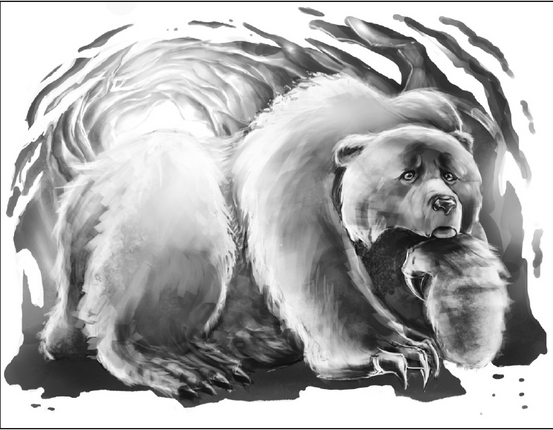
Picture from bobkehl of deviantart and not in the book but did not want this to be too wall of texty
Although technically covered in the Northlander section, there an in-depth discussion on classes. Unlike other settings Northlands has classes which are “banned” or at least heavily discouraged or changed around. The setting is more or less Early Middle Ages/Viking Era in technology and aesthetics: Alchemists, cavaliers, gunslingers, inquisitors, monks, ninja, and samurai are almost invariably foreigners from the Southlands (catch-all term for everyone south of the Northlands). The book notes that the PCs are meant to be heroes of an epic saga, and should be able to break the mold via a good backstory of how they came upon these strange traditions.
Classes which are reflavored for the setting include Barbarians, who are holy men and women of Wotan (Odin) who struggled with violent impulses but learned to tame their inner fires via divine guidance. They are either Bearsarkars or Ulfhanders, new archetypes described later in new rules in Chapter 4. Bards are known as skalds and well-respected for their inspiring abilities and knowledge of history and culture in spite of their arcane powers (which they try to disguise as “natural ability”). Clerics and Druids are a rare sort of godi (who normally don’t cast spells) who made a pact with a specific deity to carry out their will. Nûklander druids are an exception, who don’t worship the gods but instead call upon the spirits of nature to grant them power. Fighters are perhaps the most common PC class among the Northlands in general, but Monks are typically seem as having a near-supernatural control over their bodies and distrusted. Paladins are all-female spear maidens who pledged their services either to Baldr, Donar (Thor), or Wotan (Odin) but are seen less as holy warriors but rather defenders of home and clan whose abilities are derived from the blessings of wyrd (fate). Rangers are the next most common class after Fighters, usually of the non-magic-using archetypes (I don’t know if any such exist in Pathfinder tho). Rogues are surprisingly rare, the justification that theft is a major crime, there are not many locks and mechanical traps save in the ruins of the Andøvan, and what “organized crime” exists in the Northlands are less thieves’ guilds and more bandits, raiders, and the Jomsvikings who are decidedly more martial in nature. Arcane spellcasters of all stripes are exceedingly rare to the point of only really being known in myth and legend and when encountered most people assume them to be dangerous, and summoners are particularly hated for belief that their minions come from the Ginnungagap (primordial cosmic void) or the creations of demons and giants. The only two exceptions to this mistrust are the aforementioned bards and cunning women, an all-female sorcerous bloodline supplemented with healing powers. Both of these disciplines are well-respected professions. Seagestrelanders are more open and view magic of all kinds as blessings of the gods, whereas Nûklanders outlaw all types of magic save non-deific druidism.
And so ends our first chapter!
Next up is Odal, the Lands!
Note: In the interests of disclosure, the president of the publishing company for this book had several allegations levied against him at PaizoCon. I am still posting this review in part due to the fact that the book itself was the creation of a company outsider whose work was published (and modified with some notes in the second half) by Frog God Games, so to me at least the Northlands Saga is more the baby of its original author Ken Spencer. All the same, I want to forewarn others for potential purchasing decisions.The Northlands Saga Complete is a Norse-themed sword and sorcery adventure path and campaign setting. Made for both Pathfinder and Swords & Wizardry, it is a far-ranging epic inspired by the culture and folklore of the Viking era, and for the past year I have been running it for a weekly Sunday group. Although like any level 1 to 20 Pathfinder campaign it has its system-related warts (and some questionable plot and narrative choices), it helped create a campaign that has been lots of fun, and with all the notes and work I’ve done on it I decided to make an in-depth review.
So a brief history of the publication. Back in 2011 when Skyrim was the next big thing and the hills were alive with the sounds of thu’um, Frog God Games began working on a playtest for a Viking-themed adventure. One of the chief writers, Ken Spencer, was an archeologist and history teacher who had a deep passion for medieval Scandinavia and its legends, and sought to create a setting which borrowed heavily from that region’s cultural aspects. Four adventures were made in total set in the Northlands, but the line was put on hold for five years until a successful KickStarter produced a massive book with the original adventures plus eight new ones and a complete setting to boot.
Northlands Saga Complete is split into two major sections: the Northlands Saga Campaign Guide and the Northlands Saga Adventure Path. After that are several appendices of player handouts and maps (both player-friendly and GM eyes’ only versions), pregenerated player characters, and a bonus stand-alone adventure. We are going to cover the Campaign Guide here first.
Hagalaz, Hail!
This is the introductory chapter covering the overall feel of the world, the regions’ history, and a discussion on Kennings (compound expressions with metaphorical meanings often used in poetry). Basically the Northlands is part of the wider Lost Lands campaign setting published by Frog God Games, but the influence of the rest of the world is minimal enough that the Northlands may as well be its own. The Northlands is a low magic sword and sorcery style realm where most of civilization are villages at best and while magic is a common occurrence in the form of cunning women and folkloric charms it is rarely understood and wholly accepted. The setting has fantasy races, but is humanocentric in a Ravenloftian vein where dwarves and elves are isolated, halflings and gnomes don’t exist, and cannon fodder baddies tend rival Vikings, cultists, and various kinds of giant-kin instead of kobolds, goblins, and orcs.The Northlands proper is sits on the northern reach of Akados, the major continent of the Lost lands, and the southern reach of the arctic continent of Boros. It has a Meditteranean-style geography where a central North Sea dominates the center and the various lands circle around it and sea travel is a vital aspect of life.
History The region has been home to thousands of years’ worth of immigration, with the ethnic Northlander humans the most recent arrival (800 years ago). The first settlers were the Andøvans, who mastered bronze-working and whose cultural legacy is only known via the large amount of haunted mountain ruins and barrow mounds left behind. They went to war against invading trolls and lost, causing their culture to cease to be. A thousand years later the next group of settlers were a tribe of elves known as the Nûk on a religious pilgrimage. With the forest the only place unclaimed by the numerous trollish tribes they and settled there in secret.
1,500 years later, a tribe of humans known as the Uln arrived and unsuccessfully warred against the trolls. They went further north and settled into newly-discovered city ruins, which had buried texts dedicated to the demon lord Althunak whose growing cult plunged the cities into bloody war. The Uln driven from the cities soon became the Ulnat, the fantasy counterpart-Inuit people of the Northlands. The Lord of Ice and Stone’s cult held sway for a time until a hero, Hvran the Half-born, earned the trust of several tribes and led a band of heroes. They fought a mighty battle against the demon-god himself, and Hvran sacrificed himself to trap Althunak beneath a frozen lake.
150 years later a group of Hel worshipers are contained in a walled-off peninsula after war with others. There was a dude named Swein Sigurdson who thought that Hel had it all wrong and fought and escaped with like-minded people into the not-Underdark, where Swein received a vision from Wotan, head of the Æsir who told him of a new place to settle which turned out to the the troll-occupied Northlands. Traveling through the Under Realms for months they finally found light and fought a war against the trolls. They won, the giants were driven off, Swein Sigurdson was declared the High King, and the society of modern Northlanders came into being.
TL;DR Barrow-building humans fight and lose against trolls, elves migrate to the forests, the not-Inuit defeat not-Sauron, not-Nordics are led by Odin through the Underdark to the Northlands and drive off the trolls. And if you’re wondering what the deal with the seeming disconnected events is, they tie into the later campaign to various extents. Especially Althunak who is more or less the BBEG of the Northlands Saga.
Kennings
Along with a pronunciation guide on Nordic spellings not present in English, the last section of the introduction discusses the concept of kennings, or word pictures expressed by skalds and reciters of oral traditions. Quite a bit of in-game text and NPC conversation makes use of such kennings, although not overly so (mostly important and well-spoken NPCs). Basically they are ways to paint a picture of common concepts via metaphors, references to godly traits, and the like. It gives a sample list of common kennings as a means of using them in your own campaign.
Word on Pronunciation wrote: Pronunciation of words from a Nordic base is no easy task to a non-Nordic tongue, and many of the place names, and names of gods and heroes are just that. They are not, for the most part, intended to be a true rendering of Norwegian or even ancient Norse words and names, but they are meant to convey that flavor. As a result, there are some spelling habits that are perhaps strange to the eyes of many gamers. As a result, we’ve included a little bit of a pronunciation guide, though it is no way meant to be a didactic or exhaustive discussion of the subject in any real-life context. It merely explains the conventions we have used in the Northlands Saga. As with anything game related, they are there for you to use or ignore as you see fit.
Of immediate note is undoubtedly the fact that many names end in an ‘r’ that do not normally do so. This final ‘r’ of Nordic origin is often left off in Western renderings, but to lend the air of legitimacy to our Northlands setting, we have opted to go for the older, more obscure spelling. However, in general the final ‘r’ is silent unless it follows a vowel, so that ‘Thor’ is still ‘Thor’, but ‘Grimr’ would be pronounced ‘Grim’. In the case of ‘Baldr’, however, conventional use would still pronounce it ‘Balder’, so this rule is far from absolute.
For vowels, ‘Æ, æ’ is usually pronounced like ‘eye’ or ‘ay’; ‘Á, á’ is pronounced like ‘ow’; ‘Ö, ö’ and ‘Ø, ø’ are pronounced like ‘oeh’, and the other accented vowels are held longer. Unaccented vowels usually have their long sound. The letter ‘Ð, ð’ is called ‘eth’. It is pronounced as a ‘th’ sound and is sometimes used interchangeably with the letter ‘Þ, þ’ (called ‘thorn’ and also pronounced with a ‘th’ sound).
While these hints by no means create a fully authentic pronunciation in terms of real ancient Nordic and Germanic languages, they will help you to catch the intended flavor and feel. However, if it is easier, just use the spellings for the look of them and make your pronunciations whatever is simplest for you. Use them as best fits your tastes.
Kennings wrote: Common Kennings of the Northlands
Alfar dwimmer: magic
Baldr’s bane: mistletoe
battle-dew: blood
blood-ember: axe
blood-worm: sword
breaker of rings: Køenig or jarl
Corpse-ripper: the dragon Nídhöggr, chews
upon the corpses of murderers, adulterers, and
oath-breakers
easer of raven’s hunger: generous leader
feeder of ravens: warrior
Freyja’s tears: amber
Hanged God: Wotan
Frigg’s thread: gold
icicle of blood: Sword or spear
Loptr’s favor: fire
Loptr’s mead: lies/deception
mind’s worth: courage/honor
moon distaff’s thread: silver
Rán’s hammer: waves
raven harvest: corpse
ring-giver: Køenig or jarl
sea-steed: ship
shame of swords: shield
Sif’s hair: gold
sky-candle: the sun
slaughter-dew: blood
Slayer of Giants: Donar
spear-din: battle
swan of blood: raven
sword-sleep: death
wave-cutter: ship
wave-swine: ship
wave thread: sea serpent
Wotan’s children: raven
weather of weapons: war
whale road: sea
wolf-hearted: coward, oath-breaker, one
without mind’s worth
wound-hoe: sword
wound-sea: blood
Chapter 1: Mannaz, The Peoples
The chapter starts off by mentioning that in terms of D&D races the Northlands is not as varied as the typical setting or other places in the Lost Lands. Only humans and Nûklander elves have any significant population size (with a few half-elves around), and the few dwarves around are relegated in small communities in the two largest towns. Halflings, gnomes, and elves of other tribes are individual foreigners if they come into the region. Orcs, half-orcs, goblins, bugbears, and gnolls are virtually absent, but replacing their niche are all varieties of giant. Just about every type of Monster Manual giant can be found in the Northlands along with some new ones in this book, and there are many varieties of trolls. The setting mentions that giants in the Northlands are always of Evil alignment, and giant and troll-blooded people merely a strong tendency than an inherent trait. Funny enough, although the pre-generated PCs include a dwarf, there are about 200 total in the biggest towns, and are kind of a being in Norse mythology, they don’t get a write-up in this chapter at all and are more or less “invisible” in the adventure path.There is a brief entry on languages, with some interesting notes: one, there is a “Common” tongue but it’s spoken far south in lands once dominated by an expansive empire which never touched the Northlands and so isn’t a language you start play with automatically. The lingua franca of ethnic Northlanders is Nørsk, with the written version known as Runic and treated as a separate language (literacy is rare and effectively an art all its own). Andøvan is now a dead language, and Nûklander, Seagestrelander, and Ulnat are spoken by their respective cultures. Two demonic cults, the Beast Cult and the Children of Althunak, respectively use Beast Cult Sign Language and Old Uln as secret code tongues.
The Northlanders are the most populous human cultural group in the setting and pretty much fantasy counterpart Scandinavians. Although no strangers to warfare, most Northlanders live an agricultural lifestyle of growing crops and animal husbandry. Still, their economy is supplemented by warfare, trade, and raiding and almost every family owns several weapons for self-defense and chainmail if they’re well-to-do. They have a hierarchy of social classes ranging from thralls (slaves, usually foreigners or those in debt), freemen (majority of Northlanders), and jarls (Northland leaders who have enough wealth and goodwill to get the other social classes to pledge their lives to them). Northland social structure is not ironclad; thralls can buy their freedom, and in some lands a jarl’s influence is tempered by democratic assemblies known as Things or fall out of influence if his competence falters.
The rest of the section is rather wordy, but I can point out a few interesting things: Northlanders don’t use horses for warfare (they are meant for travel); many of them have a social gathering known as a Thing where every person can cast a vote for matters of laws, crimes, and public works projects; the laws of housing where a guest and host have mutually-beneficial social contracts; and that religion is a low-key affair where local priests known as godi are a part-time local position and that actual spellcasting clerics and druids are very rare specialized godi who forged a bond with a specific deity.
Next up are the Nûk or Nûklanders, elves who are more or less fantasy counterpart-Sami. They are the descendents of a persecuted cult whose god said that he would lead his people north to a bountiful land far north. After several civil wars encouraged them to move thousands of miles to the promised land, they found that their dream destination was far from hospitable. Betrayed, the people turned against the more devout followers and leaders in a night of slaughter and forsook worship of the gods in favor of calling out to the spirits of nature.
Nûklanders primarily live in the forests and tundras of the Northlands’ northernmost reaches and beyond as nomadic reindeer herders. They have some limited trade with the Northlanders of Estenfird and are on generally positive terms with them. Nûk societies are governed entirely by direct democracy councils (the concept of one person commanding many is a strange concept to them). Their society also greatly distrusts arcane magic, and practitioners face exile or death if they cannot conceal their talents. Druids, oracles, and rangers are the most common classes, with fighters rarer but when they do show up make for amazing cavalry with war-trained reindeer.
In game terms Nûklanders share the racial traits of Pathfinder elves, save that instead of gaining typical enchantment/sleep resistance and spell resistance/spellcraft bonuses they get cold resistance 5 and the silent hunter trait (reduce stealth penalties for higher speed by 5 and can use Stealth while running at -20).
The other human ethnicity detailed are the Seagestrelanders, and I am unsure what real-world culture if any they are meant to replicate. The term “Seagestrelander” is a catch-all for the hundreds of warring tribes that live between the southwest shores of the North Sea and the southern plains of the Sea of Grass. Most of them live within the forests of their namesake and the coastal shores, with expansion blocked off by natural geography. They are mostly farmers, herders, and fishermen and their lands are poor in mineral wealth. As Northlanders have metal goods, said group is willing to trade them iron weapons and armor in exchange for amber, gold, and slaves. This last commodity exacerbated the violence among the Seagestrelanders themselves and with Northlanders, with rival tribes selling off prisoners of war and Northlander vessels come to raid as well as trade.
Seagestrelanders build their villages around god-trees, the stumps of massive hollowed-out tree trunks where idol representations of their deities are placed. Funerary and worship rites take place here, and Seagestrelander spellcasters gain automatic Maximize Spell on all spells cast within 30 feet of a god-tree. Magic is even less common among them than the Northlanders, but when it does show up they are almost always honored regardless of their type of magic. All spells, arcane or divine, are viewed as gifts from the gods.
Seagestrelander characters are usually of the martial variety. The section mentions that Seagestrelander PCs will face difficulty in the Northlands, as the vast majority of them are thralls and generally assumed to be such by the populace. It mentions the idea of a slave PC, but doesn’t go in much on actual advice beyond “role-playing challenge for experienced and mature groups.” Interesting thing is, slavery and thralldom isn’t really touched upon in the adventure path, and demographics-wise thralls make up a very small portion of the population (one to five percent in places and almost never past ten percent).
Although not detailed here, one human ethnic group I wanted to touch on are the Ulnat or fantasy counterpart Inuit. They live in the Far North, an arctic region north of the Northlands dominated by tundra and mountains. Like the Northlanders they are a heavily maritime people, relying upon the sea for their livelihood. They are a society of hunters and trappers because their native environs are unsustainable for agriculture, and their main method of transportation on land are sled dogs. The sourcebook does not make much mention of their religious and cultural traditions beyond the fact that the heroes who overthrew the Cult of Althunak are buried in small tombs with their prized possessions.
The Giant-blooded are one of the 2 entirely new races of the setting. They are like half-elves or half-orcs in that they are either the product of a human-giant union or more rarely two human parents. Giant-blooded infants not raised by giants are usually killed at birth, and those who are spared are relegated to the fringes of society on account of giants’ negative reputation. A few jarls keep giant-blooded around for their great physical strength for both farming and warfare purposes, but others treat them as freak shows to show off to entertain guests. Giant-blooded rarely if ever appear among the Seagestrelanders, and given the Ulnat’s geographic position unknown among them. They are quite likely to be adventurers on account of societal prejudices and innate wanderlust pushing them to move.
Stat-wise giant-blooded are almost entirely built to be melee warriors. They have +4 Strength, +2 Constitution, -2 Dexterity, and -2 Charisma. They are Large, have a Reach of 10 feet and speed of 40 feet on account of their large frames, and to offset the size and Dexterity penalties to AC they have +1 natural armor. Low-light Vision is their only ability not explicitly “muscle-based,” so if you’re going to be giant-blooded your role is more or less determined for you unless you’re going for a self-imposed challenge.
The other new race are the Troll-blooded who are much like the giant-blooded save they are even rarer, more physically monstrous, even more vilified, and have a strong persistent hunger that is a drain on larders during wintertime. Those not slain at birth are either hidden away from the rest of society or treated as expendable thralls to be thrown in battle against one’s enemies. Troll-blooded adventurers become so mostly to find a means to satiate violent drives and their hunger (the book notes that heroes eat well no matter their ancestry).
Stat-wise troll-blooded are melee-friendly, but not as much as the giant-blooded. They have +2 Strength, +4 Constitution, and -4 Charisma. They are Medium size and have darkvision to a range of 60 feet, along with a pair of claws that deal 1d4 damage and the Ferocity trait which is similar to the half-orc’s save that you are staggered when you fall below 0 hit points. In line with their heritage, their last two traits are the ability to safely eat any organic substance and immunity to ingested poisons from this, and take 1 more damage per damage die from fire-related attacks.
Troll-blooded are a bit more versatile than giant-blooded on account that their racial traits are a bit all over the place. Their claws and ability to eat anything are very situational, but ferocity is effectively a free Diehard feat. The Strength and Constitution bonuses are nice, although the giant-blooded’s reach is a more attractive option for melee types.
Classes
Picture from bobkehl of deviantart and not in the book but did not want this to be too wall of texty
Although technically covered in the Northlander section, there an in-depth discussion on classes. Unlike other settings Northlands has classes which are “banned” or at least heavily discouraged or changed around. The setting is more or less Early Middle Ages/Viking Era in technology and aesthetics: Alchemists, cavaliers, gunslingers, inquisitors, monks, ninja, and samurai are almost invariably foreigners from the Southlands (catch-all term for everyone south of the Northlands). The book notes that the PCs are meant to be heroes of an epic saga, and should be able to break the mold via a good backstory of how they came upon these strange traditions.
Classes which are reflavored for the setting include Barbarians, who are holy men and women of Wotan (Odin) who struggled with violent impulses but learned to tame their inner fires via divine guidance. They are either Bearsarkars or Ulfhanders, new archetypes described later in new rules in Chapter 4. Bards are known as skalds and well-respected for their inspiring abilities and knowledge of history and culture in spite of their arcane powers (which they try to disguise as “natural ability”). Clerics and Druids are a rare sort of godi (who normally don’t cast spells) who made a pact with a specific deity to carry out their will. Nûklander druids are an exception, who don’t worship the gods but instead call upon the spirits of nature to grant them power. Fighters are perhaps the most common PC class among the Northlands in general, but Monks are typically seem as having a near-supernatural control over their bodies and distrusted. Paladins are all-female spear maidens who pledged their services either to Baldr, Donar (Thor), or Wotan (Odin) but are seen less as holy warriors but rather defenders of home and clan whose abilities are derived from the blessings of wyrd (fate). Rangers are the next most common class after Fighters, usually of the non-magic-using archetypes (I don’t know if any such exist in Pathfinder tho). Rogues are surprisingly rare, the justification that theft is a major crime, there are not many locks and mechanical traps save in the ruins of the Andøvan, and what “organized crime” exists in the Northlands are less thieves’ guilds and more bandits, raiders, and the Jomsvikings who are decidedly more martial in nature. Arcane spellcasters of all stripes are exceedingly rare to the point of only really being known in myth and legend and when encountered most people assume them to be dangerous, and summoners are particularly hated for belief that their minions come from the Ginnungagap (primordial cosmic void) or the creations of demons and giants. The only two exceptions to this mistrust are the aforementioned bards and cunning women, an all-female sorcerous bloodline supplemented with healing powers. Both of these disciplines are well-respected professions. Seagestrelanders are more open and view magic of all kinds as blessings of the gods, whereas Nûklanders outlaw all types of magic save non-deific druidism.
And so ends our first chapter!
Next up is Odal, the Lands!




 ) and some devil and giant guards. The last room with the pentagram is Jasella's hall, where she plans to sacrifice a captive Sveni Ljotsdottir to her dark gods.


