Let's Read: Savage Worlds Adventure Edition & SWADE Deadlands
Posted: Tue Nov 18, 2025 7:21 pm
As I've continued looking at Western RPGs, it was suggested that I take a look at Savage Worlds to run a western. So I started taking a look, and I was shocked to find that it was just the Deadlands rules that I remember playing prior to the release of 3rd edition. Or at least, it seemed like it. Was Savage Worlds just Deadlands? If so, what was Savage Worlds: Deadlands?
I was getting confused as to where one began and where the next began.
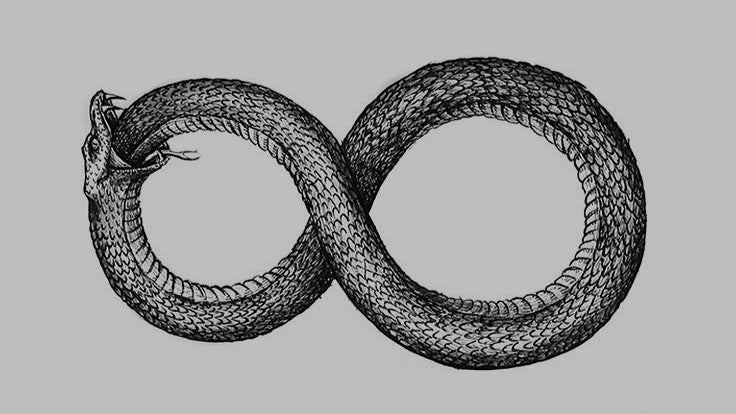
It became obvious I was going to have to do some investigation (but not much, because all of this has been explained). It turns out that the incestuous relationship between the two can all be traced back to White Wolf Publishing (as is so often the case).
Specifically, to the Cover of White Wolf Magazine #46:
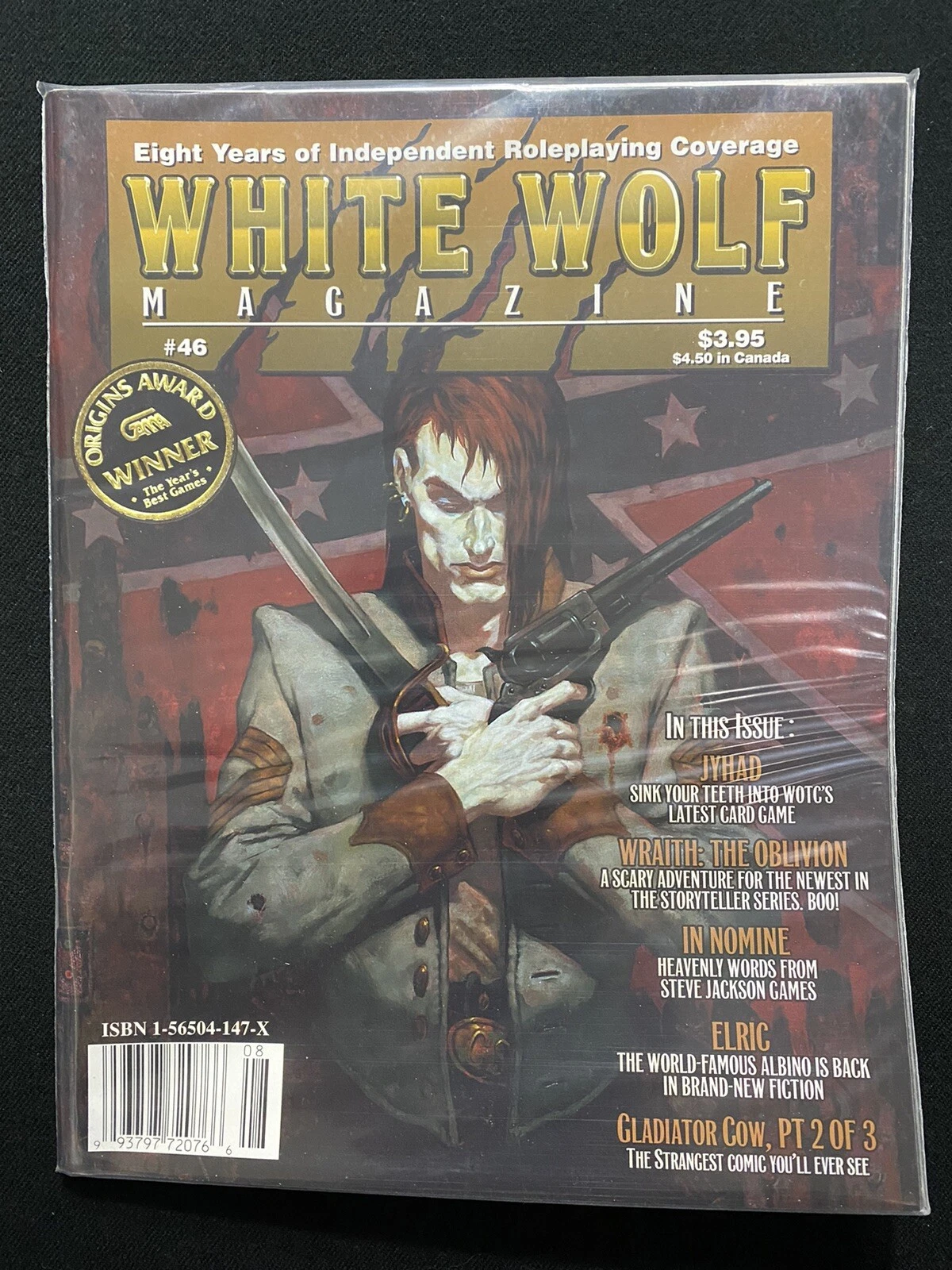
That image was the beginning of the creation of Deadlands. Long story short the mechanics of Deadlands were stripped from the game and then simplified. The new simpler rules were released as a generic game engine, and there are a host of supplements that apply these rules to different settings, including applying them back to the original Deadlands setting.
Mystery solved.
Now, Deadlands didn't run very quickly. I could spend a lot of time reading over the original rules, but in a nutshell you had a die size for your attribute (like d8) and [I lied, I did go back and read it] and you might have a skill of 4; in that case you roll 4d8. These are not added together, instead you take the highest single roll. Further, dice 'explode'.
This creates a weirdness in the power curve. A d4 is supposed to be worse than a d6, but if your TN is 6, a d4 succeeds 18.75% of the time and a d6 succeeds only 16.67% of the time.
The thing is, rolling 5d12 and then figuring out which is the highest (possibly tracking 2 or more exploding dice) isn't a particularly fast step. To simplify things, this was reduced to a single die. Instead of rolling 5d12, you'd just roll 1d12, and the TNs would have to remain lower to make that work.
For PCs, but not for minor NPCs, they introduce another die (usually a d6). You get to roll 1d12+1d6 and take the higher.
Deadlands did have advancement; you could spend XP to raise your attributes and skill modifiers. In part because characters were semi-random, and different characters got XP at different rates, it might be hard to compare two characters. Clearly a character that had many advancements would be better than a character that was just starting out, but none of that was codified. Inspired by D&D 3.x, they built a level-system and codified what increases you get at each level. They already had Feats (Edges) before 3.x, so characters could be customized. All of that makes it into the new system.
For myself, I'm wondering if two characters, one with a d8 and one with a d10 really represent any major difference in skill. Even if you're not adding dice, 5d10 is 41% likely to produce a 10 (before exploding) while 2d10 is only 19% - someone with more dice is clearly going to succeed at a difficult task noticeably more often. I'll table that since we're not even in the 'real rules' - just the overview of how the rules got created.
Originally hitting something was Roll to Hit, Roll to Defend, Roll to Wound, Roll to Resist (sounds like Warhammer 40k). Changing the resists to static values for hitting (like 3.x) cut the rolls down. While that covers hitting something, damage was also convoluted. To deal damage you have to overcome a threshold based on the targets Vigor and Armor; these values can be high, so often weapons weren't actually hurting anyone; or, if they did it was because of exploding dice. To fix this, each raise (4+ relative to the DC to hit) you get +1d6 damage.
That is, if you're attacking with a sword that does STR (1d10) + 1d6, and you hit a TN 4 with a 12, you qualify for 2 raises, so you get 1d10+3d6. For PCs, 'bennies' can potentially negate a portion of the attack. Since the damage threshold may be too high to damage someone without an ace, two hits that don't cause enough damage equal a wound... I'll expand on this later.
That covers the intro to the intro. Next up I'll dive into the rulebook for Savage Words Adventure Edition (SWADE) - the rules engine with all the setting info removed (212 pages); then I'll look at the Deadlands setting book, which puts all the setting rules back in (200 pages). And then hopefully I'll look at the Deadlands 20th anniversary edition, which appears to be a reprint of the original rules (413 pages).
With this much too look at, I'm not planning on going into great depth. I'll try to include examples of the types of abilities that are given, but not do an exhaustive review of those abilities.
I was getting confused as to where one began and where the next began.
It became obvious I was going to have to do some investigation (but not much, because all of this has been explained). It turns out that the incestuous relationship between the two can all be traced back to White Wolf Publishing (as is so often the case).
Specifically, to the Cover of White Wolf Magazine #46:
That image was the beginning of the creation of Deadlands. Long story short the mechanics of Deadlands were stripped from the game and then simplified. The new simpler rules were released as a generic game engine, and there are a host of supplements that apply these rules to different settings, including applying them back to the original Deadlands setting.
Mystery solved.
Now, Deadlands didn't run very quickly. I could spend a lot of time reading over the original rules, but in a nutshell you had a die size for your attribute (like d8) and [I lied, I did go back and read it] and you might have a skill of 4; in that case you roll 4d8. These are not added together, instead you take the highest single roll. Further, dice 'explode'.
This creates a weirdness in the power curve. A d4 is supposed to be worse than a d6, but if your TN is 6, a d4 succeeds 18.75% of the time and a d6 succeeds only 16.67% of the time.
The thing is, rolling 5d12 and then figuring out which is the highest (possibly tracking 2 or more exploding dice) isn't a particularly fast step. To simplify things, this was reduced to a single die. Instead of rolling 5d12, you'd just roll 1d12, and the TNs would have to remain lower to make that work.
For PCs, but not for minor NPCs, they introduce another die (usually a d6). You get to roll 1d12+1d6 and take the higher.
Deadlands did have advancement; you could spend XP to raise your attributes and skill modifiers. In part because characters were semi-random, and different characters got XP at different rates, it might be hard to compare two characters. Clearly a character that had many advancements would be better than a character that was just starting out, but none of that was codified. Inspired by D&D 3.x, they built a level-system and codified what increases you get at each level. They already had Feats (Edges) before 3.x, so characters could be customized. All of that makes it into the new system.
For myself, I'm wondering if two characters, one with a d8 and one with a d10 really represent any major difference in skill. Even if you're not adding dice, 5d10 is 41% likely to produce a 10 (before exploding) while 2d10 is only 19% - someone with more dice is clearly going to succeed at a difficult task noticeably more often. I'll table that since we're not even in the 'real rules' - just the overview of how the rules got created.
Originally hitting something was Roll to Hit, Roll to Defend, Roll to Wound, Roll to Resist (sounds like Warhammer 40k). Changing the resists to static values for hitting (like 3.x) cut the rolls down. While that covers hitting something, damage was also convoluted. To deal damage you have to overcome a threshold based on the targets Vigor and Armor; these values can be high, so often weapons weren't actually hurting anyone; or, if they did it was because of exploding dice. To fix this, each raise (4+ relative to the DC to hit) you get +1d6 damage.
That is, if you're attacking with a sword that does STR (1d10) + 1d6, and you hit a TN 4 with a 12, you qualify for 2 raises, so you get 1d10+3d6. For PCs, 'bennies' can potentially negate a portion of the attack. Since the damage threshold may be too high to damage someone without an ace, two hits that don't cause enough damage equal a wound... I'll expand on this later.
That covers the intro to the intro. Next up I'll dive into the rulebook for Savage Words Adventure Edition (SWADE) - the rules engine with all the setting info removed (212 pages); then I'll look at the Deadlands setting book, which puts all the setting rules back in (200 pages). And then hopefully I'll look at the Deadlands 20th anniversary edition, which appears to be a reprint of the original rules (413 pages).
With this much too look at, I'm not planning on going into great depth. I'll try to include examples of the types of abilities that are given, but not do an exhaustive review of those abilities.