It's not hard to nail down a schtick for them. Precognitive kung fu is an established trope that justifies straight combat bonuses, but you could also do a thing where you show up to a fight knowing your enemies' secret weaknesses and throw down debuffs by exposing their macho fighter as a virgin or because one guy is allergic to cats and you had a dream which told you to carry around a pocketful of cat dander; that part would have to be abstracted, obviously, but I think its got some legs. Hell, it could just be prophetic curses: "I can see the future; you don't have any." "Your horoscope says you're likely to be killed by Elothar of Bladereach; who is conveniently right here."FrankTrollman wrote:Because while divinations are awesome, it's not at all clear what a Diviner does in combat.
Warlock, 3rd Edition (okay, let's make TOME a complete game)
Moderator: Moderators
-
angelfromanotherpin

- Overlord
- Posts: 9752
- Joined: Fri Mar 07, 2008 7:54 pm
So Halfling Rangers are otherwise acolytes of Yondalla? Automatically?FrankTrollman wrote:If you happen to be in a Gnoll tribe and you are buff relative to the other people in the tribe and you're a Blighter, you're a "Priest of Yeenoghu". If you happen to be in a Halfling community and you're a badass Ranger, you're a "Priest of Yondalla".
Because you don't just have Priests. Yes, in monster mobs you may or may not have a Priest and if you do he's just a buffer version of the other monsters.
But in cities and temples you have acolytes - you can declare that all such robe-wearing acolytes are members of the religion's favored class, but you still need a common set of skills and non-magic abilities which the robe-wearing-bureaucrats all get. They're not wizards - wizards know alchemy and stuff, not theology.
You can if you wish say that all "White Mages" get the non-magic abilities of "sense motive" and "deliver sermon", in which case you have renamed the cleric rather than removed the cleric, and you still have the problem that any time any religion wants to be a real religion instead of a bunch of gnolls eating each other and squatting in the dirt, they need White Mages to run things. You'd then have a situation where people who want free food are going to travel around pretending to be "white mages" rather than pretending to be clerics. I'm not averse to renaming the Cleric - but that's still a Cleric.
I think it's much preferable to seperate that non-combat skill set and have a class, need not be called a cleric, call it a "Mage Official" or even a "Scholar". Mage officials are magic users who are also trained to be fixer/operatives for a central authority. So they always get spells needed to maintain central authority, like Consecrate, Detect Chaos and Atonement. Then, they have modest military training, good social skills, and they are trained in how to look like they should be the one wearing the stupid hat. This will fill the need of some players to have a character who has been sent out of the temple to serve their deity, and has training in being a guy in a temple, completely distinct from whatever magic he gets; he's also a naif and a comedy-relief virgin. Finally, this guy is also a smurfing cleric, in the exact same way that a black-clad killer for a hire is an assassin. He doesn't need to be a better fighter than the Monk, so if you want to not call him a Cleric to avoid all that baggage, fine. But he shouldn't have to be a "White Mage" either.
Two sets of seven, tops. You remember your previous rants about happiness and tyranny of choice, and so forth?You could really honestly have any number of magic types. There is no reason for cure disease to be in the same spell list as flame strike and no reason for minor image to be in the same spell list as dimension door. There is literally no limit to the number of magical types you could throw around.
You can make two distinct selections from lists, each of which has no more than 7 options, which is what the whole "orientation" thing is about.
Diviners are gay. Solved.I agree that they need to be split up, but I do not see how "orientations" fixes that issue.
-Username17
I said "orientation" because "school" has all of this baggage.
Anyway, if you go 6x6 you get 36 different spellcasters and you only have to write up 12, a 3:1 value proposition that you cannot deny. Here's another way it could go:
magic-users:
- Paladin - Spiritual
- Monk - Martial
- Ranger - Nature
- Sorcerer - Arcane and Xummoning
- ClericArcanist - Arcane and Spiritual
- Wizard - Arcane and Nature
orientations:
- Sidereal - Wall of Force (S), Color Spray (A), Healing Light (S), Star Fires (N), Fist of the North Star (M), Call Lantern Archon (X), Silent Image (A),
- Elder - Fireball (A), Wall of Fire (A), Sleep (A), Regenerate (S), Mind Shield (S), Hands without Shadow (M), Ghost Sound (A).
- Cthonic - Animate Dead (X), Earthquake (A), Dig (A), Wall of Stone (S), Stoneskin (S), Entangle (N), Healing Earth (S), Endure Elements (S), Iron Kiai (M).
- Visceral - Withering (A), Stinking Cloud (A), Bind Succubus (X), Martyr's Healing (S), Blood Vengeance (S), Fist of the South Star (M).
- Tempestuous - Cone of Cold (A), Gust of Wind (A), Haste (A), Lightning Bolt (A), Summon Air Elemental (X), Thunder Fist (M), Repel Missiles (S), Wind Wall (S).
- Nihilistic - Darkness (A), Soul Binding (X), Magic Jar (X), Fear (A), Silence (S), Invisibility (A), Purge (S), Blindness (A).

What the fuck are you on about, DrP? If the only thing that makes a Priest a Priest is the status of being a Priest, why not make Priest a background and be done with it?
FrankTrollman wrote: Halfling women, as I'm sure you are aware, combine all the "fun" parts of pedophilia without any of the disturbing, illegal, or immoral parts.
K wrote:That being said, the usefulness of airships for society is still transporting cargo because it's an option that doesn't require a powerful wizard to show up for work on time instead of blowing the day in his harem of extraplanar sex demons/angels.
Chamomile wrote: See, it's because K's belief in leaving generation of individual monsters to GMs makes him Chaotic, whereas Frank's belief in the easier usability of monsters pre-generated by game designers makes him Lawful, and clearly these philosophies are so irreconcilable as to be best represented as fundamentally opposed metaphysical forces.
Whipstitch wrote:You're on a mad quest, dude. I'd sooner bet on Zeus getting bored and letting Sisyphus put down the fucking rock.
Again, you could say the same thing about assassins. If you were determined to have an assassin not-be-a-class, you'd say "if the only think that makes a PC an assassin is that he kills people for money, why not just let that be a business connection and be done with it?"Mask_De_H wrote:What the fuck are you on about, DrP? If the only thing that makes a Priest a Priest is the status of being a Priest, why not make Priest a background and be done with it?
You have to make classes out of something and cleric makes ten times as much sense as a thing to make a class out of than just about anything else.
It's a good and useful shortcut to the skills and abilities you have, a shortcut to plenty of tropes, and so forth. Among the available kits, it's among the best defined.
Now, it's been heavily abused by D&D in a critical way, because absolutely every religion in the game has been forced to sustain an order of mace-wielding Dominican Friars for no good reason. But that doesn't mean that "Friar" - do we prefer "Friar"? - is a bad class. It's a really, really good class based on all of the features by which a class can be judged to have utility.
Consider the things that Friars do:
[*] They know a lot of theology. When Gods are real, this matters. So a Priest knows how to pass through the vault of death without offending the resident spirits.
[*] They marry people, they preside at funerals, they bless buildings and crops. They are automatically skilled in judging and arranging all these things.
[*] They provide spiritual support to established authority when it dances to their tune. They are automatically skilled in blackmailing noble types with threats.
[*] They are highly trained sophists, so when people need a morale-boosting argument in favor of whatever the Friar wants them to do, the Friar can come up with some convincing-sounding logic.
[*] They are licensed and supported sophists - they know what kind of sophistic arguments you are supposed to make and which are heretical to avoid. There is also an organization that'll back them up but it's knowing the rules of that organization that is a character skill and therefore matters more than the title itself.
[*] They do wear a hat which says "trust me, I'm a priest."
[*] They travel around doing the will of their deity, which is a lot like saying "job: adventurer", and also means they have various road-ready skills, as well as being educated.
[*] They logically have pro-social or at least nationally-approved magic that they are licensed to have.
That's plenty of good material for a class. Compare to "scout" for example:
[*] Scouts are good at sneaking around, at least in the wilderness.
[*] Scouts are good at spotting other people who are sneaking around, at least in the wilderness.
[*] Scouts get from place to place quickly.
Now, in order to make Scouts competitive as a class, you have to give them very-good fighting skills, although there's nothing really in the class to suggest this; you could give them magic instead but that'd be even weirder.
You probably also have to give them some trickery-based social skills. So you take what the "scout" obviously gets and then tack on five or more other features which don't quite make sense in order to make a complete class.
vs. the Friar which is automatically a class.
Now, Friars don't have to be Priests - they can be monks, or functionaries of the anti-theist sorcerer bureaucracy - and Priests don't have to be Friars. Lots of religions aren't lead by people who are professionally-just-religious-all-the-time - the Church of Boccob is made entirely of magic-users (and maybe some magic-loving flunkies, but probably not) - but some churches need to be made of fully-professionalized priests ("Cleric" being the correct general term for such people.) In a band of Gnolls, the Priest is just whatever Gnoll is wearing a shrivelled human head on a chain around his neck.
But some religions are led by people who aren't just Priests, their total purpose in life is that they are Priests-all-the-time. Some of these are warrior-priests and can be better represented by Paladins, but some of these are cloth-wearer priests and the wizard just doesn't have the right skill set.
You could, it is true, in one way or another contrive not to have a Friar-type class because you are dead set against it and determined to take all those features and spread them around in some other way. You could do the same thing with any class up to and including Wizard. But if you're going to have a class-based system you'd be nuts to make your life needlessly difficult by not having "professionally-religious person" be a class.
-
OgreBattle

- King
- Posts: 6820
- Joined: Sat Sep 03, 2011 9:33 am
How does this relate to Tomes though?
Or is this more like a "ask tgd for advice on my heartbreaker" thread?
Or is this more like a "ask tgd for advice on my heartbreaker" thread?
Last edited by OgreBattle on Sat Jun 02, 2012 1:33 am, edited 1 time in total.
-
Midnight_v

- Knight-Baron
- Posts: 629
- Joined: Thu May 15, 2008 10:27 pm
- Location: Texas
I don't... entirely follow where some of these trains of thought are evolving into however, I'd like to add.
Soilder.
Berserker.
Champion.
.................................
Among All the names I find those the best.
I fought hard to explain why people need "fighters" before but Soilder, works really well, and isn't tied to "suck".
I don't like: Hero, because well its generic. Doesn't say shit about what you are.
The 3 above are easily recognizeable in my minds eye for every historical character and/or legacy character who's primary thing is "swording, but not sucking".
Soilder: just saying it makes me think of badass dudes, who are in shit situations... but are really rather okay with killing, drinking, or fucking under those conditions.
Further its not a stretch to be a super-soilder after a certain level.
Don't hate the world you see, create the world you want....
...If only you'd have stopped forever...Dear Midnight, you have actually made me sad. I took a day off of posting yesterday because of actual sadness you made me feel in my heart for you.

I definitely like Champion more than Hero. Soldier I like, but has a military implication which makes me not want to pick it up.
I wouldn't think Berserker is synonymous with swording badasses. The Man in Black, Achilles, Hector, Solomon Kane, Duncan Macleod, King Arthur... tons of non-frothy, non-ragey sworders who don't fit that moniker.
I wouldn't think Berserker is synonymous with swording badasses. The Man in Black, Achilles, Hector, Solomon Kane, Duncan Macleod, King Arthur... tons of non-frothy, non-ragey sworders who don't fit that moniker.
-
Midnight_v
- Knight-Baron
- Posts: 629
- Joined: Thu May 15, 2008 10:27 pm
- Location: Texas
erik wrote:I definitely like Champion more than Hero. Soldier I like, but has a military implication which makes me not want to pick it up.
I wouldn't think Berserker is synonymous with swording badasses. The Man in Black, Achilles, Hector, Solomon Kane, Duncan Macleod, King Arthur... tons of non-frothy, non-ragey sworders who don't fit that moniker.
You're list is in part really why soilder is so good.The Man in Black, Achilles, Hector, Solomon Kane, Duncan Macleod, King Arthur... tons of non-frothy, non-ragey sworders who don't fit that moniker.
Soilders: Achilles, Hector
Champions: Duncan, Arthur, and Solmon Kane
The Man in Black... I'm sorry Johnny Cash? The Guy from lost? lol...wut?
Seriously though, those are the best and defendable 3.
Berserker fits because well its the class for everyone from: Wolverine, and The Hulk, to Kali, and Cú Chulainn, as well as any possessed warrior dudes, fuck the entire werewolf idea now that I think of it.
The more I think of it the more I'm certain:
Berserker
Champion
Soilder
Don't hate the world you see, create the world you want....
...If only you'd have stopped forever...Dear Midnight, you have actually made me sad. I took a day off of posting yesterday because of actual sadness you made me feel in my heart for you.
Seems like Diviner is the obvious choice for NPC arcane spellcasters. The Angels go to Charlie and he scrys up their next quest.FrankTrollman wrote:The one I would say probably can't be made into a class people feel good about is the Diviner. Because while divinations are awesome, it's not at all clear what a Diviner does in combat.
-
Username17
- Serious Badass
- Posts: 29894
- Joined: Fri Mar 07, 2008 7:54 pm
This is the logic that gives us Aristocrat or Noble as a character class. And hard won experience shows us that is a terrible idea. A concept that does not have a character idiom (like "Fighter") is a bad class concept. But a concept that does not have a combat ability set (like "Aristocrat") is also a terrible class concept.DrPraetor wrote:But in cities and temples you have acolytes - you can declare that all such robe-wearing acolytes are members of the religion's favored class, but you still need a common set of skills and non-magic abilities which the robe-wearing-bureaucrats all get. They're not wizards - wizards know alchemy and stuff, not theology.
Priest is a terrible class concept. Not because it doesn't have an associated combat concept, but because it has all the combat concepts! A Priest of Wee Jas fights with a horde of skeletons, a Priest of Hieroneous fights by donning heavy armor and cutting things up with a sword, a Priest of Pelor fights by dropping protections, cures, and lasers. Your choice with the Priest class is to either have the vast majority of "priests" not be "priests" (the RuneQuest solution), or to have the priest class be able to do fucking everything and be an omni-class that makes everyone else feel small in the pants (the 3e solution). Both of those are bad.
Sorry: you can't salvage the Cleric without first jettisoning the entire multi-racial, multi-cultural, multi-doctrinal feel of a D&D-esque world. If you make a monotheistic setting, you could have a single Priest class. But if your setting looks anything like D&D has ever looked in terms of the Sahuagin worshiping a giant mythos-mouth at the bottom of the sea that spews forth devil-sharks while the Halflings worship a lady who carries a shield and a cornucopia while the Bugbears worship the god of ninjas - then it's never ever going to fly.
The moment you concede that this guy is not playing the same character class as this guy, this discussion is over. You can't have a character class that could plausibly do every single thing that any other character class could ever do. That's retarded.
The only solution is to have people be priests or not based on a non-class choice: background. The same as people are aristocrats or farmers or not based on their choice of background.
-Username17
Exactly. If you have a 'Friar' class, then that needs to be a very narrow class with only the abilities appropriate to a subset of the good-type gods. Otherwise, you've got a class that is expected to be far more powerful and important then many of your other classes, which is a design failure from the start. Sure, you can have a Friar class if you find it important. But it can't be the default class for all priests everywhere, because that covers all the conceptual space at one stroke, and that's too much narrative power for any one class.
FrankTrollman wrote:We had a history and maps and fucking civilization, and there were countries and cities and kingdoms. But then the spell plague came and fucked up the landscape and now there are mountains where there didn't used to be and dragons with boobs and no one has the slightest idea of what's going on. And now there are like monsters everywhere and shit.
-
Username17
- Serious Badass
- Posts: 29894
- Joined: Fri Mar 07, 2008 7:54 pm
Conquest of Elysium 3 has forty eight flavors of magic. Some have a fair amount of overlap, but others do not.
Now honestly, some of those are a little silly. Actually hell, some of them are a lot silly. But that's really the sort of direction you're going to want to go. Put down a table on page XX that has "the paths of magic in the known world" and it has like thirty things on it. And then you actually write up like 6 to 10 of them. If you do expansions, you expand by grabbing one of the previously unexplained magic titles and then just writing that one up.
-Username17
Infernal Magic
Elemental Magic
Pyromancy
Hydromancy
Storm Magic
Geomancy
Hedge Magic
Unlife
Dark Magic
Foul Magic
Blood Magic
Crystal Sorcery
Garnet Sorcery
Jade Sorcery
Onyx Sorcery
Silver Arcana
Spiritism
Fortune Magic
Solar Magic
Mysticism
Serpent Magic
Golden Arcana
Iron Arcana
Kuro Do
Prayer
Enchantment
Frost Magic
Dark Prayer
Wizardry
Shamanism
Invocations of the Sun
Invocations of the Moon
Invocations of the Rain
Invocations of the Land
Nahualli Magic
Command
Black Magic
Necromancy
Druidism
Witchery
Troll Magic
Deep Magic
Illusionism
Sage Magic
Dwarf Magic
Maladies
Beast Wards
Warrior Wards
- Adept
- Alchemist
- Alienist
- Artificer
- Battlemage
- Blood Mage
- Chronomancer
- Elementalist
- Enchanter
- Frost Mage
- Galecaller
- Geomancer
- Hydromancer
- Illusionist
- Infernalist
- Magus
- Necromancer
- Psion
- Pyromancer
- Runebinder
- Shadow Mage
- Shaman
- Sorcerer
- Summoner
- Transmuter
- Warlock
- White Mage
- Witch
- Wizard
-Username17
Midnight_v wrote: The Man in Black... I'm sorry Johnny Cash? The Guy from lost? lol...wut?
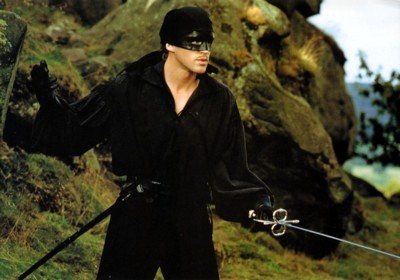
Him. =-) I guess I could have said The Dread Pirate Roberts.
I didn't mean that Soldier or Berserker was no good at all, just that it I had a brain-melt where I for some reason thought you meant any one of those was a better blanket replacement, rather than that the combination of those 3 covers a wide range of characters (to which I heartily agree).
Now, I am not sure mechanically what difference it makes to be a Soldier vs a Champion. Berserker has some sort of rage component, so they're easy to parcel out, but they could probably fall under the same class just on a different track for abilities.
[edit: also MiB should be a Swashbuckler/Agile Warrior, so I don't know why I included him in the Mighty Warrior group. Shame on me]
Last edited by erik on Sat Jun 02, 2012 2:32 pm, edited 1 time in total.
I think a spellcaster needs both a list of magic spells and a schtick.
"White Mage" is not a schtick, neither is "Enchanter".
Mendicant Friar, of course, is a schtick, but we can make progress on other points and then add that back if needed. But you should be able to have the same schtick but a persistently different selection of spells. Which brings me back to my class X splat proposal which I still like.
Again, culling down the list of classes:
[*] Adept - could mean anything or nothing, but I assume we mean either SHAMAN or SUPER_MONK by this one.
[*] Alchemist - is a 1st grade schtick and the best name for CHANGER.
[*] Alienist - is a 2nd grand schtick. Really, being an Alienist is more of a non-combat disadvantage, because it implies you are cursed or insane or something. That's cool, but it means that whatever magic you get would then have to be better than other people's since other magicians get non-combat advantages to go with their magic, and that's a game balance headache. Or, could just be a name for SORCERER.
[*] Artificer - I'll point out that by your avowed standard - most people who professionally make magic items will not be artificers - this is a bad class. A decent name for a MAKER type mage if you have one.
[*] Battlemage - Is a lame name, so it doesn't matter than every implementation of this class has sucked. You could do a good implementation but why bother. Warrior mage is an awesome and desirable schtick, but should be filled by multi-class Champion/(Magic Class) rather than by a specific hybrid class which presumably hybridizes only one of the many available types of magic.
[*] Blood Mage - Are these the only guys who get to do human sacrifice? Or another flavor of SORCERER?
[*] Chronomancer - No one gets to be BLUE. All aspects of BLUE need to be split up between different magic classes.
[*] Elementalist (and Frost Mage, Galecaller, Geomancer, Hydromancer, Pyromancer) - You're not going to give elemental magic to the elementalist exclusively, so they need something else to distinguish them. The class called "Warlock" in Rifts etc. is actually a pretty good one - they have more empathy for elementals than other humans, they have a bunch of weird skills, it works.
[*] Enchanter - Is a decent name for a generic WIZARD, but has baggage in that it implies they're the ones who get sleep or something, when obviously several people need to get that. Could be a MAKER instead.
[*] Illusionist - Is fine as long as they get sneaky/charlatany skills to back up a reduced magic selection.
[*] Infernalist - Is a good name enough name for a SORCERER, implies demons of course but could just be a pyromancer with attitude.
[*] Magus - has a "good" conotation all by itself so I'd prefer this for WHITE_MAGE.
[*] Necromancer - a classic, obviously.
[*] Psion - no-one can be BLUE, but I'm not sure what else a PSION would get. They'd all get telepathy and telekinesis, surely? Why even start with this, though.
[*] Runebinder - I prefer "Runesmith" but a decent name for a MAKER mage.
[*] Shadow Mage - Meh. Shadows are cool but the word shadow is not.
[*] Shaman - Decent name for a SHAMAN of course.
[*] Sorcerer - I think SORCERER sounds cooler than the various alternatives, so should just use it for anyone with dangerous or unsavory magic.
[*] Summoner - a dozen different cooler names are available, including Conjurer which you didn't list.
[*] Transmuter - lame name for a CHANGER, do Alchemist instead.
[*] Warlock - Is a good enough name for a SORCERER, or could be something else entirely.
[*] White Mage - Meh. Use Magus for WHITE_MAGE instead.
[*] Witch - Is a female Warlock or female Wizard, surely? Having both just confuses people I think.
[*] Wizard - Is a classic, of course, but in exchange for narrowing the magical focus somewhat should have some non-magical skills, implicitly wizards should be world-weary vagabonds rather than tower-educated naifs.
And you didn't even pull out Theurg, Thaumaturge or Conjurer.
Chaosium rules are made of unicorn pubic hair and cancer. --AncientH
When you talk, all I can hear is "DunningKruger" over and over again like you were a god damn Pokemon. --Username17
Fuck off with the pony murder shit. --Grek
When you talk, all I can hear is "DunningKruger" over and over again like you were a god damn Pokemon. --Username17
Fuck off with the pony murder shit. --Grek
-
Midnight_v
- Knight-Baron
- Posts: 629
- Joined: Thu May 15, 2008 10:27 pm
- Location: Texas
Hmm... I was thinking about your example frank. . . The one where you point out any Moses, pastiche, and any Priest of Yawgmoth. I can see a mechanical way to do that, 3rd tried and failed to do it.
Now of course REALIZE, I'm not saying that its particularly "better" but that there can be a situation in which those two are compatible as the same thing.
In 3.5 there was the cleric spell list and domains to differentiate. So going with that you give Priest(ugh, hate the name) all priest a generic set of lets say "Miracles" they're granted each day for virtue of being a priest, then they have a spell list set by sphere, or vice versa.
Why? Every priest has the ability to heal his people, cure basic sickness and Ward against hostile outsiders (regardless of denomination), and has basic abjuration buffs.
It doesn't matter that the Fey priests gets his power from Oberon, and the Illithids get that power from an elder brain.
What does matter is that the priest gets the ability to "Medicine Man" up his people.
Now, all those other varations of priest are "That way" because of things granted specifically from: Nyarlhotep, or worshiping Athena, or fuck being a Taoist at all.
That was probbably too wordy it'd look like this:
PRIEST:
: Of Pelor!
: Of The burning hate:
Now of course REALIZE, I'm not saying that its particularly "better" but that there can be a situation in which those two are compatible as the same thing.
In 3.5 there was the cleric spell list and domains to differentiate. So going with that you give Priest(ugh, hate the name) all priest a generic set of lets say "Miracles" they're granted each day for virtue of being a priest, then they have a spell list set by sphere, or vice versa.
Why? Every priest has the ability to heal his people, cure basic sickness and Ward against hostile outsiders (regardless of denomination), and has basic abjuration buffs.
It doesn't matter that the Fey priests gets his power from Oberon, and the Illithids get that power from an elder brain.
What does matter is that the priest gets the ability to "Medicine Man" up his people.
Now, all those other varations of priest are "That way" because of things granted specifically from: Nyarlhotep, or worshiping Athena, or fuck being a Taoist at all.
That was probbably too wordy it'd look like this:
PRIEST:
Lvl 1: Combat HEALZ!
Lvl 3: FIX STAT DAMAGE!
Lvl 5: Say no to Spirits
Lvl7: 1st Resurection
Lvl9: Party buff
Lvl 3: FIX STAT DAMAGE!
Lvl 5: Say no to Spirits
Lvl7: 1st Resurection
Lvl9: Party buff
Benefit: You wear Fullplate, you have a "fuck undead" power
1.Endure Elements: Exist comfortably in hot or cold environments.
2.Heat Metal: Make metal so hot it damages those who touch it.
3.Searing Light: Ray deals 1d8/two levels, more against undead.
4.Fire Shield: Creatures attacking you take fire damage; you’re protected from heat or cold.
5.Flame Strike: Smite foes with divine fire (1d6/level damage).
Corrupted Sun Domain
So you get basic priest power which is a extremely fixed limited list, then you get to flesh that out with Specilized shit that makes them different.
.... you can also controll a list of things that no priest gets ever. From a mechanic side of things... So no, the cleric of mask isn't going to out rogue the rogue, whatever that might entail.
@ Erik:
You but the soilder on a resource system, The champion get its own, and of course berserkers... beserk, make it start off as a non magic buff, but in the end you're getting powers that don't work in anti-magic areas, so they're free to be badasses.
The Corrupted Sun domain is similar to the Sun Domain, but is granted by evil-aligned deities.
Granted Powers
Benefit: +1 to caster level for spell with the fire descriptor.
Corrupted Sun Domain Spells
1.Burning Hands: A cone of searing flame shoots from your fingertips.
2.Flame Blade: A 3-foot-long, blazing beam of red-hot fire springs forth from your hand.
3.Searing Light: Ray deals 1d8/two levels, more against undead.
4.Fire Shield: Creatures attacking you take fire damage; you’re protected from heat or cold.
5.Flame Strike: Smite foes with divine fire (1d6/level damage).
.... you can also controll a list of things that no priest gets ever. From a mechanic side of things... So no, the cleric of mask isn't going to out rogue the rogue, whatever that might entail.
@ Erik:
We can deduce that later really if its Mechanics. Once its decided what role is for whom, of if we give them true design freedom to mix and match. Also what resource system would be important, but thats going to be the mechanical difference.
Now, I am not sure mechanically what difference it makes to be a Soldier vs a Champion.
You but the soilder on a resource system, The champion get its own, and of course berserkers... beserk, make it start off as a non magic buff, but in the end you're getting powers that don't work in anti-magic areas, so they're free to be badasses.
Don't hate the world you see, create the world you want....
...If only you'd have stopped forever...Dear Midnight, you have actually made me sad. I took a day off of posting yesterday because of actual sadness you made me feel in my heart for you.

Good grief @ CoE3.
I present here, in the middle of nowhere, a (not so) brief History of why D&D classes are as you see them today, and what the old farts thought was missing, and needed fixed, back before 2nd edition blandified the entire experience.
EDIT: Spoilered for obnoxious hugity. Fuck!
Oh, and I quite like Summoner as a name, because that's the medieval title for bounty hunters. What better job for your divination/conjuration class.
I present here, in the middle of nowhere, a (not so) brief History of why D&D classes are as you see them today, and what the old farts thought was missing, and needed fixed, back before 2nd edition blandified the entire experience.
EDIT: Spoilered for obnoxious hugity. Fuck!
Undead are to blame. They were designed to fuck over Fighting-Men while being immune to all the Magic-User's best tricks, and once that went too far they had to invent Clerics to fuck over the undead and restore the balance. That's what a Cleric is: a slayer, flavoured by the medieval Christian church, so all heavy armour and maces. Their classic spell list is about messing up undead or recovering from the horrid things they do to the other PCs.
Thieves got added to steal from the party. To be an internal antagonist. To invade niches and steal screen time by using the Fighter's cool swords and Wizard's cool scrolls. Gary gave them massive penalties for not being a dick. This is why they had to suck, so you could always threaten to kill them in a strait up fight and really mean it. They're not all dicks any more, but it's good to know why they got all those funky abilities in the first place.
Druids started life as a Cleric-Wizard living in the woods, not at all as they finished, but this stage influenced other classes for longer than the Druid itself.
The Ranger was invented as a Fighter-Druid then (thus Fighter-Cleric-Wizard, with Thief skills, which makes him the first JOAT). His slayer nature was changed to humanoid/giant slayer to suit common LotR type foes.
Bards hit at a similar time as the Ranger, another go at the JOAT as your Fighter switched to Rogue and then Druid. The music bit mostly started as side-fluff. 2nd edition nerfed them in a big way and they were still awesome. 3rd nerfed them again. They're supposed to be swashbuckling Fighters who pick up some magic later to stay relevant at high level.
Another class that never quite made it was an early fire-based anti-cleric, those powers ended up acting as most of the Druid spells with the nature stuff too, giving us the take we are familiar with.
Paladins snuck in as Fighters from a novel without classes, no Clerics, so better saves, some immunities, and some core healing functions fitted them. The code suited the novel they were stolen from, they're the white knights who need no aid. Which makes them a bit of a dick in a team game, so it's just as well they have to behave perfectly.
Assassins as the Rogue who can fight a bit, and actually kill people. Oddly enough, as a semi-competent Evil character he no longer would mess with the party, being required to be subtle and unobtrusive instead.
Monks are also an alternate Rogue. Intended as the non-martial churchman everyone keeps begging for, but everyone keeps trying to turn them into a Fighter instead. They're not a Fighter though, they're the pious Rogue, from when Rogues sucked.
Then the idea for 2nd edition was to maybe dump Fighters, as such, and split them into Barbarians and Knights (with various mechanics being trialled for gaining bigger stat bonuses, better attack rates, and better followers), with the rest covered by a base Bard, Paladin, and Ranger.
Another was to split the Wizard, and the Cleric. Wizard here first.
Cleric was to be split into a purer slayer type, a Mystic (who was just the Monk in disguise as a Seer, so Divination and Roguery with Angels on call), and the Druid. Anti-clerics too, perhaps, more stealthy, robed Cultist with eyes of death.
Psionics was to be it's own multi-pathed class too, as it became, but probably chucked into a compatible space sci-fi game rather than core D&D. I think most of it should be folded into other classes, Barbarians and Monks at least, and just leave a Jumper and Mind-Bender behind.
But EGG also considered much to be missing. Sorcerers were to be there in 2e in the sense of Demon-binders, a roguish non-caster with demonic pets that he circle-summons. Spies were to be the martial Monk people had desired, still a lightly armoured rogue, but good attacks and weapons as well as unarmed capacity. Mountebank were to be the con artist, because Thieves weren't destructive enough. Jesters were to talk truth to power, to dare tell the Dragon he has no clothes. WotC no doubt still holds the original notes for those classes, but little more is known to the wild.
In total, 21+ classes. (possible modern multiclass versions)
There's crazy overlap in the flavour of that, but EGGs idea was if you could think of two interesting mechanics to get the same job done from the same source (Mirror Image vs Invisibility), you had to have two classes with one mechanic each. You can't split the Fighter, Barbarian, and Knight the same way in 3e onward because the old mechanical differences for starting options, stat growth and variant bonuses, progression, end game prises, bonus sources and values, codes of conduct; these days that's all handled with feats and prestige class stuff.
That Wizard split could just be to make one of the eight schools each a compulsory primary with linked feats and prestige class options, push the spells around a bit so summoning elementals is evocation (etc). There's more meat in the summoner-seer cleric vs slayer cleric for a class split.
Note that many classes were not considered for core despite that huge expansion. Archers, Crafters, Bandits, all stood on too many toes.
Thieves got added to steal from the party. To be an internal antagonist. To invade niches and steal screen time by using the Fighter's cool swords and Wizard's cool scrolls. Gary gave them massive penalties for not being a dick. This is why they had to suck, so you could always threaten to kill them in a strait up fight and really mean it. They're not all dicks any more, but it's good to know why they got all those funky abilities in the first place.
Druids started life as a Cleric-Wizard living in the woods, not at all as they finished, but this stage influenced other classes for longer than the Druid itself.
The Ranger was invented as a Fighter-Druid then (thus Fighter-Cleric-Wizard, with Thief skills, which makes him the first JOAT). His slayer nature was changed to humanoid/giant slayer to suit common LotR type foes.
Bards hit at a similar time as the Ranger, another go at the JOAT as your Fighter switched to Rogue and then Druid. The music bit mostly started as side-fluff. 2nd edition nerfed them in a big way and they were still awesome. 3rd nerfed them again. They're supposed to be swashbuckling Fighters who pick up some magic later to stay relevant at high level.
Another class that never quite made it was an early fire-based anti-cleric, those powers ended up acting as most of the Druid spells with the nature stuff too, giving us the take we are familiar with.
Paladins snuck in as Fighters from a novel without classes, no Clerics, so better saves, some immunities, and some core healing functions fitted them. The code suited the novel they were stolen from, they're the white knights who need no aid. Which makes them a bit of a dick in a team game, so it's just as well they have to behave perfectly.
Assassins as the Rogue who can fight a bit, and actually kill people. Oddly enough, as a semi-competent Evil character he no longer would mess with the party, being required to be subtle and unobtrusive instead.
Monks are also an alternate Rogue. Intended as the non-martial churchman everyone keeps begging for, but everyone keeps trying to turn them into a Fighter instead. They're not a Fighter though, they're the pious Rogue, from when Rogues sucked.
Then the idea for 2nd edition was to maybe dump Fighters, as such, and split them into Barbarians and Knights (with various mechanics being trialled for gaining bigger stat bonuses, better attack rates, and better followers), with the rest covered by a base Bard, Paladin, and Ranger.
Another was to split the Wizard, and the Cleric. Wizard here first.
- Wizard: path of Transmutation, old style list where that's about a third of the spells, which are most of your classic European magic myths. Optional Wizard paths include the Enchantress and the Abjurer, you pick one as primary and they other two paths have delayed access.
- Necromancer: These guys all become liches, before that they bad-touch and scare you in practice for being a lich. Still tough to hang a class on, IMO, though they could have all the poisons, fogs, and curses too.
- Elementalist: That's what you call your blaster. Evocation. All the elements, not one. Also summons elementals, wind-walls, etc. Others may not blast.
- Seer: who is also your main summoner/caller. Divination is talking to the other planes, who you can get to come party once you get a bit good at it.
- Illusionist: there's an ancient dragon article has a good take on how to make them rule-bound, but basically as AD&D.
Cleric was to be split into a purer slayer type, a Mystic (who was just the Monk in disguise as a Seer, so Divination and Roguery with Angels on call), and the Druid. Anti-clerics too, perhaps, more stealthy, robed Cultist with eyes of death.
Psionics was to be it's own multi-pathed class too, as it became, but probably chucked into a compatible space sci-fi game rather than core D&D. I think most of it should be folded into other classes, Barbarians and Monks at least, and just leave a Jumper and Mind-Bender behind.
But EGG also considered much to be missing. Sorcerers were to be there in 2e in the sense of Demon-binders, a roguish non-caster with demonic pets that he circle-summons. Spies were to be the martial Monk people had desired, still a lightly armoured rogue, but good attacks and weapons as well as unarmed capacity. Mountebank were to be the con artist, because Thieves weren't destructive enough. Jesters were to talk truth to power, to dare tell the Dragon he has no clothes. WotC no doubt still holds the original notes for those classes, but little more is known to the wild.
In total, 21+ classes. (possible modern multiclass versions)
- *Fighter?
- Barbarian.
- Knight.
- Ranger. (JOAT)
- Paladin. (Fighter/Cleric)
- Spy/James Bond. (Fighter/Monk)
- *Wizard/transmute-charm-abjure.
- Necromancer.
- Illusionist.
- Seer/summoner.
- Elementalist.
- *Bard. (JOAT)
- Jester/acrobat.
- *Cleric/slayer.
- Mystic/monk/seer/summoner. (Monk/Cleric)
- Druid.
- Cultist. (Cleric/Rogue)
- *Thief/burglar.
- Assassin. (Rogue/Fighter)
- Sorcerer/binder.
- Mountebank/conman.
There's crazy overlap in the flavour of that, but EGGs idea was if you could think of two interesting mechanics to get the same job done from the same source (Mirror Image vs Invisibility), you had to have two classes with one mechanic each. You can't split the Fighter, Barbarian, and Knight the same way in 3e onward because the old mechanical differences for starting options, stat growth and variant bonuses, progression, end game prises, bonus sources and values, codes of conduct; these days that's all handled with feats and prestige class stuff.
That Wizard split could just be to make one of the eight schools each a compulsory primary with linked feats and prestige class options, push the spells around a bit so summoning elementals is evocation (etc). There's more meat in the summoner-seer cleric vs slayer cleric for a class split.
Note that many classes were not considered for core despite that huge expansion. Archers, Crafters, Bandits, all stood on too many toes.
Last edited by tussock on Sat Jun 02, 2012 3:49 pm, edited 1 time in total.
PC, SJW, anti-fascist, not being a dick, or working on it, he/him.
-
Username17
- Serious Badass
- Posts: 29894
- Joined: Fri Mar 07, 2008 7:54 pm
You're missing the Yakuza class. 
In any case, there is a market for classes which are more specialized. The Fire Mage class I drafted up in an afternoon to fulfill a request is one of the most popular classes I ever did. The Pyromancer, Geomancer, and Snowscaper have traction. They are obviously way too specialized to make any sort of first cut, but it wouldn't surprise me at all to hear that once the complete class list was done the Pyromancer and Geomancer were not only more popular than the Elementalist in aggregate, but more popular individually. So your big list of magic classes is going to include a short list of generalists, but it's also going to have the names of a bunch of specialist mages that people will be legitimately happy to see later on.
Making flavor and shticks for casters is incredibly easy, because "it's magic" and you can force feed them absolutely any distinguishing features you want. The weirder the better. Witches need to have at least 13 knots on them at all times for their magic to work. Pyromancers don't need to drink and lose their powers for an hour if they do. Infernalists have a completely arbitrary set of pact titles that change as they go up in level. Chronomancers need to "pay back" the extra time they use instead of sleeping. Illusionists can't speak unambiguous truths. The list can go on, and of course it should. Compeltely apeshit lists of magical trivia are great roleplaying hooks, and you can write a whole book's expansion worth of those while taking a bath. Because it's magic.
The non-magic classes are more difficult. Making mechanical distinctions is easy enough, balancing them is more difficult but still merely and issue of trial and error. But applying roleplaying hooks for classes that are not bound by completely arbitrary magical bullshit clauses is more of a challenge. It can be done though. Clearly Naruto (or Black Star) doesn't feel the same as VanHelsing or Alucard. So you should have no difficulty presenting a Ninja class that feels distinct from your Slayer class.
-Username17
In any case, there is a market for classes which are more specialized. The Fire Mage class I drafted up in an afternoon to fulfill a request is one of the most popular classes I ever did. The Pyromancer, Geomancer, and Snowscaper have traction. They are obviously way too specialized to make any sort of first cut, but it wouldn't surprise me at all to hear that once the complete class list was done the Pyromancer and Geomancer were not only more popular than the Elementalist in aggregate, but more popular individually. So your big list of magic classes is going to include a short list of generalists, but it's also going to have the names of a bunch of specialist mages that people will be legitimately happy to see later on.
The thing about a magician is that they can get themselves a shtick simply by virtue of having spells that do something neat. Magic classes are also really easy to give a unique flavor to over and above their spell list, because they have completely arbitrary special effects and completely arbitrary costs for their actions. Maybe the Adept looks like this. Maybe the Enchanter is the only magician whose magic is green. Maybe artificers need funky power crystals to make their robots work, or maybe Magi are surrounded by glowing runes when their magic happens.DrPraetor wrote:Posted: 02 Jun 2012 03:24 pm Post subject:
I think a spellcaster needs both a list of magic spells and a schtick.
"White Mage" is not a schtick, neither is "Enchanter".
Making flavor and shticks for casters is incredibly easy, because "it's magic" and you can force feed them absolutely any distinguishing features you want. The weirder the better. Witches need to have at least 13 knots on them at all times for their magic to work. Pyromancers don't need to drink and lose their powers for an hour if they do. Infernalists have a completely arbitrary set of pact titles that change as they go up in level. Chronomancers need to "pay back" the extra time they use instead of sleeping. Illusionists can't speak unambiguous truths. The list can go on, and of course it should. Compeltely apeshit lists of magical trivia are great roleplaying hooks, and you can write a whole book's expansion worth of those while taking a bath. Because it's magic.
The non-magic classes are more difficult. Making mechanical distinctions is easy enough, balancing them is more difficult but still merely and issue of trial and error. But applying roleplaying hooks for classes that are not bound by completely arbitrary magical bullshit clauses is more of a challenge. It can be done though. Clearly Naruto (or Black Star) doesn't feel the same as VanHelsing or Alucard. So you should have no difficulty presenting a Ninja class that feels distinct from your Slayer class.
-Username17
That's totally awesome, and definitely worth doing... but in terms of 'schtick', we should be talking mechanics, not just flavour. In strict D&D terms, different sorts of casters should have different class features, not just different spell lists. Ideally, we'd want different casting methods, as well... though it's hard to balance when everything's as different as spells, psionics, and incarna. Accordingly, the resource system should not be grossly different between classes. Maybe the Diabolist gets some bonus spells corresponding to whatever demon he's working with, or the Artificer can burn up his internal reserves to power his items or something, but whether it's spell slots, or mana points, or fatigue checks, or whatever else... the basic resource should not change. Ideally, though, every class should mechanically break at least one of the main rules of spellcasting, though... either in the sense of cheating the resource system, or ignoring various things that would normally cause spell failure (need for words/gestures, wearing armour, spell resistance, etc...), or in being hard to identify/counter or something. If each magic type had two little mechanical perks of that sort, it'd be awesome.
Aside from that, though, there should be mechanical drawbacks, as well. I'd be inclined to refer to After Sundown as a model... have a handful of things that are generally effective against magic, but any specific kind of magic will only be affected by one or two of them, which is different for each specific magic type. If you're able to do research ahead of time, you can probably figure out what you need to bring to thwart the BBEG's plan... but if you're unable to determine what sort of magic powers his artifact, the list is short enough that you should be able to run through it in combat time. While you're at it, you might also grab the idea of Power Schedules; that's another cool way to differentiate the different sorts of mage.
Once you've got all that down, sure, you can tack on a few spiffy cosmetic effects and a couple roleplaying-type disadvantages to fix the image of the class. But you need mechanical differentiation to make the different classes actually feel different; shit like keeping knots on your person or having to acknowledge an arbitrary system of titles is something you'd be likely to forget, so there needs to be something of significant mechanical importance there, or you basically wind up with a bunch of specialist wizards and some flavour text.
FrankTrollman wrote:We had a history and maps and fucking civilization, and there were countries and cities and kingdoms. But then the spell plague came and fucked up the landscape and now there are mountains where there didn't used to be and dragons with boobs and no one has the slightest idea of what's going on. And now there are like monsters everywhere and shit.
-
Dominicius
- Knight
- Posts: 491
- Joined: Sat Feb 06, 2010 8:28 pm
I had my own idea of separating magic classes
Battlemage - Evocation and Abjuration
Beguiler - Illusion and Enchantment
Demonologist - Conjuration and Necromancy
Prophet - Divination and Transmutation
Those are the main four. Then you can mix and match spell lists like Illusion + Transmutation = Witch.
Battlemage - Evocation and Abjuration
Beguiler - Illusion and Enchantment
Demonologist - Conjuration and Necromancy
Prophet - Divination and Transmutation
Those are the main four. Then you can mix and match spell lists like Illusion + Transmutation = Witch.
Last edited by Dominicius on Sat Jun 02, 2012 11:44 pm, edited 1 time in total.
I continue to think that you're better off with two degrees of freedom. So the "Cthonic Elementalist" is a geomancer, the "Elder Elementalist" is a pyromancer, and so forth. Let's try five of them (the game mechanical terms are likely-sounding gibberish, any seeming sense or similarity is just because I wrote all this in go):
Magus
Spell Smite (Ma, good): As a free/uncommon action, the Magus may smite any number of evil targets of an offensive spell. The spell strength of the spell is increased by the Magus' smite bonus, but only for purposes of any targets who happen to be evil. If no target is evil, the action is wasted.
The Talking Cure (Mu, mind-effecting, beneficial, verbal, social): The Magus is skilled in argumentation and rhetoric, and can use these skills to make the mind whole as well as to persuade. Use of the talking cure is an extended, social action. The subject of the talking cure must be currently under the influence of a baleful mind-effecting ability which allows recovery saves. If the Magus can beat with his social bonus the strength of one or more baleful mind-effecting abilities on the subject, then the subject may take an additional recovery save against each such effect, with an insight bonus to the roll equal to the Magus' social bonus. At the Master Kitty's option, the talking cure may be useful on naturally-occurring psychological problems as well.
Alienist
Mad Synergy (Ma): As a Reaction/Uncommon action, the Alienist may cast a debilitating spell at any target within 10m against whom the Alienist is eligible to take a ranged attack of opportunity, provided the target is also engaged (or disengaging) with a minion of the alienist.
Insights of the Lost Ones (Mu): While you have the edge, opponents within 30m of you do not automatically make recovery rolls against debilitating effects you generate.
Elementalist
Energy Resistance (Ma): The Elementalist gains energy resistance depending on their Orientation. The energy resistance equals their base spell strength + 3. I will hurt Frank now.
Cthonic: Shards, Chaos and Gravity resistance.
Elder: Fire, Time and Poison resistance.
Sidereal: Light, Nexus and Force resistance.
Tempestuous: Cold, Electricity and Sonic resistance.
Nihilistic: Dark, Disenchantment and Nether resistance.
Visceral: Acid, Transmutation and Harm resistance.
Wizard
Sense Magic Energy Concentrations (Ma): The Wizard can sense the strength and location of geographic concentrations of magic power (that is, Magic Nodes, Sites of Power, Ley Lines etc. as appropriate to the campaign world) out to a distance of Perception Bonus km, automatically. A perception roll may be required to judge the precise distance, direction, or the general nature of the magic power in question (use the guidelines for listening, but the effective range thresholds are all ten times as far.)
Meh I'm bored. But the point is, if we want 36 magic classes, we can either write up 36 of these (!), or we can write up 6 of them and allow each class to take 6 orientations. See - all of Franks many many posts on why having too many different splats is a bad thing.
Last edited by DrPraetor on Sun Jun 03, 2012 1:02 am, edited 1 time in total.



Can you please for the love of god delete the word Tome from the title of this thread so that I don't have to worry about people thinking I am talking about your abominable shitfest that has nothing whatsoever at all even a little bit to do with the Tomes when I talk about the Tomes.
Please show me that you have a tiny smidgen of brain, and can recognize that what you are writing is not at all, even a little bit, the Tomes.
Please show me that you have a tiny smidgen of brain, and can recognize that what you are writing is not at all, even a little bit, the Tomes.
Unrestricted Diplomat 5314 wrote:Accept this truth, as the wisdom of the Crafted: when the oppressors and abusers have won, when the boot of the callous has already trampled you flat, you should always, always take your swing."
-
...You Lost Me
- Duke
- Posts: 1854
- Joined: Mon Jan 10, 2011 5:21 am
You're missing an italics tag somewhere in there.
DSMatticus wrote:Again, look at this fucking map you moron. Take your finger and trace each country's coast, then trace its claim line. Even you - and I say that as someone who could not think less of your intelligence - should be able to tell that one of these things is not like the other.
Kaelik wrote:I invented saying mean things about Tussock.
Well, technically anyone can use anything from it. He's just only using the name.Kaelik wrote:Can you please for the love of god delete the word Tome from the title of this thread
That's how I've been able to move on- by assuming that this project only coincidentally has the same name. That, and by soliciting Frank's and other's opinions and advice on my own non-tome project I'm dabbling with, which I may or may not name TOME, THE TOMENING should I ever complete it.