Chapter 8: A Most Dangerous Game
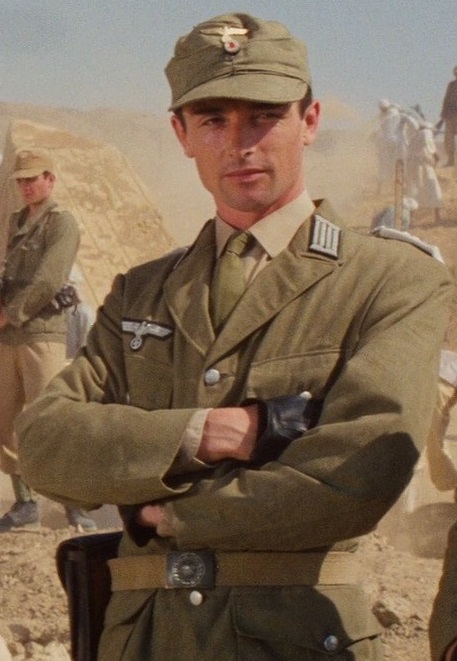
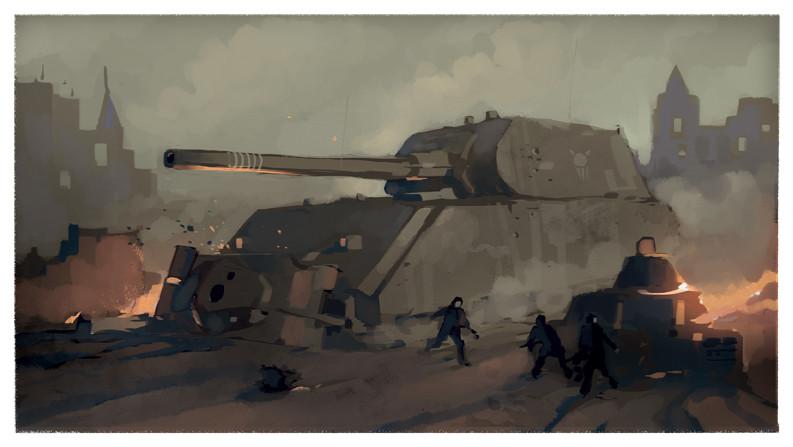
Since the 1930s, Black Sun--the dark soul of the Nazi regime--has dispatched countless expeditions under the auspices of the Ahnenerbe to scour the land for hidden knowledge. Previously forced to work within the laws of their host nations, Black Sun now have the might of the Wehrmacht's Afrika Korps to assist them, brushing asidepolitical and diplomatic niceties and, where necessary, coercing the local populace into providing labour for their extensive excavations. The Allies, despite their well-established networks of spies and informers in the region, have so far been unable to determine precisely what Black Sun are searching for, but again and again a single word crops up in the deciphered messages intended for Wewelsburg. [...] Irem.
This chapter is basically what we were gagging for throughout all of
The Cairo Guidebook: Mythos, magic, and Nazis in North Africa. In fact, it hits so many of the right buttons as far as dieselpunk Nazis delving into eldritch horrors in the sand, I'm amazed Ken Hite didn't write this fucking thing.
 This makes sense in context.
That said, the dudes involved in writing this book fell into the usual problem with anything Mythos related: they set something in stone. Which means that, no matter how good it is - and the whole thing with Irem and the
Muqarribun (the Ghost Priests), it's not going to jive with something someone else has written in some other Cthulhu product, at least until somebody writes a gloss. That said, it's a fairly good interpretation of Irem, and the Ghost Priests are fun if kindof stereotypical liches.
Call of Cthulhu does not handle liches - or really, any sort of undead sorcerer - well. The magic system is too unforgiving and chaotic and weird. It's not like Shadowrun where you can write down the important bits of a combat spell in two sentences, or even D&D where people are used to looking up the spell section and you can be forgiven for 3" x 5" cards and consulting the map to see if what you're attempting is in range. Call of Cthulhu doesn't have
many combat spells, and they're mostly either instant death or bullshit, with very little in between. But worse than that, most of CoC's spells are ritual spells of limited utility except for ending the part of the world you happen to be standing on, and even those are costly and difficult. So any write up for a sorcerer is pretty much by definition incomplete as far as a spell list goes, with a note, as here "The Keeper should provide them with spells accordingly."
Aside from the City of Pillars and undead liches, there's discussion of the Nazis tracking down the blue crystal deposits, and then it's on to the Order of the Crocodile.

The Order of the Crocodile is the modern incarnation of the ancient Egyptian Cult of Sebek. This has nothing much to do with the crocodile-men in
The Cairo Guidebook or the
other crocodile-men in
Secrets of the Congo, but rest assured that there is yet
another variety of crocodile-man in these pages.
At this point, you might ask
Why Sebek?, and I don't have a good answer. I mean, just from Lovecraft's stories you have Nyarlathotep and Bast, and while you see a bit of use of both of them in various products, not much in this book - no big cults, anyway. Set/Seth you might think they would use Robert E. Howard's incarnation of him as a big Stygian serpent god, but they don't do that. Horus, Ra, Isis...I think these are all too human. Tawaret just doesn't have the name recognition.
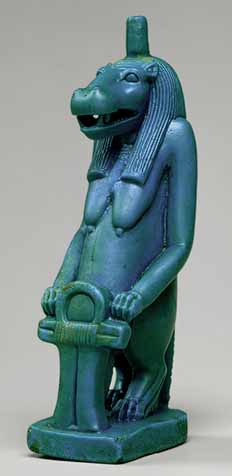 And maybe they're afraid they can't get away with the tits?
Sebek, though,
does appear in the Egyptian/Cthulhu Mythos stories of Robert Bloch, and Chaosium published those fairly early, so maybe...I mean, it's the only thing I can really think of to explain the propensity for crocodile-cults in CoC products set in Africa.
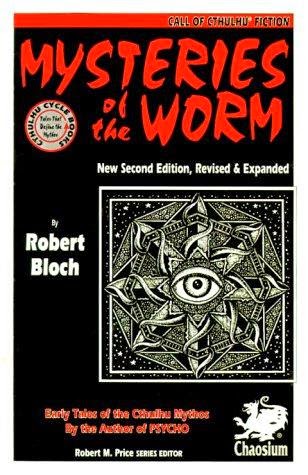 Remember, these are largely stories Bloch wrote as a teenager. Not exactly Psycho quality.
Other occult forces include the Mitzrayim Whist Club, which is apparently the cover for British Intelligence's Section M anti-occult espionage; American efforts in this direction are undeveloped. They also include a brief list of other occult sites/ruins, but those are covered very quickly and shallowly. The best I can say is that, unusual for any CoC-related product, it actually mentions other Mythos African cults and material - not by citing
The Cairo Guidebook or
Secrets of Kenya or anything, but the
Masks of Nyarlathotep campaign. I have a rant saved up about that, but it's for another time.
Chapter 9: Magic and Mysticism
CoC supplements with sections on magic are usually rubbish; it's much more common for tomes and artifacts and spells to be scattered throughout the book, or else clustered together in separate chapters. This chapter actually manages to keep everything together - although it then goes overboard.
Artefacts include Mythos magic and advanced alien technology. So you have a rare occult substance called
The Ashes of Sebek, and then you have something called a
Mi-go Transformer which plugs into a human to try and turn them into a Great Old One. If that sounds bizarre and stupid...well, it is. The third and final artifact is a Yithian Stone Hunter, which is basically a Figurine of Wondrous Power in a CoC campaign, and I feel dirty just writing that.
Tomes is what it says on the tin. There are some immediate problems, in that in proper CoC fashion they plunder the lists in CoC 6th edition for anything Egyptian-related and work from there, then add their
own tomes. One of the finer points of CoC magic is that the same spell can have different names and be technically different spells. So for example,
Call Representative of Our Lord and
Summon Servitor of Sebek are both mechanically the same as Summon Sacred Crocodile. In D&D, you would just say that the spellbook had "Summon Sacred Crocodile."
Not in Call of Cthulhu or its heartbreakers! No, in this game the spells are distinct, and may have variations because tome A leaves out the control bit but tome B also works on crocodile-men or something. And even when they do use the regular name for a spell that you'd find in the spells section of the book, they don't always use the
correct name. So like, normally the spell is called "Contact Deity/Sebek" but they might just put "Contact Sebek." That's actually one of the better examples, because sometimes you'll be looking for "Create Crocodile Mummy" but the actual spell is "Create Crocodile Hybrid Mummy," and you might get confused because there's also a "Create Mummy" spell... and yes, that means you can have one "Contact Sebek" spell that points toward Sebek and one that points towards Yig or Nyarlathotep.
 Have a drink.
There's several grimoires, but two big ones: the
Book of Faiyum, which applies to the Order of the Crocodile, and the
Book of Thoth. I'm pretty sure both of these have more spells than most versions of the
Necronomicon under CoC 6th rules, and that of course points to another problem, in that old books never keep up with new spells...but that's sort of a nitpick. Anyway, the major issue with the
Book of Thoth is that CoC already
has an entry for the
Book of Thoth in some other supplement, and of course the contents don't match up. It's one of the reoccuring little issues you see in CoC supplements, because not only does the left hand not know what the right hand is doing, but they're playing the stranger game in a blindfolded circle jerk so you're never sure
whose hand is on your junk, or whether you're just fapping alone in a room.
Spells are a combination of function calls to CoC, Savage Worlds mechanics, and some new spells. The big ones include
Contact Djinn, Create Servant of Sebek (which makes crocodile-people),
Create Crocodile Hybrid Mummy (in case you need to populate a dungeon), and
Whisper of Angels (which is used to create a ghuul, which is different from a ghoul, and should not be mistaken for the ghouls of Cairo which the
Cairo Guidebook calls ghuls, because fuck you, fuck you, and fuck you.)
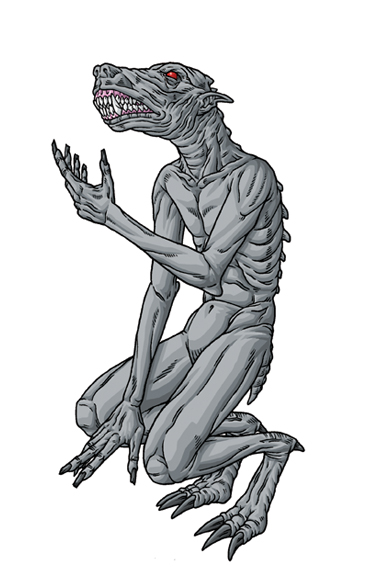 You can bind a djinn to a Cairo ghoul to make a ghuul ghul ghoul, but at that point you're casting from Sanity Points in real life.
Okay, so unlike the
Cairo Guidebook or
Secrets of the Congo,
Achtung! Cthulhu's Guide to North Africa actually has a decent-ish magic section. Albeit one that is innately Egyptian crocodile-god heavy, and actually kind of lite on what you might normally think of as traditional Mythos elements like Shub-Niggurath and Cthulhu. The only real downside is...well, it attempts the traditional CoC approach to such things, which is basically "add tomes and spells and stuff until you run out of wordcount." And of course they succeed. But success in writing CoC books just means that you're perpetuating a negative cycle.
Next up:
Chapter 10: Beasts, Real and Imaginary