Pre-Release Review - Dungeon Dwellers Roleplaying Game

General questions, debates, and rants about RPGs

Moderator: Moderators

Post Reply
User avatar
deaddmwalking
King
Posts: 5354
Joined: Mon May 21, 2012 11:33 am

Pre-Release Review - Dungeon Dwellers Roleplaying Game

Post by deaddmwalking »

Image
Dungeon Dweller's Mock-Up Cover


Dungeon Dwellers Player's Handbook

Dungeon Dwellers RPG is an RPG that is being developed by Reaper, primarily known for their gaming miniatures. I started collecting Reaper Minis ~2001 while everyone was still playing D&D 3.0. I had just relocated to Iowa City and most of the people I met was through gaming. Since we played in person and we needed a battle map to accurately determine positions and movement. The Reaper Minis, in my opinion, were the best on the market. Over the years they had multiple lines of metal miniatures, including some for an in-house miniatures combat game.

Ages ago, back when Ral Partha was a major purveyor of miniatures, there was a line of minis called Dungeon Dwellers. I never saw them, but in addition to individual models and such, they had some sets including 'Cavern of Doom' and 'Crypt of the Sorcerer'. The sets included miniatures for characters and monsters, a painting guide, as well as maps and a scenario for play - basically a complete adventure in a box. The business closed in 1982, but it made an impression on the Reaper team. Eventually they bought the rights to Dungeon Dwellers - the name, the old models, everything.

I think they thought they might release some of these types of sets for 5th edition, but somewhere along the way they decided that it made sense to release their own RPG. One year ago they had a Kickstarter and raised a couple hundred thousand dollars from a couple thousand people to get the game off the ground.

Joseph Wolf has been working in game design for some time and looks like he has some minor credits for a variety of systems including Legend of the Five Rings and Deadlands. I don't remember him from these other works. He seems like a decent guy who likes to keep creepy-crawlies as pets and he's active on the Reaper Discord answering questions. In the event that I call out things that I don't like - even if I say they're OBJECTIVELY GARBAGE - it's really just a matter of preference - I already know that our tastes don't really align. That said, while I'm sure I'll call out things that I think could have been handled better, I'll also try to focus on areas where I think the stated design goals and the implementation don't really align well (if any).

So, what are the design goals?
Dungeon Dwellers Roleplaying Game (DDRPG) is built on the foundation of the fantasy roleplaying games we all know and love. The familiar concepts of classic roleplaying are still intact, but many things have been retooled and updated.

DDRPG emphasizes intuitive, consistent gameplay while remaining true to the old-school themes of perilous adventure, risk, and delving into the unknown. If you love the feel of Old School Renaissance (OSR) games, or the modern mechanics of 5e, you'll feel right at home with Dungeon Dwellers.

DDRPG's goal is to take the best parts of our favorite fantasy RPG editions and blend them together to offer something unique in today's tabletop landscape. DDRPG keeps things fast and fun.

Four Core Classes: Fighter, Cleric, Rogue, Wizard
Four Core Folk: Human, Proudfoot Halfling, Wood Elf, Hill Dwarf
Six Ability Scores: Strength, Constitution, Dexterity, Intelligence, Wisdom, Charisma
d20-based Resolution System: The core of DDRPG uses a twenty-sided die. Whenever a character attempts something with interesting success or failure, the d20 is rolled and modifiers added.
Open Skill System is based on Ability Checks - a character's Background, Folk, and Class define what sorts of Skills a PC is proficient in.
Renovated Spell System - some spells have been revamped, improving utility and effectiveness; Spell Points allow casters to alter spell effects, increasing damage, number of targets, and degree of effect.
Dangerous - When Hit Points are exhausted, a creature is likely to die. When Hit Points are reduced below 0, the combatant has till the end of the round to be stabilized or they die. There are no Death Saves in DDRPG.
Easy to Use - DDRPG is compatible with almost any other RPG product. If you want to add something from a different system, it's easy to fold it into DDRPG's ruleset.
Now there are things from a design perspective that I'm not a fan of right off the bat. Having four classes and four races seems pretty limiting in 2024 - there have been a lot of developments in the last 40+ years that they're ignoring. A conga-line of death style of gaming where PCs are expected to regularly replace their fallen comrades also isn't really my cup of tea. But I like Reaper and I like RPGs and the value proposition was good enough that I was willing to get in on the ground floor and at least take a look.

And since I'm taking a look, I welcome you to come along.

Please note that the Player's Guide that I'm reviewing is a pre-release PDF from October 2024 and is admittedly incomplete. The PDF is 176 pages total including cover, etc, but none of the internal pages are numbered, yet. The Table of Content lays out 6 sections, some of which are mostly complete and some that I think are completely missing, so I'll be aiming to cover the book in 6-7 additional posts over the course of the coming week if everything goes to plan.

As I go, I encourage anyone that wants to ask questions. I'll try to go into as much detail as possible while respecting copyright and recognizing that this is still a work in progress. If everything goes well, I'll continue to the 229-page Game Master's Vault.
-This space intentionally left blank
User avatar
deaddmwalking
King
Posts: 5354
Joined: Mon May 21, 2012 11:33 am

Re: Pre-Release Review - Dungeon Dwellers Roleplaying Game

Post by deaddmwalking »

I think we all agree that part of the reason Pathfinder has had as much success as they've had is good production values - good art and good layout counts for a lot. No matter how many times someone tells us not to, it's easy to judge a book by the cover. The current cover (shown above) is by Izzy "Talin" Collier; page 3 repeats the art only this time in Sepia. Collier does a lot of artwork that Reaper turns into minis and I have no problems with the art.


Image
Example from Collier's Facebook Presence


Other artists include Max Dunbar, James Holloway, Brian Podell, Wayne Reynolds, Bryan Symes, Gene Van Horne, Christine Van Patten, David Wenzel, Richard Whitters, and Maciej Zagorski.

Most of the interior art is black and white sketches, with color pictures for the 'folk' pictures' and at the beginning of each section. Most of the interior art shows characters (probably from mini designs). There's nothing (currently) in the book that fires my imagination the way some of the classic 2nd Edition artwork did - the kind of things you'd see on Dragon Magazine, but also in the books.


Image
This is one of my favorites


In any case, most of the art that's been chosen (even if just placeholders) is appropriate to the section. There's a familiar in the familiars section, and a barded mount in the mounts section. The only art selection that I feel is a let down is for the spell mirror image. They have the same piece of artwork duplicated four times, but it's obviously just copy/paste. Each character has a bit of ground they're standing on, but they're not connected - it's not like a SCENE of someone casting the spell. But mostly the art is decent and appropriate.

Outside of the art credits, there are world design credits (7 people) for the World of Adon (the setting for the RPG), play tests (9 credits), sculptors (12) and Design (1 person, Joseph Wolf). There's space for an editor credit, but it hasn't been assigned, yet. Again, work in progress, so I won't say anything about failure to do their job when they haven't even been given it, yet. :)

The Table of Content lays out 6 sections, but only the first three appear to be fleshed out and include sub-headings.

Part 1: Welcome to Dungeon Dwellers (6 sub-sections)
Part 2: Character Creation (14 sub-sections)
Part 3: Armory & Gear (5 sub-sections)
Part 4: Movement & Combat
Part 5: Spells and Magic
Part 6: Adventuring

Before we hit section 1 we have the Author's Foreward (possibly also referred to as an introduction in the table of contents). Suffice it to say that the author has been interested in D&D since the early 80s (at least).

And that gets us to Section 1 (page 8).

It starts with 'What is Roleplaying' - standard boiler plate explanations, but it does have a sidebar explaining that GMs and Players shouldn't have an adversarial relationship - not always the advice you see in 'old school' sourced games. That's followed by 'What's Needed for Play' which explains the types of dice and nomenclature.

DDRPG is a d20 game with a d20 used for ability checks, saving throws, attack rolls, and spellcasting rolls. For ability checks, in addition to relevant ability modifier you may get a proficiency bonus (equal to level) or a non-proficiency bonus (equal to 1/4 level, rounded down). Thus, if you're 20th level you have a +5 to everything compared to a 1st level character, but a +20 if it relates to your background, race, or class. As written, classes are on a 10-level progression, so the difference may be capped at +8... There's more on this later, but a dwarf, for example, might be proficient in finding and disarming stonework traps, spotting secret doors, and avoiding subterranean hazards.

The difference between proficiency and non-proficiency (and I'm going to tell you now that every time they say 'add your proficiency or your non-proficiency bonus as appropriate' is going to be maddening) is significant enough that there are going to be things that you can't hope to do without proficiency, at least until very high level. But it's simultaneously not ENOUGH DIFFERENCE at low-levels. Your rogue with Trap-finding Proficiency has a +1 at 1st level relative to everyone that doesn't have it. It's not yet clear to me what attribute you use when finding/disarming traps (I don't think it says) but it seems likely that it depends on the specific trap. Maybe a lock is Dexterity but a chess-trap is intelligence - or maybe it's always the same thing. Either way, if your attribute isn't high relative to the party, you're not going to be particularly good at the things you're 'proficient' in. I'd much rather see a flat +4 or +5 proficiency bonus. That would matter at 1st level and still be significant at 10th level while allowing for challenge TNs to remain relatively constrained. But they didn't ask me (and when I offered my advice without being asked, they didn't care).

Saving Throws also get proficiency/non-proficiency bonus and one is determined by class (Wizards=Int, Clerics=Wis, Rogues=Dex, Fighters=Con). Characters get to choose a second proficiency. There are 2 spells that use (Int) to resist while there are 20 spells that (Wis) negates. So it's really clear that the save proficiencies are not balanced... The Save DC to resist a Wizard's spell is 10 + Int + Proficiency. I wasn't sure whether that meant bonus equal to level or 1/4 level so I asked the designer. The intent was that they get a bonus equal to level on save TN. Attribute bonuses are like 3.x, so an 18 is +4. So a 5th level Wizard is 10 + 5(P) +4(Int) for TN 19. We know the rogue is proficient on Dexterity checks, so they're making d20 + 4(Dex) +5(P) for a total of +9 (55% chance of success). Of course, if the wizard knows they're a rogue, you can hit them with a Con save where you know they lose the proficiency and they're probably saving at +2/+3 (20-25% chance of success). Many of the conditions (like Nauseated) aren't yet defined, so it isn't clear to me how bad it is to fail saves frequently... We'll find out more, later. But I gotta say, I'm a little concerned by save TNs rising so quickly. Telekensis is a 7th level spell that uses Strength to resist. Since no PC classes have proficiency in STR saves, that's pretty scary. Basically characters fall off the RNG against non-proficient saves pretty quickly.

Attack Rolls get FIGHTING ABILITY instead of Proficiency/non-proficiency. Spellcasting that requires attack rolls gets SPELLCASTING ABILITY. After establishing Proficiency/Non-Proficiency, you might wonder why they need these abilities. I certainly do. For Fighters, Fighting Ability FA is exactly like Proficiency - a bonus equal to level and using the relevant attribute; STR for melee and DEX for ranged. For a Wizard, FA is exactly like non-proficiency - +1/4 level. But Rogues and Clerics are in-between (+1/2 level) - so they can't just use their existing nomenclature. And once you have to have special words for weapon fighting, you might as well have a special word for spell casting fighting, I guess. Spellcasting doesn't have any variance - it's relevant attribute + level.

After all that time spent on Proficiency/non-proficiency, the game suggests two alternate categories, familiar and unfamiliar. Familiar is +1/2 level, and unfamiliar is no bonus ever. We'll learn about them in the GM section, but there are additional degrees of bonus if you want to use them.

Following this, we have a 3-page example of play. I'm surprised that the elf wizard has a +3 Con, but since I haven't read character creation I'm just going to assume that's not crazy. Following that is a 2-page glossary. It seems strange to have it in the middle of the book, and it covers mostly high-level concepts. It defines Familiar for Proficiency/non-proficiency but doesn't mention the caster's friend. Let's just say it's incomplete, and the words they choose to define are ones that any one that has played an RPG already knows (like Dice) or a different word for DDRPG like Load (instead of Encumbrance or Free Swing instead of Attack of Opportunity).


Image
I've learned something. I hope you have, too


Then we're to Chapter 2, Character Creation. We're on Page 18 of 176, so 10% of the way through the book.
-This space intentionally left blank
User avatar
deaddmwalking
King
Posts: 5354
Joined: Mon May 21, 2012 11:33 am

Re: Pre-Release Review - Dungeon Dwellers Roleplaying Game

Post by deaddmwalking »

Chapter 2 Starts with Ability Scores, after recommending that you have a concept of your character. Of course, if you're new to role-playing, translating your concept 'stealthy character who stays hidden' (one that they mention) isn't actually intuitive. When you read descriptions of the ability scores none of them mention 'hiding' or 'sneaking'. Dexterity is for: Nimbleness, aim, and reflexes; useful for ranged attacks, dodging, tumbling, and catching. For experienced players, this isn't much of an issue, and if you read everything through a couple of times isn't an impediment for new players. Still, we know there's a better way but this chapter is sticking with tradition.


Image
TRADITION!


Ability scores are the D&D traditional using the standard names, and using the 3.x style modifier equal to the ability score minus 10, divide by 2, round down, so an 18 has a +4 attribute modifier. Despite the old-school gaming vibes, the book suggests an array as the first option for creating ability scores, broken down into low (net +2)/standard (net +5)/high (net +8). Option 2 is roll and once again it offers low (3d6, assign as desired), standard (4d6 drop lowest, assign as desired), or high (5d6, drop 2 lowest, assign as desired). Option 3 is a point-buy system. The suggested point values correspond to the arrays from option 1, so that's good! There is a side-bar about 'old-school feel' and rolling 3d6 in order, but I don't get the sense that anyone is trying to push players to rolling a character and then playing what they get rather than crafting a character that fits their imagined ideal. There's not much point in deciding you want to play a sneak-thief if you end up rolling that doesn't have the stats for it.

Following stats, it's time to pick a race and you get four to choose from: human, halfling, dwarf, or elf. Once again, tradition (and alignment) are referenced extensively. For example, dwarves that pledge themselves to the destruction of goblins tend toward neutral rather than good.


Image
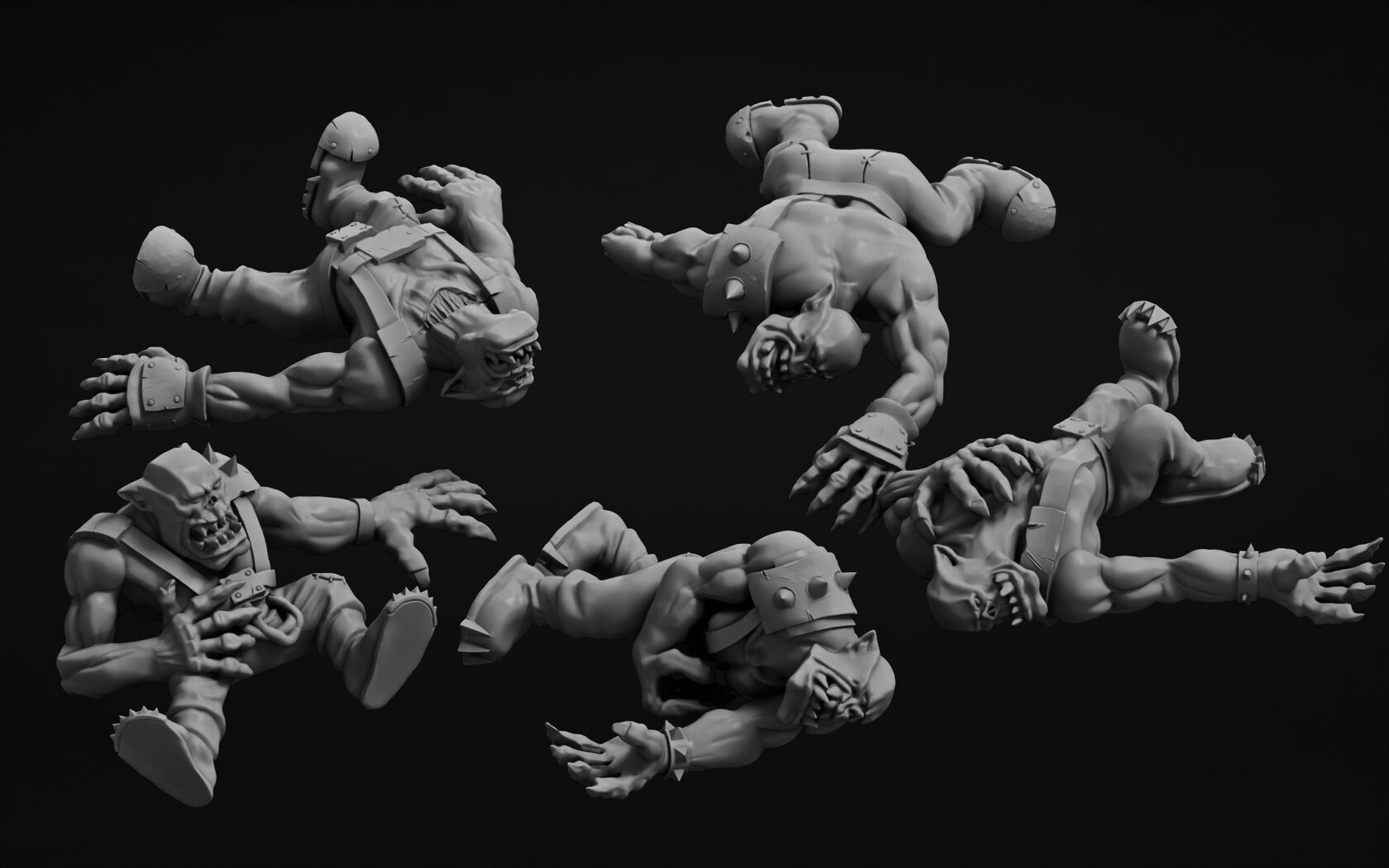
Good Orcs, apparently

Each 'folk' represents the most common racial variant, ie hill dwarf and wood elf - others are referenced but only the game mechanical information for the 'base race' is provided.

So after Step 2, choose a race, we move on to Step 2, choose a class. Obviously the formatting is a work in progress, so it's possible they've been moving race/class back and forth when determining which one to put first.

The first class is Cleric. They get a d8 hit die, +1/2 BAB, armor proficiency, the ability to turn/rebuke undead, and spells. For this version, clerics (and wizards, but more on them later) get 4 spell points per level; a 1st level spell costs 1 spell point, so you can cast 4 spells at 1st level. At 2nd level you could cast 4 2nd level spells, but that would use up all of your spell points. You could also cast 4 1st level spells but 'enhance' it. Basically, at 2nd level the most spell points you can spend at once is 2. So, since you get 4 spell points per level, and you can always spend up to your level when casting a spell, you can always cast 4 spells at your most powerful and then you're 'spent'. You're not required to spend as many spell points as you're permitted to. So at 10th level you could cast 4 spells at 10 spell points each, or 40 spells at 1 spell point each. More on this later when I really get into the magic, but it's definitely going to feel somewhat limiting and create some 'analysis paralysis' for players as they evaluate their options. This game renames orisons 'blessings'.

Another thing that's going to be a problem that we'll cover more later - you choose your action BEFORE you roll initiative. Your action determines how you determine initiative. So if you're a cleric and you want to use a 'blessing' to cast 'Spare the Dying' (stabilize), you roll a d12. If you instead want to use a mace, you roll a d4. Since a higher number goes faster, this is a relatively fast spell... It sounds like you can change your action, but all other actions are resolved, first. More on initiative later!

Fighters get a pretty good cleave ability from level 1. At 5th level they get a 2nd edition style extra attack (3 attacks every 2 rounds). At 10th level they get 2 attacks in a round (when rogues and clerics are getting 3 attacks/2 rounds). Outside of that they get +1 to +3 to attack/damage rolls with a chosen weapon, and by 10th level they have that bonus on a SECOND weapon. That doesn't excite me, either. Outside of that, they have a limited self-healing ability.

Rogues look a lot like 3.x characters with +1d6 sneak attack at odd levels, trap sense, uncanny dodge, and improved uncanny dodge. They also get evasion (renamed 'slippery').

Wizards get the worst attack progression and the fewest hit points. Like clerics, they 'prepare' a certain number of spells, but they use spell points so they can cast one of those spells 4x with their 4 spell points at 1st level, or cast each of them once, or any other combination. Again, that's not in keeping with the old-school vibe, but it's a welcome change in my mind.

After ability scores, 'folk' selection, and 'class', we're on page 43 and this section ends on 51 - 8 pages for 8+ additional steps (some are duplicate numbered) plus character advancement. Most of the steps are only a paragraph. Besides the saving throw that you receive a bonus equal to your level determined by class, PCs choose one additional saving throw to receive this bonus. Humans get a third as one of their abilities. The next step is a longer one, backgrounds. Every character has a culture, upbringing, and trade. This is just background information and doesn't even include example tasks that you might be able to apply your level as a bonus on when making a check. Although your class (and to a lesser extent your 'folk') determines your armor and weapon proficiencies, writing those down is step 6 and 7. Step 8 you decide on which languages you learn - this is very 3.x based on Int modifier and available languages determined by race. Starting hit points are maximum for class, with the expectation that future hit points are rolled. The game suggests guaranteeing that characters receive at least half the maximum hit points, but that's given as an optional rule. All characters get the same basic equipment and 200 gp to spend on gear. There's some suggestions about appearance, personality, name. Alignment (here) is limited to good/neutral/evil, but from the folk descriptions it's clear that there is an expectation of a law/chaos axis. Anything along those lines is in the GameMaster's Vault.

Advancement is based on earned XP. You have to earn your level x 1000 XP to achieve the next level, so you are Level 2 from 1k to 3k XP, and Level 3 from 3k-6k. After covering leveling it ends the chapter with a character example showing how all the steps were applied. Following a couple of blank pages we'll pick up with Chapter 3: Armory and Gear next time. We're about 1/3 of the way through by page count.
-This space intentionally left blank
User avatar
deaddmwalking
King
Posts: 5354
Joined: Mon May 21, 2012 11:33 am

Re: Pre-Release Review - Dungeon Dwellers Roleplaying Game

Post by deaddmwalking »

Chapter 3 - Armory and Gear

The chapter starts with the encumbrance system and it draws a lot from video game physics, and I mostly approve. Rather than tracking weight, you track 'slots'. Generally, a medium object counts as one slot; multiples of smaller items equal a slot. Various bags and backpacks allow you to carry a certain number of extra items without counting toward your total. A medium creature has 12 slots, plus additional slots for a positive STR modifier. The example character (page 53) has 5 1/2 'slots' in their backpack that don't count for weight purposes, and various weapons on a weapon belt that don't count. There's some miscalculation but if I'm correcting their math the example character counts as having 8 slots filled, but with the weapons and backpack they're carrying 9 1/2 slots that don't count. As a result, they're not considered 'encumbered', but if they didn't have the backpack and weapons belt, they would.

Rates of encumbrance have increasing penalties to speed and various checks. Speed reduction is by 1/3, then 2/3, which basically works since the four races presented have speeds that are multiples of 3 (6, 9, and 12).

Armor can also reduce your movement, and unfortunately the book is not at all clear how various levels of burden interact with armor. The armor value lists a 'max move', and it appears that it makes some assumptions that it is for humans/elves (creatures with a 12 movement). Dwarves have an ability where their speed is not reduced, but as written a Halfling wearing half-plate has a max-move of 9 (normal for them) while a human has a max-move of 9 (a 1/3 reduction). I'd really like to see something where armor interacts more directly with the encumbrance system, even if that means dramatically increasing armor 'slots'. The designer has indicated that they're landing more on the simulationist side of things, and that whatever you've seen about folks doing acrobatics in armor don't represent REAL armor.


Image
This is just TOO FANTASTIC


I have my doubts, but having armor interacting with move, and then encumbrance interacting with armor reduced speeds in another way, and it not being clear how small races are supposed to be impacted makes this section a bit of a mess. Nothing too impossible for a GM to adjust or fix for their game, but from my perspective a disappointment that I feel it needs doing.

Armor is divided into five categories and multiple armor types are treated the same. For example, Padded and Leather are both Very Light armor, provide the same benefit (+1 Defense) and the same cost (10 GP). Not sure that's very simulationist, but honestly I'm glad that (at least here) nobody is suggesting that chain armor gets a different bonus versus slashing weapons compared to bludgeoning weapons (which is old-school D&D and also terri-bad).

Heavy Armor heavily penalizes all kinds of skills that require physical movement including things like picking locks. As far as I'm aware, there's no skill list (yet???) so it's really a question of whether the skill in 'proficient' based on your background, so at this point, I'm guessing you say something like 'sneaking is something rogues are proficient with' and if your GM believes you, you get a bonus on the check equal to your level. That GM probably won't believe that Fighters should be sneaky, no matter what the Conan stories say.


Image
No way I saw Conan hiding behind this rock


Shields also apply penalties to all the skills that warriors might want to do, and it stacks with load and armor penalties. If you like rocking out in the heaviest armor with the heaviest shield, even if you're 'unencumbered' you're walking around with a -13 penalty. OUCH!!! This game uses facing and shields are both limited in how many attacks they defend against during the round and which direction(s) protection applies to.

After armor and shields we move on to weapons. A big chunk of text talks about Initiative and Weapon Size. I mentioned in an earlier post that you choose an action; then that action determines how you determine initiative - in part based on the weapon. Larger creatures get a bonus on initiative relative to smaller creatures; when a weapon is wielded in two-hands (assuming it can be) you get a better initiative than if you wield it in one hand. That's a bit odd to me, but if initiative mostly represents REACH it makes sense. And while larger creatures usually go faster, reducing the weapon size also increases initiative. More initiative stuff in Chapter 4 so we'll put a pin in this and come back to it later. Just going to say it seems like a lot of work to track a variable initiative based on action (including specific spells) for what's often not much difference. I know a d10 is faster than a d8. In fact, I went and calculated how often it's faster 54% of the time. If you just used a d10 all the time and gave it a +1, that'd be faster 55% of the time. But seriously, now I'll set this aside for the time being, even though it vexes me.


Image
Yes, it vexes me, so


Okay, on to actual weapons! After consolidating armor into broad categories, you might expect that DDRPG would do something similar with weapons. They did not. In fact, they have 19 special weapon properties like Returning (only on boomerangs). With a combination of faster or slower, damage, weight, cost, and special properties it would be very easy to make every weapon better than others in some situation, but they didn't. A broadsword is exactly like a longsword except it weighs more. Unless there's something I haven't seen about breaking weapons, weighing more and doing exactly the same as another similar weapon is bad.

Let's dive in to weapon properties because they're a mixed bag. First off, making something a property is mostly intended to make the chart easier to read. Many of the weapon qualities existed in 3.x but weren't deemed qualities - things like asterisks denoting a reach weapon, or a sap dealing non-lethal/subdual damage. Making those properties means that you can just list it next to the weapon even if there's only one weapon with that quality.

Disarming weapons get a bonus to disarm attempts; Exotic weapons can't be one of the few you're proficient with unless you have a special reason (including just using one without proficiency for a long time); Finesse weapons use Dexterity instead of Strength on melee attack and damage rolls; Grabbing, similar to Disarming, gives a bonus when entangling an opponent; Light weapons have a smaller off-hand attack penalty; Merciful weapons can deal subdual damage without an attack/damage penalty; Mounted weapons deal the mount's STR as additional damage while mounted; Plant weapons can deal extra damage when set to receive a charge; Range weapons can be thrown or fired with the given range as a range increment; Reach can hit creatures the indicated number of squares away and they come in 1, 2, and 3 varieties meaning that you can attack 2, 3, or 4 squares away but not adjacent; Reload is how long it takes to reload; Returning only applies to boomerangs, and only if you miss, and only if you JUST miss; Thrown weapons can be thrown and you have to find the weapon again on the ranged weapon chart to see how far; Tripping gives a bonus when trying to trip-people; two-handed must be wielded in two hands, and versatile weapons can be wielded in two-hands to increase damage and initiative.

I held the following aside because I think they're a little more problematic:
Flailing maybe negates shield bonuses. You get to keep 1 point of shield bonus, so you're losing from 1-3 points for most shields. Unless your shield is magical, in which case you keep the magical bonus instead. Trying to figure that out and asking for adjusted Defense is really just too much extra work for everyone in combat.
Penetrating ignores half of non-magical armor bonuses, which is basically the same issue. Also all armor values are odd, and if you round down it doesn't have any benefit against 'very light' armors. Rapiers get this property as well as finesse, so there's good reason to expect this to come up a lot.
infamous weapons are usually illegal 'in civilized lands'. This includes a garrote, blow guns, and hand-crossbows. There's a setting for DDRPG so they can define what these terms mean, but it's just weird. The garrote isn't even a very good weapon - it doesn't have any listed abilities to use within a grapple (or to start one) so it's just a way to get yourself arrested when you could use a kukri (legally) instead.

So, is there an ultimate weapon? I'm not prepared to answer that directly, but I will say that there's a few weapons that are completely redundant. A Longsword is better than a broadsword and a battleaxe. If you're a Dexterity build, the Rapier looks pretty good. The Great Scimitar is a dex-based Greatsword and while it's more expensive, a 25 gp difference won't mean that much at higher levels. It's lighter and you CAN use Strength, so really no reason not to pick it over a Greatsword even if you opt to use Strength. And both weapons can be wielded either one- or two-handed, but with Reach 1 you can't attack adjacent foes, which I think is probably a disadvantage most of the time.

Another example of a weapon that doesn't make sense is the Great Pick. It's Penetrating, Reach 1, Two-Handed. It does 1d10 damage with a d4 initiative. The Heavy Pick is Versatile, Penetrating, and Reach 1. It has a d6 initiative and 1d8 damage. Because it's versatile, you can CHOOSE to use it in two-hands, and if you do you increase the damage and the initiative one step. So when you wield a heavy pick two-handed it does the same damage as a Great Pick, it goes twice as fast, it weighs less, and you use it in one hand if you decide you want to. It even costs less!

After weapons we move on to adventuring gear. It has multiple sections in alphabetical order including ammunition, alchemical items, clothing, containers, harness and bridle, herbs, illumination, livestock/mounts/pets, Lodging, Provisions, Trinkets and Tools, and Transportation. Most of this is the type of thing you're familiar with from 2nd/3rd edition, but they've added a few minor things like potion belts and scroll organizers.

Transportation has room for creatures and slots for items; since people take up slots they could just combine them. Still, slots is better than weight in a lot of ways, so still an improvement over ounces and pounds. And that concludes the chapter - we're on page 71 of 176 with Combat and Movement next.
-This space intentionally left blank
User avatar
deaddmwalking
King
Posts: 5354
Joined: Mon May 21, 2012 11:33 am

Re: Pre-Release Review - Dungeon Dwellers Roleplaying Game

Post by deaddmwalking »

Chapter Four: Combat and Movement

This chapter covers 17 pages from 72-89. There's art, sidebars, diagrams, but it's also a fairly information dense section. The game emphasizes surprise (which really was a feature in OD&D), and suggests using the stealthiest member of each group to determine whether the group is noticed, and using the most perceptive member of each group to determine if they're seen. That means using a Rogue/Halfling with a Full-Plate/Heavy-Shield/Dwarf walking around with bells on his toes might be impossible to notice. I'm sure someone will eventually tell me that the GM must use common-sense in the game world, and I'd say that if you want the most obvious person to determine how obvious the group is, you could just make that the rule. If you're surprised, most of the time you get to go at the end of the turn (after everyone who is not surprised goes). If you were planning on doing something with a d2 initiative anyway, the downside is that you lose your shield bonus, Dexterity, and everyone gets at least a +2 to hit you. If you're REALLY surprised (like during an ambush) then you don't go in the first round at all, and only go the next round.

Under initiative, the game suggests that you could just have the group roll once for each side, which would certainly be a lot easier. If you do that, it's just a straight d12 and you don't muck about with weapon or spell speeds. Monsters have an initiative in their stat block; I don't know if it is weapon specific, but it may be depending on the weapon. Unarmed attacks usually get a d8, so I'm guessing that's sort of the 'default initiative' with some weapons being faster or slower based on an arcane calculus where smaller people are slower while smaller weapons are faster.


Image
I made my save versus madness, we can move on


If you do something really impressive to warrant going faster, you can improve your die by one step (ie, rolling a d8 instead of a d6). Ties between PCs are resolved by PC agreement; ties between PCs and monsters go to the PCs. If you don't want to take your turn you can delay. If you decide to do something different than what you rolled for initiative (assuming it is slower), you go at the very end of the round. If it's the same action speed or faster, you can just do it on your turn. You can also spend a fortune point (more on those later) to seize the initiative and go first, regardless of what you're doing.

Movement can be taken before and after taking an action, which I think is a good thing. With 12 movement for humans/elves that's a significant amount of movement in addition to their action. Movement within a threatened area is limited to 5' without provoking. There's a number of other actions (like drinking a potion) that can provoke, but only if you're to the side/flank of a creature. Most creatures don't threaten behind them (though creatures with a tail might).

Since creatures have facing, you get a bonus for attacking the sides/rear, even if you're by yourself. An aware creature can change their facing as a reaction so you're UNLIKELY to get a bonus to attack without someone standing opposite you. If you have people on opposite sides the target could face one of them meaning the other gets a +4, or he could face between them, meaning they each get a +2. Edit - there's ALSO a ganging up bonus which is a flat +2 regardless of how many creatures are attacking, so targets in front of/behind might get +2/+6 - one bonus for ganging up and the one behind getting an additional bonus based on facing.

Fighting Ability (BAB) only applies to weapons you're trained with. If you're a 10th level Fighter with a +10 FA, but you use an exotic weapon, you lose that entire bonus. So if you're a 10th level Wizard, use whatever exotic weapon you want because it's only costing you a -2 compared to an attack with a proficient weapon.


Image
GM: NO! Your character doesn't know that!


Wizards and Clerics use Spellcasting Ability to target opponents with spells. In 3.x, wizards don't have a very good attack bonus, but when they use spells they're usually touch attacks, so the difficulty in hitting is usually much lower. I think that's better in part because multi-class characters (which I'm told are allowed) can't benefit from their other class levels to be better at targeting with spells for no reason that I understand. Unless they count as proficient for ALL levels as long as they're proficient for ANY levels. Still, it seems unnecessarily complicated to have different tracks for what are basically different forms of attacks. Many spells don't even require an attack roll, so it doesn't have to be hard. And 'touch attack' is already a concept here and that's much less complicated than recalculating armor and shield bonuses based on what weapon we're using, so having 'reduced defenses' and just using those has to be easier.

Critical hits are confirmed (like 3.x), but even if they fail to confirm you treat the weapon damage as maximum. If you confirm, you get the base weapon damage again. So if your base damage with a longsword is 1d8+2, on an unconfirmed critical you deal 10 damage, on a confirmed critical you deal 1d8+10. I'm not sure how I feel about not getting bonuses to damage again, but getting a max roll is one of those small things that can make a player feel good the way rolling minimum damage on 2 dice doesn't. There's an optional rule for escalating criticals (ie, on a 20 add max damage for the second die and confirm again to see about adding a 3rd). There are no threat ranges; critical hits only activate on a natural 20, which is another reason there isn't that much variation between weapons.

The game has rules for fumbles, and they make some of the same mistakes that most people seem to make. Every time you roll a natural 1, you have a chance of fumbling. You roll a 'confirmation', and if that would be a miss, it's a fumble. The general result is that every opponent gets a free swing that doesn't count against their AoO for the round, but the GM can pick something else appropriate to the situation and some suggestions are given. The advice is never make fumbles excessively punitive, so that's a positive. But if you're a high level fighter making 2 attacks per round, and you're two-weapon-fighting so you have a 3rd attack a round, and sometimes you get a free swing, there's a good chance that you're making 4 attacks per round. While there's a 95% chance that each of those ISN'T a natural 1, there's a 19% chance that one of them is. If you make 8 attacks in 2 rounds there's a 34% chance that one of those is a natural 1. Now, hopefully a high level fighter's attack bonus will usually be good enough to confirm the hit (making sure it's only a regular miss, not a fumble) but that really depends on the defenses of the opposition.

Failing a save badly also offers an optional fumbling rule - if you roll a 1 and roll again and that's a success, every die of damage is treated at least as half. Ie, if you roll fireball damage (5d6) or 1, 1, 3, 5, 6, the two 1s are treated as 3s, increasing the damage to the fumblee by 4. If the confirmation is a fail, dice are maximized. It doesn't have suggestions for what happens when you fumble a spell saving throw against a non-damaging spell.

Combat Maneuvers are going to be familiar to Pathfinder players. Like Pathfinder you have a Combat Maneuver Bonus and a Defense. Opponents must exceed your Defense to succeed on a maneuver. You may use your Strength or Dexterity for both making and resisting these checks. I'm seeing lots of reasons to make Dex-based characters - with the right weapon, you can pretty much use Dex for everything you might normally want Str for.

Like Magic: The Gathering, there's an End of Round phase. Any effects that persist over multiple rounds are applied at the end. People that are dying...die. PCs die 1d4 rounds after falling below 0 while non-PCs die the same round. I'm not a fan of PC only rules, so I don't see a reason not to just make it a universal rule. If you take double your maximum hit points in damage, you're dead instantly. That's the kind of thing that at low levels is pretty easy to have happen, which I'm uncomfortable with. If you're a 1st level wizard with a decent CON of 14, you have 6 hit points. A longsword critical hit can do 18 points of damage, putting you at -12. Since -6 is instant death, your fragile wizard is never getting put together again. Since things like this are primarily an issue at low level, adding your full CON would help. A minor change like that would mean the wizard wouldn't die until -18, and very few 'regular attacks' could do that in a single fell swoop. That'd also help with situations when the Fighter is down to 1 or 2 hit points. That last hit could be the one that does 18, so Mr. I have 14 hit points at 1st level could be dead as a doornail.

DDRPG uses short and long rests. Every character gets recovery dice equal to their level, each die is equal to their HD, so a 3rd level Fighter would have 3d10 recovery dice. During a short rest, they can use any/all of them to recover hit points up to their maximum. Ie, if you're down 15 hit points you could use 2 dice and heal anywhere from 2-20. Every time you take a long rest you get all your hit points and your recovery dice back.

We're now on page 90 out of 176. The next 70 pages are spells and magic, which isn't that interesting to me. I'll plan to skip it and hit Chapter Six: Adventuring which will take us to the end of the book and then doubling back to talk about spells.
-This space intentionally left blank
User avatar
deaddmwalking
King
Posts: 5354
Joined: Mon May 21, 2012 11:33 am

Re: Pre-Release Review - Dungeon Dwellers Roleplaying Game

Post by deaddmwalking »

Chapter Six: Adventuring

This chapter is 14 pages; the first eleven is something of a guide for characters to know what to do in the dungeon. Think of it as advice from an experienced player. Like all such advice, some of it is contradictory. Like don't bring open flames into the dungeon because it will foul the air, but also always have torches because some monsters are afraid of fire. There's nothing here that qualifies as RULES TEXT - there are references to various checks to identify food and water while foraging or to appraise goods, but nothing with enough detail for the GM to determine how hard it is for PCs to survive in the wild. It has a lot of old-school gaming vibes, but never mentions using a 10-foot-pole. Otherwise, generally solid generic advice.


Image
We nailed iron spikes into the dungeon floor to keep open doors open and closed doors closed

The final 3 pages is advice aimed at players, rather than characters. This has advice about making game fun for everyone, and being on time and engaged. All generally good advice and nothing wrong with repeating it even if it's something everyone 'already knows'.
-This space intentionally left blank
User avatar
deaddmwalking
King
Posts: 5354
Joined: Mon May 21, 2012 11:33 am

Re: Pre-Release Review - Dungeon Dwellers Roleplaying Game

Post by deaddmwalking »

Chapter Five: Spells and Magic

Through the rest of the review, the game has been sticking pretty close to source material - aiming for an easy play experience but with more tactical depth than 5th edition. This is the section where DDRPG is trying to push the envelope, and they're moving in a direction that's NINTENDO HARD. They're trying to juggle a lot of balls is what I'm saying.


Image
The Power of voodoo
There are 10 levels of classes. There are 10 levels of spells. That means you're getting access to brand new spells every time you gain a level. Clerics prepare a number of spells equal to their Level + WIS modifier (so a 1st level Cleric might prepare 5 spells), not counting 0-level spells (known as blessings). Wizards similarly prepare a number of spells equal to Level + Int, but spells must be in their spell book. A first level wizard starts with 6 spells, and you get 2 every time you gain a level - and they can't be higher level than you are. Scrolls cannot be added to your spell book. It says that scrolls lack essential elements found in spell books, but if a scroll has everything you need to cast a spell that you don't even know it's gotta be better than Ikea instructions. I'm guessing this is intended as a limit to spell accumulation by wizards. Surely wizard spells are much better than cleric spells to justify the smaller Hit Die, lower attack bonus, inability to wear armor.


Image

Spells can be interrupted with a TN of 10 or half damage dealt, and casters get their level added to the Con check. You might expect a 5th level wizard to have ~+7 to this check. A 5th level Rogue that hits with Sneak Attack might do ~18 damage with a sneak attack. I'm going to say that successfully interrupting a spell caster is going to happen. What casters have going for them is that usually they can complete a spell on their turn in the round - someone is going to have to ready or get a 'free attack' to interrupt them most of the time - it's not that they start casting on their turn and the spell activates at the end of the round, allowing EVERYONE to interrupt them.

Similar to the way everyone gets recovery dice equal to their level, clerics and wizards get a small pool of spell points that they can regain after a short rest. The pool is equal to their level, so a 3rd level wizard normally has 12 spell points (4/level), but with one or more short rests they can effectively have 15 spell points for the day. An optional rule allows casters to get bonus spell points equal to casting stat modifier.

I'm not going to analyze every spell on the spell lists. I'm going to try to illustrate some of the complexities of balancing scaling spells. I'm using Comprehend Languages because it appears first on the Level 1 Arcane List. The level 1 version lets you understand every spoken language for one hour. There are three options that require an extra spell point, and thus raise the level of the spell by one (1) each; if you add all of them it's a 4th level spell.

- The options include +1 hour duration (redundant if you don't have other scaled benefits also cast)
- the ability to READ as well as understand,
- the ability to reveal hidden or invisible text

For +2 Spell Points you can speak any language fluently
For +3 Spell Points you can speak, read, and write any language fluently (which kinda seems like combining two of the options, but I guess if you did the +1/+2 abilities you might not be able to write).

Setting aside all of my criticisms of magical metaphysics that underly all D&D clones, this isn't a bad little spell. If you're 5th level, you could cast this as a 4th level spell using 4 spell points and can speak to anyone fluently for 1 hour. If you can spare a spell point you can bump the duration to 2 hours, which is less expensive than recasting the amped spell a second time.

There are only 2 5th level Arcane Spells, so for comparison let's look at the 4th level spell Clairaudience/Clairvoyence. This allows you to create a sensor anywhere within 1 mile that either listens or watches - it can switch back and forth but only provides one sense at a time. Some scaling options let you target an individual (+1 spell point) or make the range anywhere on the same plane of existence (+3).

From a utility standpoint, I think the 1st level spell holds its own and should continue to see use. Let's look at direct damaging spells. At 1st level magic missile does 1d4+1 damage and never misses. You could add another missile so at 4th level you can do 4d4+4 (never miss). Or you could cast fireball using those 4 spell points. The base version of the spell does 6d6 (Dex half) to all creatures in a 15' radius. Since you can use your (small number) of 0 level spells, firebolt is also an option dealing 1d10 until 5th level when it increases to 2d8.

I think you can make the argument that the low-level spell has a use when scaled up to higher levels, but I think it becomes increasingly difficult to justify scaling a low-level spell in place of a higher level one. The author did a lot of work to remove high-level spells and tie them to a low-level spell with a scaling option. For example, beguile is a 1st level spell that's like charm person, but for +6 spell points it becomes charm monster.

From a complexity standpoint, it's a lot to put on the player. When you're 7th level and you're confronting a dragon, you have to look at the ~11 spells you have prepared and have to also know how they scale to be useful. Beguile can work cast at 7th level, or Hold Person cast at 6th level. Having a lot of spells prepared has complexity, but when most spells do exactly what they say it's usually easy to figure out what's useful at a glance. With fewer spells known/prepared, maybe it's not unfair to ask players to be aware of the augmentations available.

As far as spells presented, there are:
Arcane
Cantrips - 18
1st Level Spells - 36
2nd Level Spells - 17
3rd Level Spells - 23
4th Level Spells - 15
5th Level Spells - 2
6th Level Spells - 10
7th Level Spells - 9
8th Level Spells - 4
9th Level Spells - 7

Divine
Blessings - 8
1st Level - 13
2nd Level - 8
3rd Level - 12
4th Level - 7
5th Level - 5
6th Level - 5
7th Level - 5
8th Level - 1

There's not a lot of overlap between the two lists. When a spell is both, it's generally a good idea to let the cleric handle it, because they don't have to commit it to their spell book and can prepare it 'as needed', but the wizard definitely has a lot of fun spells that clerics don't. There are some direct damage spells for clerics, but utility spells like fly and knock are only on the wizard list, so having clerics do everything isn't really an option.
-This space intentionally left blank
User avatar
deaddmwalking
King
Posts: 5354
Joined: Mon May 21, 2012 11:33 am

Re: Pre-Release Review - Dungeon Dwellers Roleplaying Game

Post by deaddmwalking »

Final Thoughts

So, where does that leave us?

While the game is admittedly incomplete and a work in progress, what we have is playable. The combat rules handle determining hits and damage adequately, and spells and their effects can be adjudicated. There are various levels of complexity within games, and while this adds some complexity to tactical combat with facing rules and 'stances' that everyone can use, it strips out a lot of complexity by removing character options. Four races and four classes isn't very many even by OD&D standards - sub-classes like Rangers and Assassin were released early in the game, and if you think of races as classes that covers some more options. Still, the classic 4 archetypes (Fighter, Cleric, Rogue, Wizard) are classic for a reason. I think it's a bit of a shame that mechanically 'Fighter' is basically all the same, and outside of different attribute selection and equipment, they're going to stay the same. Wizards and Clerics have spell selection to differentiate them but I feel that other classes are going to feel repetitive very quickly.


Image
Not happening without some major splatplosion


On the other hand, something with so little complexity for character creation can be welcoming for new players. This is something that you can have a player roll up a new character in just a few minutes and get them right to the dungeon. So there's definitely space in the hobby for a game with this level of complexity.

Of course, leaving so much of the game incomplete puts a lot on the shoulders of the GM. I'm reading the GM Vault, and there's lots of information to help GMs (including novice ones) but so much of the game ends up being 'roll a 15+, good things happen', 'roll a 1-5 and something bad happens'. At least that's my impression. As much as there are references to negotiations and using proficiencies to interact with the world, it's up to the GM to figure that out. The Game Master's Vault has a lot of GENERIC advice on running a game, and GENERAL advice on whether an attribute check gets a Proficiency Bonus or not, but it's all very amorphous. GMs are called on to make a lot of judgement calls. Is jumping a chasm 'proficient' if the GM previously decided that jumping from a 2nd story window qualified for the bonus? It's a GM call. And what's the DC for jumping a chasm or jumping out of the window - totally up to the GM. There's a lot of making sure everyone has the same expectations going in.

While this game is something I might be willing to play in a beer and pretzels kind of way, and since there's no worry about 'breaking rules' this is the kind of game that you can run with minimal prep. On the other hand, it doesn't have the tactical depth that I crave, so there's no way that this becomes my 'real' game.

Suggestions For Improvement
Putting together a game is a lot of work, and trying to consider and model all of the various pieces of the game and consider their impacts is also hard. Sometimes changes aren't made, not because they don't make sense but because TRADITION. Not making a change because you're concerned that it kills a Sacred Cow is a defensible position, but I'm all for calling them out.


Image


Attributes
There's no 'roll under your attribute' like there might have been in AD&D, everything is d20 add modifier. As a result, there's no reason to have stats of 3-18 and derived attributes. Further, there's no mathematical difference between everyone rolling 1d20+0 versus everyone rolling 1d20+5. What that means is that instead of modifiers running from -5 to +5, you could run them from +0 to +10 without meaningfully changing success rates by adding 5. If your ASSUMPTION is that an 'average' person has +5, instead of DC 10+attribute, you make it DC 15+attribute. People with a 20 have a +10 now, so they need a 5 or better. People with an 'average' +5 need a 10. Mathematically, that's the same as having a DC 10 with -5 to +5. The major difference is that you're only adding (so somewhat bigger numbers) but you're NEVER subtracting. I'll tell you, psychologically speaking, having a negative number for your modifier feels worse than having a smaller than average positive. So getting rid of 3-18 may be a sacred cow, and getting rid of -5 to +5 may be a sacred cow, but once the industry gets on to making the change people are going to wonder why we didn't do it earlier. It's like THAC0. There's a more streamlined way to do it and people will come around to the increased simplicity sooner rather than later.

Non-Proficiency Bonus
If you're not proficient, you get a bonus equal to 1/4 your level. That caps at +2 at 10th level. While that represents things that you're not spending a lot of time or effort learning, you can't convince me that an 10th Level Int 10 Fighter that's garnered 45,000 experience points adventuring with a wizard casting 10th level spells knows exactly as much about magic as a 1st level Rogue with a 14 Int. Non-Proficiency should be something like half level (+5 at 10th level). That's not GREAT, but that's statistically significant, and you have a decent chance of hitting DCs that weren't guaranteed for a 1st level Wizard.

Proficiency Bonus
As written, Proficiency bonus is equal to level, meaning it starts at +1 and increases to +10 at 10th level. The bonus is too small at low-levels. If you want characters to do something, say 'herb lore', you decide that it's based on Wisdom and you have four characters, one with a +4 (16 WIS, Proficient), a +3 (16 Wis, NP), a +2 (14 Wis) and a +1 (12 Wis), the odds are that one of the other players rolls higher. Someone can calculate the true odds, but testing it 10 times the highest bonus got the best result 40% of the time, and one of the other characters got the best result 60% of the time. With such an abstract skill system, having non-proficient characters regularly beat the rest just isn't good. If Proficient Characters got a flat +5 (instead of +1/level, and added to their non-proficient bonus so they end with a +10 at 10th level) the proficient character would have had the best roll in 80% of those tests (the exception being where the primary character rolled a nat 1 and one where the 2nd character had an 18 compared to our proficient character's 17). It's clear that a +10 bonus isn't too much since the +1/level scales to it already - it'd just adjust how quickly you approach that.

Recovery Dice
Characters are going to take damage. Giving characters a chance to heal even if they don't have magical healing is a good thing. If someone has 3d10 hit points, giving them 3d10 healing seems like it'll roughly double their adventuring day. The thing is, the math doesn't quite work out. First off, you get your CON bonus at each level, so if you get 1d10+CON at each level, getting 3d10 isn't really that much. And since it's VARIABLE if you're down 15 hit points you have to think really hard about whether to use 2 dice or 3 - and if you roll badly are you going to rest again? Using 2 dice 10x I failed to regain my intended 15 hit points every single time and I only got 10+ 50% of the time. But when I used 3 dice 10x, I exceeded my recovery goal 70% of the time. The intention behind this mechanic is to keep the game moving, so setting a minimum amount of healing is absolutely worthwhile. If you add your CON bonus to the roll (why not?) I'd guarantee getting CON + 1 per point spent. With a 16 CON in my first test, I would have gotten to full 70% of the time. The 30% of the time I didn't I would have gotten 9, 9, or 14, so probably enough that I wouldn't feel bad about moving on without spending another rest period. Sometimes variance is good; sometimes it needs to be mitigated. Recovery Dice are a good way to get people back to the adventure, but make at least part of it something they can plan on. Fighters (only) have an ability to use recovery dice in combat (as a bonus action, so in addition to their normal turn). Personally, I think that giving everyone the option to use them as a full action would be worthwhile - that'd be another tactical decision to make. If I implemented something like that, I might limit it to 1 die per action. With the Fighter's ability, they have the ability to heal up WITHOUT a short rest, but their companions don't. Being the only one able to use their ability in combat is a sure-fire way to have the Fighter ready to roll-out but the casters (and the rogue) needing to sit down for a couple of hours. Keeping everyone on the same adventure schedule is worthwhile. A short (2-hour) rest ought to give them a replacement for the ability (currently they only refresh on a long rest). Changes like that would ensure that the Fighter gets a benefit from a short rest - otherwise he's going to be arguing for the long rest since that restores his healing ability and if they're going to waste 2 hours that doesn't benefit him, might as well spend another 6 to make sure he gets something useful.

Diligence/Devotion
These are similar to Recovery Dice, but they allow casters to get spell points back. Like Recover Dice, I think that you should get one use back with a Short Rest. Getting 1 spell point back at 1st level isn't really enough, but always having full spell points is it's own issue. Like Recovery Dice, it should be a combat action that you can take, and each time you take a Short Rest you should get one use of the ability back. In my mind this doesn't make the game higher powered - you're not getting better abilities and you're not able to do more things in combat - just better at recovering from combat.

Death and Dying
I already mentioned that I don't like PC only rules, so using the 1d4 rounds to death for EVERYONE. I previously suggested using a formula for instant death like negative hit point maximum PLUS Constitution, but since I'd eliminate ability scores in favor of Modifiers only that formula wouldn't work. So I'd just get rid of that rule. No instant death - you always have 1d4 rounds (and 1 means you die in the CURRENT round). If you have 6 hit points and you take 40 hit points of damage, you're dying and in 1d4 rounds you'll be dead. If damage is so massive that I don't think anyone could possibly survive, I'll just deal with it. At the levels where I care nobody is doing that amount of healing anyway. And if you get decapitated by a guillotine you're dying, and if the entire clerical staff of Ye Olde Abbey are able to cast 12 1st level healing spells on you, I don't have a problem with the vessels between your head and neck stump knitting back together so you don't actually die. I'm pretty okay with 'it takes a moment to realize you're dead' even if you get squashed by a boulder or some other 'instant death' type effect. It's a game, and it should be fun, so saving someone quickly enough seems like it should be allowed.


Edit - I wasn't thorough enough - I was rushing to walk my dog before dark and posted before pondering another moment.

Variable Initiative Dice
I understand variable initiative as an homage to weapon speeds in previous editions, but at the end of the day every character gets an attack every round, but how slow is a pick-axe, really if it attacks as often as a dagger? If you use a d8 initiative weapon and someone uses a d4 initiative weapon, you're going to be faster than they POSSIBLY could half the time. Half of the remaining time you'll still be faster than they are because you rolled a 3-4 when they rolled a 1-2. But slow weapons aren't really any better than fast weapons. There might be a couple where being particularly fast justifies lower damage (longknife) or being particularly slow justified increased damage (mattock), but tracking individual weapon initiatives is a pain and it HAS to have a reason to justify the work. Now, I can see how spending a moment thinking about what action you're going to take before the round could potentially speed up play, but in reality, it doesn't work. People who want to think about their action don't know what the game state will be so they're going to be considering myriad possibilities to determine which die they roll. And then if their chosen action doesn't make sense, they still have to decide what to do after everyone else has gone. Keeping initiative relatively constrained so the GM can count down from a fixed number (12 in this case) has some advantages. If you have everyone roll a d20 and add Dex, you could have initiatives from 1-30, and if there's only 5 people acting, that's a lot of dead numbers. I do like variable initiative, and we use it in our home game - we roll and write it down so we can call out names. It does get people paying attention BEFORE their turn comes up again, and since sometimes the person who went last goes first in the next round it makes things like dramatic escapes possible where in static Initiative that's hard to pull off. But if that's an advantage that's worth rolling initiative every round, having one person rolling a d2 and being confident they're going last probably doesn't help. In fact, players who remember their initiative 30 seconds after they've rolled it are rare enough, so having to go back to 7 because someone got skipped just sounds like a headache that nobody needs. Since Dexterity already represents things like agile, quick fighters compared to slow, brutish ogres, giving a benefit based on Attributes makes a lot of sense. Since you're rolling a d20 and adding an attribute modifier for most everything else, making this one weird and unique doesn't make sense if it doesn't bring anything to the game.

If I think of anything else, I'll put it in another post. But happy to take questions!
-This space intentionally left blank
User avatar
Foxwarrior
Duke
Posts: 1672
Joined: Thu Nov 11, 2010 8:54 am
Location: RPG City, USA

Re: Pre-Release Review - Dungeon Dwellers Roleplaying Game

Post by Foxwarrior »

So comprehend languages has 5 augments, but you only mention 1 for magic missile... Does magic missile have more you didn't mention? What's the median number of augments per spell?
User avatar
deaddmwalking
King
Posts: 5354
Joined: Mon May 21, 2012 11:33 am

Re: Pre-Release Review - Dungeon Dwellers Roleplaying Game

Post by deaddmwalking »

Magic Missile has two augments: (+1) increase range 120 ft; (+1) add one additional missile.

It looks like the median number of augments is 4. Spells that are thematically related and have a 4th, 5th, 6th, 7th level version in 3.x have been condensed into a single spell with augments. For example, Spectral Hand has been rolled into Mage Hand. Mage Hand has 6 augments: (+1) Increase range 30 ft; (+1) increase weight 10 lbs; (+1) increase duration 1 minute; (+2) no concentration required; (+2) cast self- and touch- spells through hand; (+3) create a second mage hand

Most of the spells have an augment to increase range, duration, or number of targets.

I think it's still a work in progress. Fog Cloud is a 1st level spell, but there's no augments that imitate other cloud spells. Stinking Cloud and Creeping Deathfog are completely separate, and there's no equivalent to solid fog at all.

To me it seems like something like deathfog is too complex to be described as an augment which fit on 1-2 lines.

Comprehend Languages is one of the better ones in that it really does add options; something like 90% of the additional options are about affecting range, duration, concentration, area, number of targets, or extra damage.

Gaseous Form is another spell that augments add options. The base version is a 3rd level spell, and while nothing in the spell description led me to believe worn equipment wasn't automatically included, the augments do: (+1) additional target; (+1) clothing and gear are affected; (+1) +1 hour duration, (+2) Remove Concentration requirement, (+1) Increase range 30 ft., (+3) target unwilling creature, (+4) you may spend an action to assume solid form for 1d3 rounds throughout the duration of the spell.

I'm not sure how much more consolidation might be achieved, but I know the author has mentioned that being an ongoing area of work a few times - I'm not sure if that was up to the release of this version of the book (October) or if it continued after so the next version might have more consolidation.
-This space intentionally left blank
User avatar
tenngu
1st Level
Posts: 49
Joined: Sun Jul 21, 2013 3:39 pm
Location: Canada

Re: Pre-Release Review - Dungeon Dwellers Roleplaying Game

Post by tenngu »

Suggestions For Improvement
Putting together a game is a lot of work, and trying to consider and model all of the various pieces of the game and consider their impacts is also hard. Sometimes changes aren't made, not because they don't make sense but because TRADITION. Not making a change because you're concerned that it kills a Sacred Cow is a defensible position, but I'm all for calling them out.
Honestly reading through this, this point was on my mind the most. I feel like tome strays from 3.5 more now than this does. Turning magic into psionics with up casting and spell points is kinda pushing the envelope but 5e half did that a decade ago. Who was this product made for? Who is paying full price for a phb that has some home brew rules in it?
User avatar
deaddmwalking
King
Posts: 5354
Joined: Mon May 21, 2012 11:33 am

Re: Pre-Release Review - Dungeon Dwellers Roleplaying Game

Post by deaddmwalking »

tenngu wrote:
Wed Nov 20, 2024 5:47 pm
Who was this product made for? Who is paying full price for a phb that has some home brew rules in it?
I think the primary audience are fans of Reaper Miniatures. For myself, I do like looking at other games and it felt like enough value for $99 to justify backing them. There's like 37 minis in the Collector's Box, so if you're into collecting and painting miniatures you could almost make the argument that you're getting the game for free.
The Dungeon Dwellers Collector's Box gives backers everything they need to enjoy DDRPG. The Collector's Box Pledge ($99) includes the following items:
Print and PDF copies of the Player's Guide, Gamemaster's Vault, and Denizens of the Dungeon books
One set of DDRPG Roleplaying Dice
One DDRPG Dice Bag
One set of 8 cardstock Fortune Tokens
One set of 8 metal Fortune Tokens
PDF Adventures: "Beneath the Fortress of Peril parts 1 -3" and "A Tun of Trouble"
A Printed and PDF copy of the "Hillsedge Province & the Westbarrow Hills" sourcebook
Dungeon Dwellers Miniatures Set
4 Iconic Heroes
1 charnel grub
4 armored goblins
4 armored skeletons
1 wraith
1 ogre
1 fymngratch
1 moor troll
1 lesser basilisk
2 cultists
3 oozes
1 dragon
2 hellhounds
1 hobgoblin
1 minotaur
1 harpy
1 Sir Rictus
1 banshee
2 monstrous centipedes
2 monstrous ticks
2 fire beetles
On the Discord I was just speaking with someone that played this for a month, but the one player that was really eager to try it moved and they're all back to 5th edition. By his own admission he's not a rules-focused GM.

I think the Author feels that 5th edition has abandoned too many elements of realism (like encumbrance) and bringing some of those back is important for creating the right atmosphere when you're delving into a dank dungeon and you're limited in part by what you've brought with you.

I don't know that I ever hear complaints that 5th edition is TOO COMPLEX, but I do think there's space in the hobby for an entry level game that isn't terribly complex. Tracking facing and arcane initiative rolls do add complexity but reducing the races/classes simplifies a lot of things, and for some of us who have been playing for ~40 years there might be a nostalgic desire to give younger players the feel of those days without necessarily running OD&D with all the baroque elements.

Outside of the combat elements (which are relatively straightforward since there is no real character customization like feats), it's really straightforward to say 'everything is an attribute check, and your bonus is x'. From a GM perspective, it's really easy to make anything, no matter how crazy, work within that framework. On the other hand, it's really hard to be consistent with DCs and what PCs can hope to accomplish. If you've got a +5 bonus (total) you're basically limited to DC 15-20 on the high end or it becomes a conga-line-of-failure, and those are the kinds of things that an average person without any training could accomplish at least some of the time. I think that appeals to people that think their player smarts, not abilities on their character sheet, should be the primary determinant of success.

I know there are a lot of OSR type games with various sensibilities - some cleaving very closely to published rules circa 1977 and others that incorporate elements of more recent games - I think this is aiming for the sensibilities of an OSR game but really sticking close to the 5th edition game rules. That said, I've played so little 5th edition that I'm not really sure if this offers enough 'crunch' for people that think 5th edition needs a little more.
-This space intentionally left blank
User avatar
deaddmwalking
King
Posts: 5354
Joined: Mon May 21, 2012 11:33 am

Re: Pre-Release Review - Dungeon Dwellers Roleplaying Game

Post by deaddmwalking »

Just had a moment to speak with the designer on the Discord Channel. They're making some updates to a spell that creates an illusionary copy of the caster and turns the caster invisible at the same time. This allows the caster to step away safely while keeping an enemy occupied - something that Loki does in the Marvel universe and the designer likes.

I think the spell is interesting and worthwhile. The thing is, invisibility isn't defined in the game. There's a page of text in the Game Master's Vault telling you that a handful of flour, or fog, or mud might reveal the presence of an invisible creature, and that's primarily intended to keep players from abusing it excessively.

But what about if/when the players encounter an invisible creature. If you step into a seemingly empty room, is it possible to even identify that there's a creature there? If a PC were trying to hide in the room without invisibility I know that I'd have them roll an ability check (modified for Proficiency, if applicable), and if another PC walked into the room they'd make an ability check to notice that PC, and it'd be very simple to just make those two DCs the same. The TN to spot someone hiding should be based on how well that person hid, right? I haven't seen anything that tells me that a monster works any different (it's not in the Player's Guide, but may be in the Game Master's Guide), so that seems reasonable.

But how much of a bonus is being invisible? How much of a bonus is a pile of boxes? Is there a penalty to hiding if you don't have any cover?

The game appears to basically default to 'GM decides' on all of these types of questions. If you don't think the PC can hide in a featureless room, they don't roll and therefore they're not hidden so nobody rolls to notice them - it's automatic. And if you do think they can make a roll, you let them, and you assign a bonus or penalty based on what you think is reasonable. Is hiding in an empty room a -10? A -20? Or is that +0, and places to hide give a bonus. Your call.

There may be a ton of good advice in the Game Master Vault (and it looks like there is - stuff that you can generally apply to any game system) but the reason we use a ruleset in the first place is that we know that every game of Cops and Robbers ends with someone saying "I shot you" and someone else saying "No you didn't", and there's no resolution except shouting. Here the rule is 'the GM decides'. And there's a lot of advice about making sure you're not adversarial with the players, and that you're trying to create a challenge and a fun time. While Player's won't enjoy a game where they always succeed, they can also feel bad if they don't think they were given a chance when they think they deserve one.


Image
No one will think to look for me HERE!


I'm not advocating for making the GM an automaton, but I think it's important that common effects (like spells) at least make a suggestion for how they should work. If I don't like the suggestion, I can always change it (see above - I'm not shy about it at all), but deciding on the fly in a way that is generally consistent and balances risk and reward is HARD and that's what the game should be doing for you. So while this is something you can run and have fun with (and I still might) it's the decision that since not every condition can be exhaustively codified in advance that there's no need to establish a common framework.

The Author has a ton of experience running games. He doesn't need to crack open the rule books to run the game. The point of publishing his game is to convey that experience as directly as possible. And without establishing what he considers reasonable benchmarks that's impossible to do. I'm already certain that the proficiency bonus he assigns in the book doesn't work as well as he expects, and I think that if he laid out how often a stealthy rogue should be able to sneak past an absent-minded wizard and found that the rules don't actually achieve that, he'd adjust on the fly. But what about Bob?


Image
Why bring me into this?


Not Bob necessarily - but the GM that's trying to apply the rules consistently and fairly to achieve what the author already does - exciting, fast-paced games that keep the players engaged and interested. It's Shaq selling a Buick - saying it's a perfect fit for him when it's not actually what he drives.
-This space intentionally left blank
User avatar
deaddmwalking
King
Posts: 5354
Joined: Mon May 21, 2012 11:33 am

Re: Pre-Release Review - Dungeon Dwellers Roleplaying Game

Post by deaddmwalking »

Final versions of the PDFs have been released to backers. I currently have:

Dungeon Dwellers Player's Guide (Final, 11/8/25)
Gamemaster's Vault (Updated 11/8/25)
Denizens of the Dungeon (Final, 10/25/25)
Crypt of the Sorcerer (Final, 11/11/25)
Fortress of Peril (Final, 9/8/25)
Horror on the Howling Heath (Final, 11/7/25)
Hillsedge Province and the Westbarrow Hills (Final, 11/7/25)
A Tun O' Trouble (Final, 11/6/25)

The file doesn't say the Game Master's Vault is final, but their most recent update says it is. At least as far as adding new material. They are looking to fix typos until the printer starts on the physical printing, and that is waiting on transferring the final artwork for the front and back covers.

Anyways, I'm happy to take a look and answer questions, or even look again for major changes. For my own curiosity, it doesn't look like fog cloud changed at all, and it doesn't cover any other spell functions, but they added more cloud spells..
Fog Cloud (Conjuration)
Level: Wiz 1 Components: I, G
Casting Time: 1 Action Range: 120 feet
Initiative: 1d10 Saving Throw: None
Duration: Concentration up to 1 hour
With this spell, the caster conjures a cloud of dense
fog in a 20-foot radius sphere. The fog obscures all
sight, including darkvision, beyond 5 feet. The cloud
does extend around corners. As long as the caster is
within range and can see the fog, the cloud can be
moved as an Action.
The fog dissipates in 1 round in a moderate or
greater wind (10+ mph), although the caster can
expend an Action to keep the fog together.
Scaling:
• +1 Spell Point increases duration +1 hour (still
requires concentration)
• +2 Spell Points eliminates concentration
• +1 Spell Point increases range +120 feet
• +2 Spell Points increases sphere radius +20 feet
Stinking Cloud (Conjuration)
Level: Wiz 5 Components: I, G, M
Casting Time: 1 Action Range: 90 feet
Initiative: 1d8 Saving Throw: Negates (Con)
Duration: Concentration up to 1 minute
This spell conjures a 15-feet radius sphere of
greenish-yellow, noxious vapors. The area inside the
thick vapor cloud is Heavily Obscured. Any creature
caught in, moving into, or through the cloud must
make a Constitution saving throw; the cloud effects
are treated as poison.
On a failed save, the creature is Nauseated.
Creatures making the save are Dazzled (-1 to
attack rolls, Dexterity saves, and ability checks).
Creatures immune to poison or who don’t breathe
automatically make their saving throws. A creature
leaving the cloud continues to suffer the effects until
their next turn.
A wind at least 10 miles per hour disperses the
cloud in 4 rounds. A strong wind 20+ miles per hour
disperses the cloud in 1 round.
Scaling:
• +1 Spell Point increases duration +1 Minute (still
requires concentration)
• +2 Spell Points eliminates concentration
• +1 Spell Point increases range +90 feet
• +2 Spell Points increases radius +15 feet
The repetitive nature of the scaling options means that there's savings of pages of texts to make that a function call.
-This space intentionally left blank
Post Reply