Let's Read: Savage Worlds Adventure Edition & SWADE Deadlands

General questions, debates, and rants about RPGs

Moderator: Moderators

Post Reply
User avatar
deaddmwalking
King
Posts: 5352
Joined: Mon May 21, 2012 11:33 am

Let's Read: Savage Worlds Adventure Edition & SWADE Deadlands

Post by deaddmwalking »

As I've continued looking at Western RPGs, it was suggested that I take a look at Savage Worlds to run a western. So I started taking a look, and I was shocked to find that it was just the Deadlands rules that I remember playing prior to the release of 3rd edition. Or at least, it seemed like it. Was Savage Worlds just Deadlands? If so, what was Savage Worlds: Deadlands?

I was getting confused as to where one began and where the next began.


Image


It became obvious I was going to have to do some investigation (but not much, because all of this has been explained). It turns out that the incestuous relationship between the two can all be traced back to White Wolf Publishing (as is so often the case).
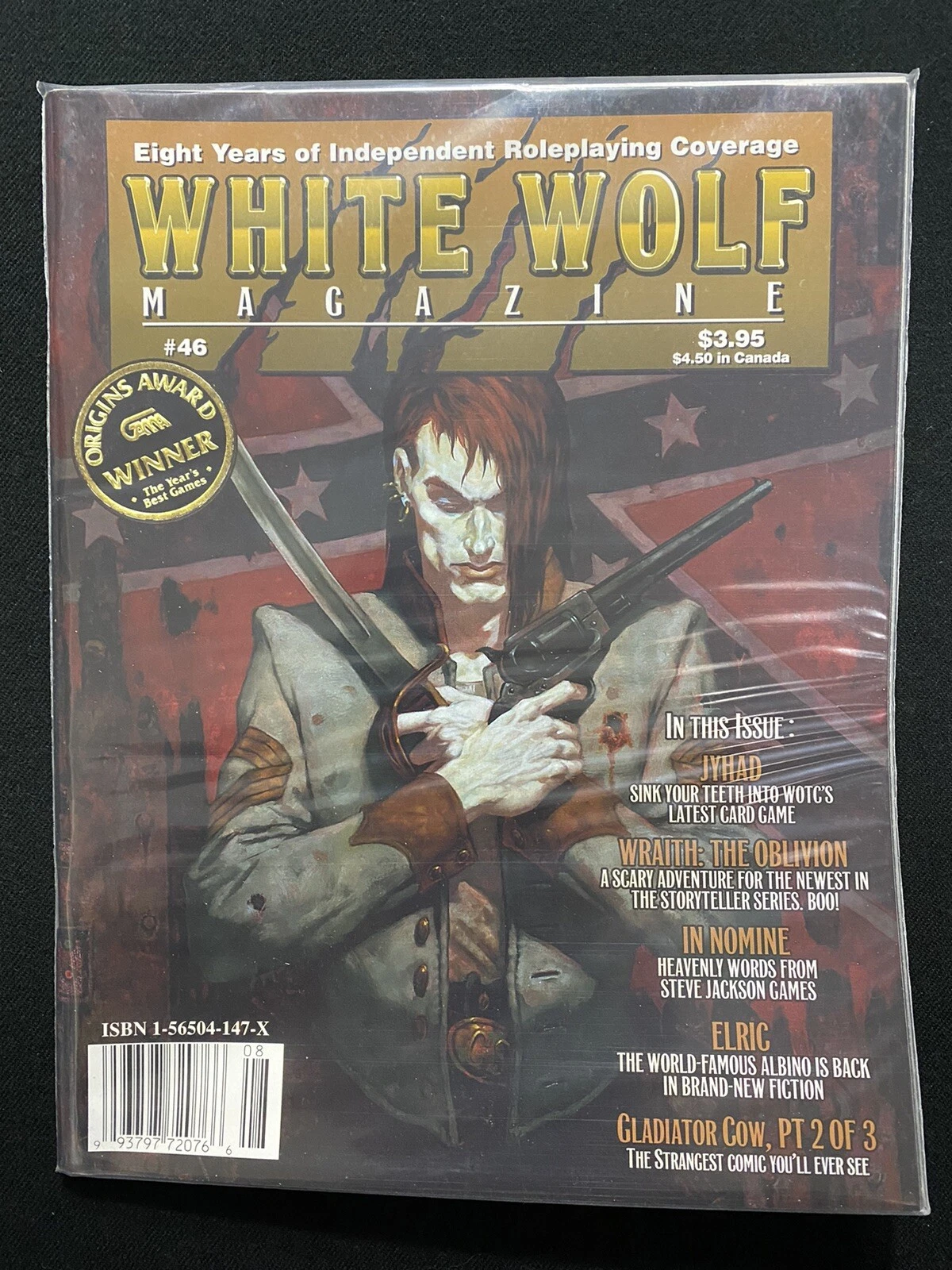
Specifically, to the Cover of White Wolf Magazine #46:


Image


That image was the beginning of the creation of Deadlands. Long story short the mechanics of Deadlands were stripped from the game and then simplified. The new simpler rules were released as a generic game engine, and there are a host of supplements that apply these rules to different settings, including applying them back to the original Deadlands setting.

Mystery solved.

Now, Deadlands didn't run very quickly. I could spend a lot of time reading over the original rules, but in a nutshell you had a die size for your attribute (like d8) and [I lied, I did go back and read it] and you might have a skill of 4; in that case you roll 4d8. These are not added together, instead you take the highest single roll. Further, dice 'explode'.

This creates a weirdness in the power curve. A d4 is supposed to be worse than a d6, but if your TN is 6, a d4 succeeds 18.75% of the time and a d6 succeeds only 16.67% of the time.

The thing is, rolling 5d12 and then figuring out which is the highest (possibly tracking 2 or more exploding dice) isn't a particularly fast step. To simplify things, this was reduced to a single die. Instead of rolling 5d12, you'd just roll 1d12, and the TNs would have to remain lower to make that work.

For PCs, but not for minor NPCs, they introduce another die (usually a d6). You get to roll 1d12+1d6 and take the higher.

Deadlands did have advancement; you could spend XP to raise your attributes and skill modifiers. In part because characters were semi-random, and different characters got XP at different rates, it might be hard to compare two characters. Clearly a character that had many advancements would be better than a character that was just starting out, but none of that was codified. Inspired by D&D 3.x, they built a level-system and codified what increases you get at each level. They already had Feats (Edges) before 3.x, so characters could be customized. All of that makes it into the new system.

For myself, I'm wondering if two characters, one with a d8 and one with a d10 really represent any major difference in skill. Even if you're not adding dice, 5d10 is 41% likely to produce a 10 (before exploding) while 2d10 is only 19% - someone with more dice is clearly going to succeed at a difficult task noticeably more often. I'll table that since we're not even in the 'real rules' - just the overview of how the rules got created.

Originally hitting something was Roll to Hit, Roll to Defend, Roll to Wound, Roll to Resist (sounds like Warhammer 40k). Changing the resists to static values for hitting (like 3.x) cut the rolls down. While that covers hitting something, damage was also convoluted. To deal damage you have to overcome a threshold based on the targets Vigor and Armor; these values can be high, so often weapons weren't actually hurting anyone; or, if they did it was because of exploding dice. To fix this, each raise (4+ relative to the DC to hit) you get +1d6 damage.

That is, if you're attacking with a sword that does STR (1d10) + 1d6, and you hit a TN 4 with a 12, you qualify for 2 raises, so you get 1d10+3d6. For PCs, 'bennies' can potentially negate a portion of the attack. Since the damage threshold may be too high to damage someone without an ace, two hits that don't cause enough damage equal a wound... I'll expand on this later.

That covers the intro to the intro. Next up I'll dive into the rulebook for Savage Words Adventure Edition (SWADE) - the rules engine with all the setting info removed (212 pages); then I'll look at the Deadlands setting book, which puts all the setting rules back in (200 pages). And then hopefully I'll look at the Deadlands 20th anniversary edition, which appears to be a reprint of the original rules (413 pages).

With this much too look at, I'm not planning on going into great depth. I'll try to include examples of the types of abilities that are given, but not do an exhaustive review of those abilities.
-This space intentionally left blank
User avatar
deaddmwalking
King
Posts: 5352
Joined: Mon May 21, 2012 11:33 am

Re: Let's Read: Savage Worlds Adventure Edition & SWADE Deadlands

Post by deaddmwalking »

The version I'm looking at is listed as the 4th printing and has a copyright of 2022


Image
And it looks like this


The PDF is 212 pages including covers. The Table of Contents has 10 major sections: Any Time, Any Place (intro, 1 pg), Getting Started (3 pages), Characters (50 pages), Gear (16 pages), Rules (10 pages), The Adventure Tool Kit (34 pages covering Hazards, Social conflict, etc), Powers (25 pages, magic), Bestiary (18 pages), Game Mastering (8 pages), and the Index.

The first section Any Time, Any Place emphasizes that these rules are GENERIC - they can be used in any genre and any setting.
Perhaps the best thing a game system can do is support YOUR ideas. It should serve as a background and a common language for your players - then get out of the way as the story races to its conclusion. We've attempted to make that even better in this edition by streamlining many modifiers, simplifying how you pose creative challenges for foes and support your allies, and even opening up new options for heroic multi-actions.
There's certainly room for a rules-system that can apply to any genre. Obviously that's what GURPS tries to do, but it is not particularly quick to resolve. There have also been many efforts to apply the d20 system to various other genres where it hasn't done particularly well. The fact is that d20 does heroic fantasy reasonably well - where PCs advance to the point where it's not strange that they can survive a literal building being dropped on their heads - but it struggles in other settings. It certainly doesn't lend itself well to a setting where a single attack can drop a powerful enemy.

The next section, Getting Started includes the obligatory 'What's a Roleplaying Game?'. In addition to the explanation of standard dice, Savage Worlds uses a playing deck for initiative. This was part of the Deadlands rules, and generally fits the aesthetic of a Western RPG. I'm not convinced it works as well for other settings. Also, players are supposed to share a deck. I play online with my friends using video conferencing; physically distributing playing cards isn't possible. Each player using their own deck creates potential issues; I think that this is something that would need altering in our case.

Savage Worlds, like Deadlands, uses a physical currency to change the narrative. The generic term is 'bennies' (short for benefits) but in Deadlands they were called Fate Chips originally. They're covered more in the rules chapter but by default players start every session with 3 tokens; they get extra tokens when a Hindrance makes their life harder and/or when players are extremely creative/funny as determined by the GM. I looked at Huckleberry, and it awards these types of tokens when you succeed, which I think is a mistake. In Savage Worlds, a bennie is also issued to every player when one player receives a Joker as their initiative card.

For my money, the other important consideration should be genre emulation. In Westerns, letting someone draw before you shoot them down is an important part of the setting - drawing on someone and shooting them is murder; shooting someone who is drawing their weapon is self-defense. Giving people an incentive to respect the conventions of the setting seems worthwhile.

The other tools are all pretty standard - miniatures and adventures, etc. The only additional thing that warrants mentioning is 'companions'. These are 'genre guides' which introduce new rules specific to the type of setting. I believe that the Deadlands rulebook qualifies.
-This space intentionally left blank
User avatar
deaddmwalking
King
Posts: 5352
Joined: Mon May 21, 2012 11:33 am

Re: Let's Read: Savage Worlds Adventure Edition & SWADE Deadlands

Post by deaddmwalking »

Chapter 1: Characters

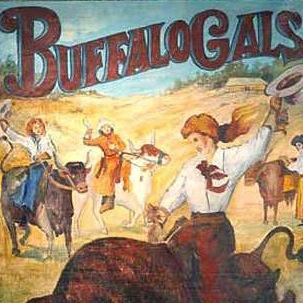
Traditionally, Deadlands didn't have classes. They had Archetypes, but those were essentially lists of skills, Edges, and Hindrances that were appropriate to the different character types. A Buffalo Girl (archetype) and a Gunslinger both invest in skills related to shooting. As the characters advance, the Buffalo Girl can pick up every ability that the Gunslinger has, and the starting differences are small enough that you can pretty much call yourself a Buffalo Girl but be a Gunslinger or vice versa.


Image
I thought Buffalo Gal was the same as Soiled Dove, but in this case it means big-game hunter.


In the document explaining the creation of the system, they mentioned 'Professions'. They used the example of a Wizard and a Superhero that both had access to fire powers. A Wizard has potentially MANY powers, and fire powers are just one of them; a Superhero probably has very FEW powers, and all of them are fire based. Similarly, a wizard can probably use fire powers just a few times per day, while a super hero can probably use a fire power every single round. In this case, Profession impacts how many powers are available, and how many 'spell points' are available to power those. Nothing in this book appears to address that. It does not appear that the Deadlands specific book has Professions either. Instead, there are several Arcane Backgrounds Edges; you can only choose one and that specific background determines the various elements of what powers you have access to and how they work.

The chapter opens with a paragraph on each of the mechanical concepts that are described in more detail later. They are:

Concept
Race
Hindrances
Traits
-Attributes
-Skills
-Derived Statistics
Edges
Gear
Background Details

More on these later.
-This space intentionally left blank
User avatar
deaddmwalking
King
Posts: 5352
Joined: Mon May 21, 2012 11:33 am

Re: Let's Read: Savage Worlds Adventure Edition & SWADE Deadlands

Post by deaddmwalking »

Races
Keeping in mind that this is a generic rule set without any setting, the races are highly varied. They include Android, Aquarian (merman), Avion (birdman), Dwarf, Elf, Half-Folk (halflings), Humans, Rakashans (catman), and Saurians (dragonman). That's followed by a list of traits positive and negative to balance races out. That's a pretty straightforward way of doing things, and it turns out you can play a winged wizard using these rules in a way that you can't with Daggerheart.

Race as Class is a bad idea. So this is already ahead of some new games.

In Deadlands, humans are the only available race. In some settings humans get regional variations. Standard humans get an extra Edge at character creation.

Hindrances
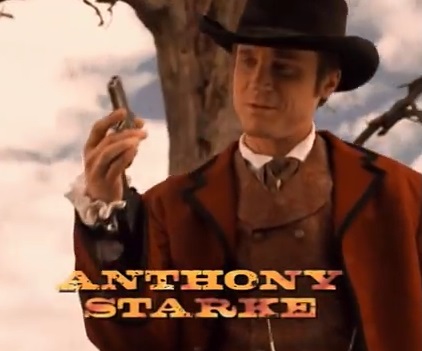
These are problems that you choose for your character. Flaws come with a severity - the equivalent number of points you can spend to improve your character. You can take up to 4 points of flaws. Those 4 points can be used to raise an attribute (2 pts), buy an edge (2 pts), gain a skill point (1 pt), or get extra starting money (1 pt). In many ways they're similar to 3.x Flaws. But in 3.x, you try to pick a flaw that never causes you a problem. In Savage Worlds, when flaws make life hard, you get Bennies. I think that makes this a better implementation - you pick a Flaw that you think will be fun to play and that will cause SOME problems, but not so many problems that you can't play.

There's just over 50 Hindrances here and another 10 in the Deadlands book. These include various versions of poor eyesight, missing an arm, or dying of consumption.


Image
It can take a long time to die


Traits
This section covers both Attributes and Skills. In 3.x, you roll a d20 modified by your attribute to perform a check. In this system, attributes don't add to your skill roll. Instead they determine how expensive it is to advance a skill. If you have a d8 in an attribute, you can buy a linked skill at d4 for 1 point, raise it to a d6 for another point, and then raise it to a d8 for one more point (for a total of 3). If you want to raise that skill to a d10, it will now cost 2 points unless you raise your attribute first. There are some minor differences between raising a skill/ability at character creation versus when advancing a character, but fundamentally that's how it works.

What are the Attributes? Agility, Smarts, Spirit, Strength and Vigor. In this edition (SWADE) they removed Charisma, which was apparently in the earlier version.

On the subject of Attributes, there's very little SCALE. The average human has a d6 for every stat. The highest attribute for a normal human is a d12. A bull has a STR of d12+3; a dragon has a STR of d12+8 so going 'off the scale' in a positive direction is possible. A dog has the same stats as a normal human. Doing anything smaller also requires adjusting the scale; a cat has a STR of d4-3.

There are about 30 skills, of which Fighting and Shooting are probably the most important for combat. Both are Agility based. A number of skills are 'innate' meaning that characters automatically start with a d4 for that skill. All other skills must be purchased. Innate skills can be improved like other skills.

Next up: Edges.
-This space intentionally left blank
User avatar
deaddmwalking
King
Posts: 5352
Joined: Mon May 21, 2012 11:33 am

Re: Let's Read: Savage Worlds Adventure Edition & SWADE Deadlands

Post by deaddmwalking »

Edges

Edges are like Feats - they give you a special ability that you might not have had otherwise. Like Feats, they have (at least sometimes) prerequisites.

I mentioned previously that they created a level system that didn't exist in Deadlands. They're called 'Advances'. Basically each time you advance your character (ie, buy a new skill or something) you can count that as +1 Advance. If you have 0-3 Advances you're a Novice; 4-7 you're Seasoned; 8-11 you're a Veteran; 12-15 you're Heroic; and 16+ you're Legendary.

When you get an Advance, you get one of the following:
-A new edge
-Increase a skill above your linked attribute by 1 rank
-Increase 2 skills below your linked attribute by 1 rank (includes adding a new skill at 1d4)
-Increase one attribute (maximum of once per rank)
-Remove a Minor Hindrance, or reduce a Major Hindrance to Minor

They advise that you prioritize increasing attributes. You can't do it every advance, but if you do it, it'll make the skill purchases cheaper. It also allows you to qualify for some of the Edges.

So Edges may have a 'Rank' requirement like Legendary or Seasoned. It may have an Attribute requirement like Spirit d8+. It may have Skill requirement(s) like Stealth d6+, Thievery d6+. It may also have another Edge as a pre-req like Arcane Background (Any).

As a human, you should get one Edge for free. You can also spend points from taking Hindrances for additional Edges.

An example Edge is Brawler. You deal STR + 1d4 damage with your fists and get +1 Toughness. Later you can take Improved Brawler and increase your damage die (so STR + 1d6) and get another +1 Toughness.


Image


There are different categories of Edges, like Combat, Social, Power (magic) and Background.

There are like 50 combat Edges, so probably at least 120 Edges published in this book, and more in setting specific books. There are almost certainly going to be dozens of Edges that could help any character concept. If you're a gunslinger, you could reasonably want Two-Gun Kid, Trademark Weapon, Improved Trademark Weapon, Steady Hands, Rapid Fire, Improved Rapid Fire, No Mercy, Nerves of Steel, Improved Nerves of Steel, Marksman, Level Head, Improved Level Headed, Killer Instinct, Double Tap, Combat Reflexes...and more.

And that's just to emphasize shooting. He may want Edges that make him better at fighting hand-to-hand, too.

Which leads me to advancement should be more strictly codified. Each time you advance you should get an Edge (or buy off a Hindrance) and 2 skill points (or 1 if raising it higher than your attribute). At every 4th advancement you should get an Attribute. Why do it that way? One, it ensures that players are advancing along multiple paths (helping ensure parity between characters).

There are almost 20 pages of Edges, and then another 7 pages of tables with summaries. It's a fair chunk of the book, and like Feats, pretty easy to think of something that you want to do and just say 'now it's an Edge'.
-This space intentionally left blank
User avatar
deaddmwalking
King
Posts: 5352
Joined: Mon May 21, 2012 11:33 am

Re: Let's Read: Savage Worlds Adventure Edition & SWADE Deadlands

Post by deaddmwalking »

Gear

So while there's gear in this book, the Deadlands Source Book essentially replaces it.

Guns typically do 2-dice of damage (ie, 2d+1 for a Single Action Colt Army .44). Single and Double Action impact how many shots you can fire. Ultimately, there's very little difference between pistols.

A Colt Army .44 Single Action and a Colt Frontier .44 Double Action have the exact same stats, and a $3 difference in cost. A Colt Peacemaker is identical except weighs a little more.

Figuring out if you hurt someone depends on a combination of Armor and their Toughness. But in a Western RPG characters don't wear armor. If you want people NOT DYING at a similar rate to a system based on medieval weapons you either have to reduce firearm damage (which is weird since you'd expect a gun to be at least as good as a knife), artificially inflate people's toughness, or let them get the benefit of armor.

Medieval Plate Armor gives Armor Protection +4. Medieval Leather Armor gives Armor Protection +2. In Deadlands you can get an Armored Duster (Heavy) and get +4 Armor Protection, just like Plate Armor. I don't think that's a particularly satisfying solution

This is actually a hugely significant design element. If you want players to walk around looking like Ezra from the Magnificent Seven TV Show (streaming on Pluto) then armored trench coats can't be too important.


Image
I'd like this to be a supported character archetype


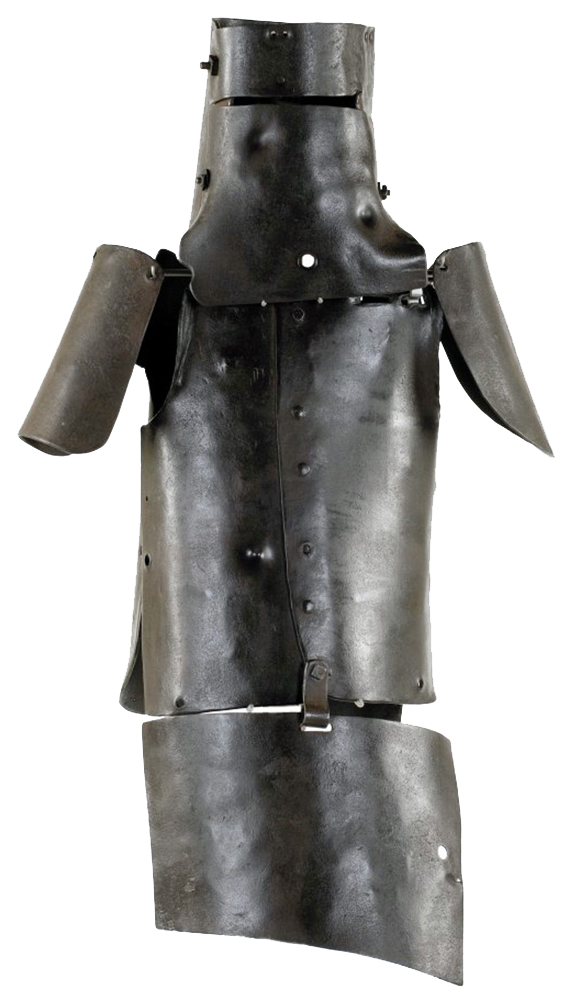
On the other hand, if the setting features knives, arrows, and tomahawks (and it does) then wearing medieval style armor would protect characters from a lot of potential threats, even though it is completely inconsistent with the setting.


Image
Or MOSTLY inconsistent. Ned Kelly saw my point


In 3.x, armor makes you harder to hit. Getting rid of armor means that people have to be harder to hit for other reasons, or else people are hit all the time. But if you make them too dodgy, players get frustrated that they never hit.


Getting the hit frequency/damage equation right is really hard, especially if you're trying to maintain consistency between a fantasy setting where wearing armor is normal and a 'modern' setting before advanced ballistic armor becomes standard. Abstracting damage helps some - a 'near miss' could shave a few hit points without a character walking around with 12 bullets in him.

So let's talk about damage (we're skipping ahead a fair bit in the book).

You know you have Attributes, which include Vigor. Toughness is a derived stat based on your Vigor. It's 2 + 1/2 your Vigor die. So if you have a d4 Vigor, your Toughness is 3. If you have a d12 Vigor, your Toughness is 8.

To take damage from an attack, it has to exceed your Toughness. 2d6+1 damage from a pistol is almost certainly going to hurt someone with a Toughness of 3. It might hurt someone with a Toughness of 8. But armor adds directly to your Toughness. If you have a +4 armor from an armored Duster, the frail dude now has a Toughness of 7. Our tough dude now has a Toughness of 12.

There are wound boxes. The first one is 'shaken', the rest are wounds and add a cumulative -1 to all your rolls. If you roll enough damage to equal or exceed toughness, your target is shaken. If you get a raise (4+ TN), you do a wound plus shaken. If you get two raises (8+ TN) you do two wounds plus shaken.

If you're already shaken and would be shaken again, you get a wound. You can throw off being shaken relatively quickly.

So let's say we're doing 2d6+1, and each d6 can explode (roll and add if you roll a 6). We have a 47% of doing at least 9 damage. Against our Frail person without armor (Toughness 3) we get a hit and 1 raise, dealing a wound and shaken. If they have armor (Toughness 7) we get a hit; they're just shaken. Against our tough hombre, 9 damage is enough for shaken. If he puts on armor that's not even enough to faze him.

The game wanted 'faster combat', and they recognized that they don't really have faster rolling compared to many games. The fact is that 'aces' mean more time spent determining if you have a raise, and since TNs are often dependent on the opponent, you have to know the target number and quickly determine how many multiples of 4 you have. To their credit, they recognized that fact. They argued that increased speed comes from tracking less after a hit. If it's a minor character, a single wound kills them. If it's a major character, 3 wounds kills them.

Being shaken largely prevents you from acting in combat, so shaking that off is pretty important. You can spend a bennie to do that, even when it's not your turn. So PCs are probably not shaken very often or very long.

Rather than take the wound, you could also Soak the damage. Spend a bennie and make a Vigor check.

I'm going to let that all percolate and have some thoughts later.
-This space intentionally left blank
User avatar
deaddmwalking
King
Posts: 5352
Joined: Mon May 21, 2012 11:33 am

Re: Let's Read: Savage Worlds Adventure Edition & SWADE Deadlands

Post by deaddmwalking »

The Rest of the System

I've read through the rest of the rules, and the system hangs together pretty cohesively. You can look at a game by the 'toggles' - the things that affect results. In 5th edition, 'advantage' is the major toggle - it changes which dice you roll, thus impacting the success or failure of your action.

In this system, you generally roll your skill. If you don't have a skill, you roll 1d4-2. Just about everything that could impact it is a small bonus (+1 or +2) or a small penalty (-1 or -2). For example, if you want to attack someone with a sword, it's your Fighting Skill against their Parry. But what if you just want to 'touch' them with your sword? Armor doesn't impact your ability to hit, so it's just a straight +2 bonus - touching someone is easier than hitting them to do damage.

The other major toggle are re-rolls. If you don't have a critical failure (1/6 x 1/your skill die; ie, if your skill is 1d6 you have a 1/36 chance of a critical failure) you can spend a bennie to reroll your skill.

Having someone use a different die (moving it up or down a step, as in Huckleberry) isn't used. In some cases where a task involves two different skills (such as shooting a pistol while riding a horse), you use the lower skill.

In 3.x terms, we often think of success in terms of both skill (training, skill ranks, base attack bonus, whatever) and attribute (BAB + STR for a weapon attack roll); in this system only the training matters, and the Attribute essentially establishes the maximum skill available. If two people pick up pistols for the first time, one with an Agility of d12 and the other with an Agility of d4, natural ability doesn't give one the advantage; they're both making the roll at 1d4-2.

It wouldn't be hard to add an attribute based bonus; you could do 1d4 (+0), 1d6 (+1), 1d8 (+2), 1d10 (+3), and 1d12 (+4). This would make a character with Attribute 1d12/Skill 1d12 noticeably better than someone with Attribute 1d4/Skill 1d12 - without something like this there's no difference in performance. However, there would be a noticeable difference in investment of effort. To get to a d12, the d4 character would have spent 9 skill advances; the character with a d12 would have spent 5. Alternatively, your skill rank could provide your bonus; anyone with a d10 Agility could roll a d10 for shooting; if they had a 1d6 in the Shooting Skill it'd count as a +1. Obviously, adding modifiers impacts probabilities for success rates and its not entirely obvious that skill + attribute should matter. The system made a design choice and it is defensible; adjusting it is one of the easiest ways to take the underlying system and give a very different flavor regarding 'untrained competence'.

A common archetype is a fast character. Since initiative is determined by a deal of a card, and no character has any ability that affect the VALUE of a card dealt, the only way to simulate faster characters is giving them MORE cards. Relative to dice, there's some interesting impacts on probability. When you roll dice, the results are INDEPENDENT, so we normally talk about something like a 1/6 chance and a 1/6 chance, and two ones being a 1/36 chance. When you draw cards, you have a 1/52 chance of any particular card (or 1/13 of a VALUE), but once that card is removed your next chance for a particular card is 1/51. The more cards you draw, the more likely you will get EVERY value. By default, every player gets 1 card. Certain Edges give you more. Level Headed characters get an extra card. Quick characters can discard any card lower than a 5 and draw again until they have better than a 5. Quick Draw characters can spend a bennie to get 2 additional action cards rather than 1. Assuming you want to go faster than your opponent, the probabilities depend entirely on what they draw - if they have an ace it's pretty much impossible to draw a better card (though this system does use rank order so two aces are not EXACTLY equivalent). But let's use the example that they drew an 8. There are 6x4 lower cards (2, 3, 4, 5, 6, 7; one of each suit); there are 6x4 higher cards (9, 10, J, Q, K, A; one of each suit); and there are 3 cards that are the same (8). A lot of math later, the odds of beating that card are 72.5%. The quick and dirty version is that 1/2 the cards are higher and 1/2 the cards are lower; the odds of pulling two lower cards is ROUGHLY 1/2 x 1/2. Your odds of pulling a higher and a lower are roughly 1/2 x 1/2; your odds of pulling a lower and a higher (same difference) are roughly 1/2 x 1/2. And your odds of pulling a higher card on both draws are roughly 1/2 x 1/2. Only in the case where you draw two lower cards do you lose, the impact of an extra card is much more significant.

If you compare someone with a 1d20 initiative versus someone with 1d20+4, the higher initiative wins 66%. If you increase that bonus to +6, it's 74% of the time. It's not a direct comparison because 1/52 times your opponent will pull a card you can never hope to beat and 1/52 times they'll draw a card you can never lose to (and if you draw two, even if they draw the second lowest card you can't lose, even if you ALSO draw the lowest card).

Additionally, each time a Joker is drawn for your team, you all get a Bennie. If the GM draws a Joker for Team Monster, he gets bennies for his important NPCs and another for a general pool. If you're discarding 2, 3, and 4s, you're cycling through that deck pretty quickly and greatly increasing your chance of pulling a Joker.

But there's more to talk about... So you've set yourself up as someone who is REALLY FAST. And since we're imagining ourselves in a Western you find yourself in a situation where you're supposed to duel against someone else at high noon. After having drawn 7 cards (after extras and discards) you have an Ace. Your opponent has a Jack. You go first.

The problem is, if you draw first and gun him down, you might get accused of murder. You have to let him reach for his gun so you can claim self-defense. You're the fastest as evinced by drawing all those cards, but you're waiting until his turn (holding) and hoping to interrupt. So his turn starts and you want to interrupt him. You now need to make an opposed Athletics roll. To make sure you win the gunfight you'll have had to invest in that skill, too. And even if you did, you're basically looking at a straight roll against your opponent - none of those edges you invested in extra cards/improved initiative apply to that.

Now, actually having the shot come down to an opposed roll is probably BETTER than automatically being guaranteed a chance to beat your opponent. The only reason I say it's a problem is that if you've invested character resources in being 'the fastest gun in the west' you'd expect to have some advantage when it comes to the actual duel...
-This space intentionally left blank
User avatar
deaddmwalking
King
Posts: 5352
Joined: Mon May 21, 2012 11:33 am

Re: Let's Read: Savage Worlds Adventure Edition & SWADE Deadlands

Post by deaddmwalking »

Dice Mechanics
In case I have not explicitly made it clear, the primary resolution mechanic is a single die, and the size of the tie increases as your skill increases. Critically, PCs also roll a second die that is always a d6. This is called 'the wild die', and it actually makes a huge difference in terms of expected success rate.

The 'expected TN' is 4. If you were rolling just one d6, you'd hit the TN 50% of the time. But when you roll 2d6 and take the best, you hit that result 75% of the time. There's a similar story. Even a d12 hits a TN 4 75% of the time. But you combine it with a d6 'uh-oh' die, and that jumps to 87.50%.

There are penalties so the TN isn't always 4, but it's pretty clear to me that a character that is 'good' at something will succeed often enough that they'll feel like they're good at something. Especially since many times the penalties that you might have can be negated by an Edge.

As far as using dice to represent increased skill, moving from a d6 to a d8 FEELS like an increase because you're physically using a different die - there's a tactile CHANGE. That doesn't really exist when you get a +1 to your d20 roll. And while going up a die is only effectively a +1, there's some benefits. Someone rolling 1d6+1 has a range of 2-7 - they can't 'roll a 1' anymore. So while 1d8 and 1d6+1 average out the same, the 1d8 has slightly more range both at the top and the bottom. That keeps the possibility of a lower die out-rolling a higher die as a fairly routine occurrence. Basically everyone is staying on the same RNG.

I've already mentioned that there's some weirdness in probability where an exploding d4 is more likely to get a 6 than a d6 (even an exploding d6 which can't actually get 6, but can get 7+). Rolling dice and then rolling exploded dice, and potentially comparing an exploded d6+d6 to a d10+d10 involves some potentially intensive rolling sessions. Whether rolling and exploding is 'fun' is a question for the group. My feeling is that GENERALLY, it is. Especially because getting 'extra successes' means something in this game. In D&D, having a 30+ when you only needed an 18 means you stop counting. Carrying over a piece of an attack roll into damage makes those attack rolls matter more.

This isn't as bad as the Pathfinder Critical Hit rule (10+ over target counts as a crit).
The insistence on making everything gain an effect level every +10 on the result means that you never leave the range where a +1 bonus has a large relative impact. By the time you're regular hitting on 10 numbers, you are critical hitting on 1 number. So while +1 doesn't add any damage output from your regular hits, it adds +100% to the output of your critical hits. And while a critical hit is less than 10 regular hits, it's a lot more than 1. Every bonus adds 1:1 to the chances of getting the highest tier possible result and removes 1:1 from the chances of getting the lowest tier possible result. If you hit on an 11+, you fumble on a 1 and critical on zero numbers, and if you add +1 to that you critical on a 20 and fumble on zero numbers. You've basically blanked out the number that made you stab yourself and replaced it with a number where you hit your opponent twice.

That paradigm means that every +1 is incredibly valuable. As much if not more so than it was in 4e. As such, expect the PF2 player community (to the extent that it exists) to be into micromanagement and bonus whoring to the same degree that the 4e community was.

Weird shit like Inspire Courage is going to stay on everyone's radar. And the only reason it won't become an assumed part of every party is if it turns out that there's something more efficient to do to give everyone stackable small bonuses.

-Username17
In this case, stacking bonuses just isn't a thing, so turning every hit into a crit automatically doesn't happen the same way. If you're hitting on a 4, you're getting +1d6 damage on an 8 and +2d6 on a 12 which is meaningful but doesn't drive the game in the same direction of searching for stacked bonuses.

As a result, even though rolls don't reflect attributes in any meaningful sense, the overall systems yields results in line with what you would want and expect - it works as intended. In a case where you want a highly skilled ninja warrior to be just as deadly as a highly skilled muscle-bound samurai warrior you basically get that (technically swords get STR to damage, so attributes might make a relatively insignificant difference).

I think the biggest obstacle is really that combat skills, which determine how often you hit and how often you ARE hit cost the same as non-combat skills. It'd be very easy for players to load up on an unreasonable number of combat focused skills and neglect other skills. Creating 'balanced characters' isn't pushed by the ruleset.

Overall, I'm reasonably impressed. Especially with setting specific books, this is a pretty flexible ruleset that covers a lot of territory well. I'd be willing to play under this system and expect I'd enjoy it.
-This space intentionally left blank
pragma
Knight-Baron
Posts: 839
Joined: Mon May 05, 2014 8:39 am

Re: Let's Read: Savage Worlds Adventure Edition & SWADE Deadlands

Post by pragma »

I've flirted with Savage Worlds on and off for a decade, and the games I've run have half been terrible and half been awesome. So I have opinions!
Dead wrote:The first section Any Time, Any Place emphasizes that these rules are GENERIC - they can be used in any genre and any setting.
The fanbase, and perhaps the book itself, emphasizes that the rules aren't completely generic. They are designed for pulp adventuring, where the protagonists lead action rich lives knocking about many lesser henchmen. That matches my experience: the game shines in big set piece fights where tracking would be a nightmare in D&D. There the up, down or out HP mechanics make tracking much easier.
I've already mentioned that there's some weirdness in probability where an exploding d4 is more likely to get a 6 than a d6 (even an exploding d6 which can't actually get 6, but can get 7+)
This numeric wonkiness definitely shows up. The game struggles to represent big enemies, who just bounce lesser attacks off of them. It also falls down with big PCs, who can just ignore lesser threats. This is in part the difference between a toughness of 6 and a toughness of 5 vs. d6 damage enemies, especially when you have the "ignore swarms" edge, can break genres. A zombie horror scenario, even one with a lot of chainsaws to channel pulp energy, can break over the right combination of edges. I suspect the strategy, as in 5e, is to make big monsters out of many little monsters stapled together; you don't fight a dragon, but rather fight a head, wings, legs and a tail.
There are like 50 combat Edges, so probably at least 120 Edges published in this book, and more in setting specific books. There are almost certainly going to be dozens of Edges that could help any character concept.
I also struggle with reading Savage World supplements, because the character notation is so compact that I can't tell what is powerful about them. Unless i have all the edges memorized, the characters all look like a small block of samey numbers followed by 3-5 phrases. That doesn't mean that characters and monsters won't differentiate in play, but I think it's a count against the system that it doesn't jump off the page.
Overall, I'm reasonably impressed. Especially with setting specific books, this is a pretty flexible ruleset that covers a lot of territory well. I'd be willing to play under this system and expect I'd enjoy it.
I continue to be fascinated by the system as well. There are a ton of fun settings and supplements, and the system is deep enough and modular enough to support a lot of different genres by bolting a few bits of rules here and there. Even so, it has never quite won out over more specialized systems for me. I need to do a longer campaign sometime to see if it might displace other games, but the "Whatever WIthout Number" family of systems has kind of won out for "generic ruleset that covers a lot of ground" in my perosnal catalog.
This isn't as bad as the Pathfinder Critical Hit rule (10+ over target counts as a crit).
Sidebar, but I got to try PF2 recently, and this is definitely a feature instead of a bug. It incentivizes some cool team play by allowing hindering maneuvers (intimidate, trip, etc.) to help allies get crits more often, and it leads to some neat bits of build strategy. I think it also has the effect of making fighting a solo monster that is a few levels high a slog - they always crit, you often fumble. So the design point for big fights is similar: it's better to fight a scary team than a single scary monster.
User avatar
deaddmwalking
King
Posts: 5352
Joined: Mon May 21, 2012 11:33 am

Re: Let's Read: Savage Worlds Adventure Edition & SWADE Deadlands

Post by deaddmwalking »

I'm not sure I'd take that as a full-throated endorsement of the Pathfinder Critical Hit Rules.

I definitely think that getting players to work cooperatively to boost their relative chance is good in play. I'm also not opposed to the idea that players should spend some time thinking about character options and making selections that enhance their character. Generally, I'm against abilities that add +x to anything. At least, if that's ALL they do. Frankly, that's boring. It may be mechanically beneficial, but it doesn't qualify as a 'real ability'.

In our fantasy heartbreaker, we have Talents like 'Expert Tactician' that let you get double the normal bonus for combat situations like flanking (+2 per flanker instead of +1, or +2 for higher ground instead of +1), which are similar, but I feel that they express something about the character that make them worthwhile, and they're mostly conditional (the player has to do something to get the benefit). There are a variety of abilities that reduce/negate penalties, so not every ability is 'here's a cool new toy to play with', but I definitely want players to have those more than a bonus.

For similar reasons, we don't have +x weapons - magical weapons do something beyond just a bonus to hit/damage. The concept of a +5 sword just bores me as I approach 4 decades of RPG play.

On the subject of Whatever Without Number, is there one that's aimed at a Western (or adjacent)? I know of Stars Without Number and Worlds Without Number - what should I be looking for to read through?
-This space intentionally left blank
pragma
Knight-Baron
Posts: 839
Joined: Mon May 05, 2014 8:39 am

Re: Let's Read: Savage Worlds Adventure Edition & SWADE Deadlands

Post by pragma »

Ashes Without Number is for post apocalypses, but it skews a bit Western and includes a cowboy class. If you ignore the mutations I think there are good vibes there. I've also heard praise for Weird Frontiers, but can't vouch for it; things get pretty wooly as you venture deep into OSR knockoffs.
Post Reply