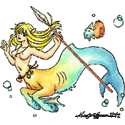
I would definitely have no problem with Elves/Humans/Dwarves/Merfolk being basically the same race... From the Forest/Everwhere/Mountains/Waters. Just the variants thereof. That's why they can intermarry, and why their cultures are slightly different.
-Crissa
Ending TNE Work Stoppage
Moderator: Moderators
-
bosssmiley

- Apprentice
- Posts: 68
- Joined: Tue Apr 29, 2008 7:56 pm
Warhammer Orcs are weaksauce as a culture. Between the Mockney "I'm ded fik me" accents they're are lumbered with, their lowbrow fanboi machismo appeal, and the fact they have literally *no* culture beyond fighting they are dull, dull, dull.Koumei wrote:Is that just because of the way they speak?FrankTrollman wrote:The Warhammer style Greenskins are to my mind unsatisfying,
The Beastmen steal a lot of the Orcs' place as 'the wild things that lurk in the woods and eat little children'. The Skaven occupy the 'swarming hordes in the darkness' niche, leaving the Goblins as little more than joke creatures. Even one-book-wonders like Chaos Dwarves and Ogres enjoy a richer cultural background (this is actually lampshaded by a comment in the Tomb Kings book that the Orcs haven't grown as a culture in millennia). WH40K handwaves Orks as a literal cosmic fungal infection; Warhammer Fantasy just has a poor pretence that they're more than this.
If Warhammer greenskins were presented as-is on a contemporary forum would pretty much merit an reaction of "Mediocre start. Now go and finish the write-up."
For all that Eberron and WoW are cheesy their evocations of Orcish and Goblin races having proper cultures is one of the better elements of those settings. It turns the faceless hordes of Mordor into real people.
The Elves, Dwarves, etc are all one morphic race is intriguing.
edit: edited into legible English
Last edited by bosssmiley on Wed Aug 06, 2008 9:04 am, edited 2 times in total.
The rules serve the game, not vice versa.
"Pass me another elf, Sergeant. This one's split."
Mary Gentle's Grunts - besides being great fun - is an excellent illustration of how you can have one species that has enormous variation in terms of size, strength and intelligence.
Despite still being a little one-dimensional in cultural terms, the orcs in her book are a damn sight more interesting than most.
The most extreme portrayal of a single race having massively divergent physical forms that I can think of in contemporary fiction is the Tanu/Firvulag "dimorphic" race from Julian May's Saga of the Exiles series. The Tanu and Firvulag between them incorporate every notable feature from "genuine" mythological elves and dwarfs, and the poor mutated Howlers run the gamut of pretty much every other faerie creature described in any western tradition you care to mention.
The whole point with them is that they're really all one species and can interbreed freely; it's actually cultural bias that keeps them apart, although over the millenia their talents as individual races have developed in different directions. The mightiest heroes of each race can pretty much be characterised as "being able to not only do the things that race is noted for really well but also being able to pull the same shit that the other races can do".
It's the weaker reeds in each race who are restricted to only their stereotyped racial tricks; the really awesome characters transcend those boundaries and you never know what you might be facing.
I've simplified the situation in the books significantly, but it might not be a bad model to follow if you want to minimise the number of actual races whilst maintaining the familiar flavour. If elves and dwarfs are actually one race, perhaps even most of them don't know it because the n00bs of each race have distinct 'racial' (actually culturally-determined) abilities.
As they get more awesome they get to pick from the laundry list of abilities that are in reality part of a shared racial pool. Their really top-flight heroes have access to everything the entire race (encompassing elves, dwarfs and whatever) can do and serve to illustrate their shared ancestral heritage to those who know what they're looking at.
Just a thought.
-
Draco_Argentum
- Duke
- Posts: 2434
- Joined: Fri Mar 07, 2008 7:54 pm
I prefer my suggestion from whatever the crap thread it was, start the PCs at level 3 or 5 or whatever. That leaves room for mooks under them without an odd notation. It also means those mooks will interact nicely with powers that add +level do damage rolls etc.K wrote:On another note, Frank and I have been discussing the idea of "under levels" that are below a starting level for adventurers. This is so that a starting adventurer doesn't have to kill rats to xp, and so that even a 1st level guy can have followers and henchmen if that is necessary.
-
Username17
- Serious Badass
- Posts: 29894
- Joined: Fri Mar 07, 2008 7:54 pm
The idea there is that you make the tiers explicit. The first level of the Paragon Tier (or whatever) is called Paragon Level 1. The first level of the Adventurer Tier is called Adventurer Level 1. And that notation allows you to have other weaker things in the world without getting into stupid notation like Level -3.
-Username17
-Username17
-
JonSetanta

- King
- Posts: 5580
- Joined: Fri Mar 07, 2008 7:54 pm
- Location: interbutts
I was amazed that I had read it too.ubernoob wrote:I wasn't aware that other people had read that.sigma999 wrote:Clive Barker's Imajica.
If I were a professor for fiction writing or similar, I would use it as an example of what not to do with "Mary Sue"ing oneself.
But I'm warning you Frank, if you ditch the archetype players will simply recreate it once it passes their way.
K: how will you handle NPC advancement in careers without gaining combat abilities? For instance, a "High level Expert" in 3.x would be needed for increased competence in their jobs, yet they gain all associated feats, stat boosts, BAB, HP, and so on without having actually fought or needing it.
Contrarywise, characters could have a separate advancement for noncombat abilities.
Is this an "underlevel"? Or is it more like LA+ without being LA+?
The Adventurer's Almanac wrote: ↑Fri Oct 01, 2021 10:25 pmNobody gives a flying fuck about Tordek and Regdar.
-
The 13 Wise Buttlords
- Master
- Posts: 233
- Joined: Sun May 25, 2008 5:19 am
Now here's for something completely different.
TNE guys, one of the biggest selling points about the Tome series was that it invited readers to look behind the scenes to see why you chose to take the rules in a certain direction and the implications.
For TNE, how much (if at all) are you going to be doing that? If you do, what will you be comparing it to, if at all?
-
Username17
- Serious Badass
- Posts: 29894
- Joined: Fri Mar 07, 2008 7:54 pm
Probably the best comparison would be to the The Ends v4.01. Behind the Scenes explanations would be used to explain why we went in a particular direction from a goal oriented perspective.
So for example, I really like the direction K is going with the experience system. And the reason it's quest based is to encourage players to finish quests rather than to run around finding easter eggs in dungeons. At no point do I want the players to turn aside from a faceoff with the evil duke in order to rampage around in the duke's warg kennels. That's frickin retarded and I don't want to do it. We were talking yesterday and K summed it up quite nicely:
But yes, one can expect that the final product will have regular essays about end-goals against which the rules are set in order to attempt to show how the end goals that we have are hopefully achieved by the rules that we write. This among other things makes evaluating rules much easier (does this actually support the explicit goal we had for it?) and it makes people putting in house rules of their own easier (does the goal the authors had for this rule match my goals?).
-Username17
So for example, I really like the direction K is going with the experience system. And the reason it's quest based is to encourage players to finish quests rather than to run around finding easter eggs in dungeons. At no point do I want the players to turn aside from a faceoff with the evil duke in order to rampage around in the duke's warg kennels. That's frickin retarded and I don't want to do it. We were talking yesterday and K summed it up quite nicely:
Another thing we don't want to ever happen is the whole thing where peasants go "Look out! That Fighter is only 10 XP from leveling!" That sort of XP dance thing is just bad all around. Hence a non-challenge based advancement system.K wrote:If the game punishes me for sneaking past a 3 headed dog, it's not a good game.
But yes, one can expect that the final product will have regular essays about end-goals against which the rules are set in order to attempt to show how the end goals that we have are hopefully achieved by the rules that we write. This among other things makes evaluating rules much easier (does this actually support the explicit goal we had for it?) and it makes people putting in house rules of their own easier (does the goal the authors had for this rule match my goals?).
-Username17
-
The 13 Wise Buttlords
- Master
- Posts: 233
- Joined: Sun May 25, 2008 5:19 am
WTF are you talking about?At no point do I want the players to turn aside from a faceoff with the evil duke in order to rampage around in the duke's warg kennels. That's frickin retarded and I don't want to do it. We were talking yesterday and K summed it up quite nicely:
That part in Breath of Fire 3 was kick awesome! Only with giant chickens instead of dogs! 8D
-
The 13 Wise Buttlords
- Master
- Posts: 233
- Joined: Sun May 25, 2008 5:19 am
But in all seriousness, however, did you want to get rid of easter egg treasure entirely with TNE?And the reason it's quest based is to encourage players to finish quests rather than to run around finding easter eggs in dungeons.
Frankly, I don't see why you shouldn't. Getting easter eggs is fun in Shadowrun, when you're trying to steal a disc and come across a safe or when you plan to acquire swag that's not part of the main plan. Roaming around the complex for Chekov's Guns can be fun to a point, like in Star Wars. Stumbling around the haunted castle and fighting Frankenstein's monster because you took a wrong turn has its place.
But the horsecrap where people put the adventure on hold so that they might find fun toys has to stop. That should either be the point of the adventure or part of the After-Action Report.
-
The 13 Wise Buttlords
- Master
- Posts: 233
- Joined: Sun May 25, 2008 5:19 am
double post
Last edited by The 13 Wise Buttlords on Wed Aug 06, 2008 4:55 pm, edited 1 time in total.
Well, I think the idea of 3.x and 4e skills has to go. Having a stat like Diplomacy that is supposed to represent everything from getting a bartender to give you a free beer to raising an army.... well, it's a good idea for efficiency, but it's not a good execution.sigma999 wrote: K: how will you handle NPC advancement in careers without gaining combat abilities? For instance, a "High level Expert" in 3.x would be needed for increased competence in their jobs, yet they gain all associated feats, stat boosts, BAB, HP, and so on without having actually fought or needing it.
Contrarywise, characters could have a separate advancement for noncombat abilities.
Is this an "underlevel"? Or is it more like LA+ without being LA+?
That being said, people will get skills, and they won't be tied to level in any way. These skills will be for things like knowledges, professions, and other things that that in DnD used to work only when a DM told you that you had a chance for them to work or were only for RP purposes.
Actual abilities that used to come for skills will be actual abilities that you choose with class features or feats that can be traded for class features from other classes. For example, if you want a charming face character, you'll choose Rogue's Charm by being a Thief, or by spending one of your feats to get Rogue's Charm.
So to summarize:
-Skills are for non-abilities. You can just be a master swordsmith or a sage-level expert on the planes. It doesn't affect the game in any way if you are since either the DM tells you when it's relevant (knowledge) or the skill can't affect the game(craft).
-Actual abilities are actual abilities.
-Things that used to be based on skills like spot, hide, jump, swim, and other basic things are based off of your ability scores. If you want a better version of one of these, you take an ability that does that.
Reasoning: Designing adventures is a real pain when you have to toss in skill checks so that people feel that they get value out of their skills. Add that to the pain of keeping track of skill points for critical skills like spot and DM has to keep raising DCs to account for your bigger skills, and the math just doesn't work out.
Also, by making these things actual abilities you can control what is possible by level. No more +19 Bluff checks on 5th level characters, for example.
For making the Tiers explicit, isn't that just changing the name as you rise in level, a continuum where you turn into a Paragon 1 after finishing Adventurer 10? Or is there going to be some kind of quantum leap of power between the Tiers, such that a Level 1 Paragon is a giant against a Level 45 Adventurer?
As long as getting an easter egg won't give you XP, that should discourage putting the adventure on hold to look for them.
I'd like abilities that have skills as prerequisites. That way, people can feel a connection between their actual powers and their background traits. Granted, it won't help if you take underwater basketweaving, which I've taught IRL (boy was that a crappy skill point ).
You can stick a list of races that fit with the rules as an addendum, but I don't want the system to default to yet another boring-ass semi-medieval European forest with Orcs and Elves stabbing each other.
Sumeru has seen alot of setting work done towards it already, so I don't see the point in dropping its focus. Even moreso considering the fact that the only attempt I've ever seen towards that area of mythology is TSR's Arabian Nights thingy, which was crap.
As long as getting an easter egg won't give you XP, that should discourage putting the adventure on hold to look for them.
I'd like abilities that have skills as prerequisites. That way, people can feel a connection between their actual powers and their background traits. Granted, it won't help if you take underwater basketweaving, which I've taught IRL (boy was that a crappy skill point
).I don't see why we should do even more Tolkien-centric stuff. It's seriously been hammered into the RPG community more times than I can possibly imagine. I want to see something different and well done, and not yet another equine corpse battered into oblivion.K wrote:I mean, I don't have any visceral abhorrence to Grell-like PCs, or thri-kreen, or even vampires or rakshasa as PCs, but I don't want to go the Monte Cook's Arcana Unearthed route and abandon things that people like just for the sake of being different.
I mean, when you can't call a warrior a Warrior and assume that people want to play sprites, you've gotten out of touch with your customer base.
You can stick a list of races that fit with the rules as an addendum, but I don't want the system to default to yet another boring-ass semi-medieval European forest with Orcs and Elves stabbing each other.
Sumeru has seen alot of setting work done towards it already, so I don't see the point in dropping its focus. Even moreso considering the fact that the only attempt I've ever seen towards that area of mythology is TSR's Arabian Nights thingy, which was crap.
Come see Sprockets & Serials
How do you confuse a barbarian?
Put a greatsword a maul and a greataxe in a room and ask them to take their pick
How do you confuse a barbarian?
Put a greatsword a maul and a greataxe in a room and ask them to take their pick
EXPLOSIVE RUNES!
-
Absentminded_Wizard

- Duke
- Posts: 1122
- Joined: Fri Mar 07, 2008 7:54 pm
- Location: Ohio
- Contact:
This is good. It makes some interesting things possible. For example, since Paragon Level 1 isn't Level 11, does this mean that Adventurer Level 11 can exist? If nothing else, it could be like the old 2e rules about advancing beyond 20th. You can advance beyond Adventurer Level 10 while the campaign is still on the adventurer tier and the campaign's wrapping up; you just get some basic numerical effects with no additional powers.FrankTrollman wrote:The idea there is that you make the tiers explicit. The first level of the Paragon Tier (or whatever) is called Paragon Level 1. The first level of the Adventurer Tier is called Adventurer Level 1. And that notation allows you to have other weaker things in the world without getting into stupid notation like Level -3.
-Username17
Personally, I don't see why you can't do a world based on Hindu mythology. The key is just not to explicitly say that it's Hindu mythology. I mean, presumably you guys didn't name the three major gods Brahma, Vishnu, and Siva, right? If all the names are changed, you can just present the world and the reader will have one of three reactions. Either the person is familiar with Hindu mythology and says, "Somebody finally stole ideas from a non-Western mythology. Cool!" Or they aren't familiar with Hinduism, in which case they either think it's the most original setting ever or condemn it as a ripoff of Dragonlance.

-
Draco_Argentum
- Duke
- Posts: 2434
- Joined: Fri Mar 07, 2008 7:54 pm
I can see having the tiers be a continuum (like 4E). As was said, it's a matter of notation. Also, it more clearly defines what that character should be doing. If you call the first four levels of the spectrum the Peasant Tier, then you get to have players start at level 5 without ever thinking they should start lower, like the current (& stupid) paradigm with D&D; there needs to be some acknowledgement when it comes to player psychology.
Come see Sprockets & Serials
How do you confuse a barbarian?
Put a greatsword a maul and a greataxe in a room and ask them to take their pick
How do you confuse a barbarian?
Put a greatsword a maul and a greataxe in a room and ask them to take their pick
EXPLOSIVE RUNES!
Nope, that won't be happening. Skills are non-abilities for flavor and RP only.virgileso wrote:
I'd like abilities that have skills as prerequisites. That way, people can feel a connection between their actual powers and their background traits. Granted, it won't help if you take underwater basketweaving, which I've taught IRL (boy was that a crappy skill point
But, each character will have a Background trait that he picks thematic abilities from. That way, the warrior from the barbarian tribes will have some different stuff from the pirate warrior.
Why choose?virgileso wrote:I don't see why we should do even more Tolkien-centric stuff. It's seriously been hammered into the RPG community more times than I can possibly imagine. I want to see something different and well done, and not yet another equine corpse battered into oblivion.K wrote:I mean, I don't have any visceral abhorrence to Grell-like PCs, or thri-kreen, or even vampires or rakshasa as PCs, but I don't want to go the Monte Cook's Arcana Unearthed route and abandon things that people like just for the sake of being different.
I mean, when you can't call a warrior a Warrior and assume that people want to play sprites, you've gotten out of touch with your customer base.
You can stick a list of races that fit with the rules as an addendum, but I don't want the system to default to yet another boring-ass semi-medieval European forest with Orcs and Elves stabbing each other.
Sumeru has seen alot of setting work done towards it already, so I don't see the point in dropping its focus. Even moreso considering the fact that the only attempt I've ever seen towards that area of mythology is TSR's Arabian Nights thingy, which was crap.
Seriously. If you look at Forgotten Realms you'll see that inside it there is an Oriental setting, a Europe-centric setting, the Arabian setting, and a South American setting, and those are just the one's with their own supplements. The Underdark setting is wrapped into that as well (though one Underdark setting is the same as another).
Unless we choose to do a post-apocalyptic or far future, all these settings can be in the same meta-setting (though we could do a Rifts-like setting where everything meshes).
-
JonSetanta
- King
- Posts: 5580
- Joined: Fri Mar 07, 2008 7:54 pm
- Location: interbutts
I like the concept of Level 0 characters plus K's explanation of TNE's skills.
It could be used to describe how many folk have absolutely no combat experience aside from childhood brawls or the occasional fight with an animal, relative, tiny savage humanoid, or neighbor.
They perform their contributions to their society and live average, steady lives, never falling in to a spiked pit trap, dragon's lair, or caused a demilich's re-awakening deep in a necropolis.
As a result, their HP and defenses might be low, they have nearly no supernatural experience let alone ability, and can't use weapons for shit.
And that's fine since they are not part of a combat encounter anyway.
If they ever are, they are treated as mooks.
In b4 'peasant hero with scythe' and so on.
Last edited by JonSetanta on Thu Aug 07, 2008 6:44 pm, edited 1 time in total.
The Adventurer's Almanac wrote: ↑Fri Oct 01, 2021 10:25 pmNobody gives a flying fuck about Tordek and Regdar.
-
CatharzGodfoot
- King
- Posts: 5668
- Joined: Fri Mar 07, 2008 7:54 pm
- Location: North Carolina
In the real world we have an "Oriental" setting, an "Occidental" setting, an "African" setting, a "Maztican" setting, a "Wild West" setting, a "South Pacific" setting, and more. They all have different mythologies with different gods, monsters, philosophies, and heroes. And those mythologies are all pretty much fiction, which is why it works.K wrote:Why choose?
Seriously. If you look at Forgotten Realms you'll see that inside it there is an Oriental setting, a Europe-centric setting, the Arabian setting, and a South American setting, and those are just the one's with their own supplements. The Underdark setting is wrapped into that as well (though one Underdark setting is the same as another).
Unless we choose to do a post-apocalyptic or far future, all these settings can be in the same meta-setting (though we could do a Rifts-like setting where everything meshes).
A wheel of karma does not sit well with an eternal heaven and hell. A 'One True creator God' does not sit well with pantheons. FR mythology is incredibly & obnoxiously more complex than it needs to be. There are ways to make multiple cosmologies work together, but it involves belittling all of them.
K wrote:Well, I think the idea of 3.x and 4e combat has to go. Having a stat like BAB that is supposed to represent everything from getting a dart-bet to give you a free beer to raising a pike.... well, it's a good idea for efficiency, but it's not a good execution.
That being said, people will get combat, and they won't be tied to level in any way. These attacks will be for things like shields, swords, and other things that that in DnD used to work only when a DM told you that you had a chance for them to work or were only for RP purposes.
Actual abilities that used to come for combat will be actual abilities that you choose with class features or feats that can be traded for class features from other classes. For example, if you want a backstabbing character, you'll choose Rogue's Stab by being a Thief, or by spending one of your feats to get Rogue's Stab.
K wrote:Nope, that won't be happening. Attacks are non-abilities for flavor and RP only.
But, each character will have a Background trait that he picks thematic abilities from. That way, the warrior from the barbarian tribes will have some different stuff from the pirate warrior.
Last edited by Crissa on Thu Aug 07, 2008 10:40 pm, edited 2 times in total.
Color me confused. You've replaced all the words in my text like "skills" and "diplomacy" with "combat" and "BAB."Crissa wrote:K wrote:Well, I think the idea of 3.x and 4e combat has to go. Having a stat like BAB that is supposed to represent everything from getting a dart-bet to give you a free beer to raising a pike.... well, it's a good idea for efficiency, but it's not a good execution.
That being said, people will get combat, and they won't be tied to level in any way. These attacks will be for things like shields, swords, and other things that that in DnD used to work only when a DM told you that you had a chance for them to work or were only for RP purposes.
Actual abilities that used to come for combat will be actual abilities that you choose with class features or feats that can be traded for class features from other classes. For example, if you want a backstabbing character, you'll choose Rogue's Stab by being a Thief, or by spending one of your feats to get Rogue's Stab.K wrote:Nope, that won't be happening. Attacks are non-abilities for flavor and RP only.
But, each character will have a Background trait that he picks thematic abilities from. That way, the warrior from the barbarian tribes will have some different stuff from the pirate warrior.
Your point?
Clearly, making subtle and ungrammatical edits to someone else's words is the most clear and cogent technique for making your opinion known.
True, there may be some confusion as to whether you are trying to emphasize or minimize the differences between the two objects related by your analogy, and which one of those two objects you believe is currently receiving inappropriate treatment, but that's OK, because people who are smarter, more dedicated, or more principled than you can be expected to thoroughly and systematically consider everything you could possibly have intended, and respond appropriately to every single possibility. That way, they have you think about your argument, but you don't even have to understand your own point!
Best of all, if they overlook any one of the myriad options you failed to spell out, then even if they give professional and eloquent responses to every other possibility, you get to accuse them of putting words in your mouth!
-
CatharzGodfoot
- King
- Posts: 5668
- Joined: Fri Mar 07, 2008 7:54 pm
- Location: North Carolina
No need to be a dick about it. It didn't seem like she was making an argument; just noting a similar use of abstraction.Manxome wrote:...that's OK, because people who are smarter, more dedicated, or more principled than you can be expected to thoroughly and systematically consider everything you could possibly have intended, and respond appropriately to every single possibility.
It is true that being a dick is seldom mandatory. I apologize for my lack of restraint.
However, I disagree: it did seem that she was making an argument. At least to me.
But that's essentially the point: the post is notably obtuse and indirect. It could mean at least half a dozen very different things. Deciphering it is excessively burdensome to the reader, and I don't count that as polite in any serious conversation. In fact, it happens to be a pet peeve of mine.
I don't think it's an unreasonable thing to complain about.