[Review] Aces & Eights (1st and 2nd Edition Showdown)

General questions, debates, and rants about RPGs

Moderator: Moderators

Post Reply
User avatar
deaddmwalking
King
Posts: 5352
Joined: Mon May 21, 2012 11:33 am

[Review] Aces & Eights (1st and 2nd Edition Showdown)

Post by deaddmwalking »

Listening To: Prelude/The Land (from How the West Was Won)


Introduction
Without a doubt, the most popular role-playing games are set in a fantasy world. The PCs travel from town-to-town, wandering the wilderness, standing up to corrupt nobles, defending caravans from marauding bandits, skirting the edges of world-defining conflicts and choosing a side and using their skills and abilities to lead their preferred side to a victory. All the while, they wield martial prowess and magical might against enemies with similar abilities or monstrous beasts. Law often comes from the blade of a sword as the PCs wander a wilderness far from any authority. Vast riches lie in these deserted areas, ripe for the taking. A man (or woman) can, by their actions, raise their station from the gutter to the highest echelon of society almost overnight.

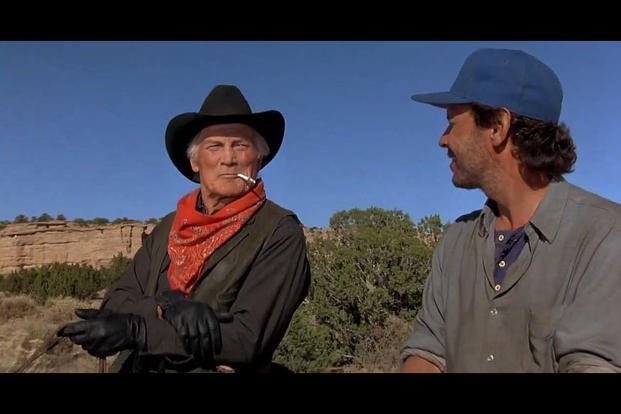
And with little change, everything above could apply to a western RPG. Corrupt sheriffs and greedy cattle barons instead of nobles, outlaws instead of bandits. And while magic isn't historically real, people of the time often believed in magic, and making it real doesn't ruin the setting. Native American shamans shielding their warriors from bullets with a magical ritual, or voodoo percolating through New Orleans to the western frontier, or even Satanists calling upon demons and devils to wreak havoc aren't too much for the Western to hold.

So why aren't Westerns popular compared to fantasy settings? I think there are two main reasons. First, any time you base a setting on the real world, there are real people and events that you have to respect, even if you opt for an alternate time line. It's really easy to portray evil and brutality without holding them to account.


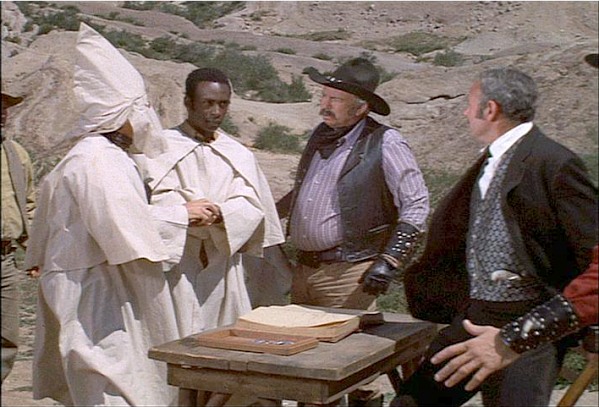
Image
Or making a mockery of them


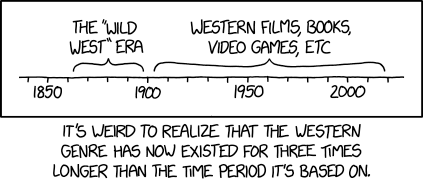
It's easy to have a beer-and-pretzels game of Dungeons and Dragons where orcs are kill on sight and stealing their treasure raises no moral qualms. That's not something you can do with Native Americans or even by flipping the script and attacking settler families. This is a real issue, and there's no real solution - no matter what you do someone is going to be unhappy with some level of cultural insensitivity. The 'real west' was racially diverse and had people mixing from all over the world. Between 1/5 and 1/4 of real cowboys were African-American, and there were Vaqueros all over what became the Southwest United States, Chinese immigrants fleeing the Taiping rebellion and its aftermath poured into San Francisco and dispersed throughout the area, and European immigrants flooded into New York and headed west (including more than 1 million Irish). This is a place where any story you could conceive of could have plausibly happened, but ultimately in the real world the 'wild west' came to an end.


Image

In 1877 Chief Joseph of the Nez Pierce declared he would 'fight no more, forever'. Sitting Bull surrendered in 1881; Geronimo, the last Native American warrior to formally surrender, in 1886. By 1890 the frontier was declared closed by the U.S. Census Bureau. Before that, the 'Wild West' was reduced to a side-show as Buffalo Bill took a traveling show around the country and the contents of dime novels was produced, live, for spectacle.

I don't have much to say about this first reason - it exists and there's nothing an RPG can do except posit an alternate timeline and hope for the best - to recognize that the setting exists in the same world as 'The Good the Bad and the Ugly', rather than any world we know.

The second reason has to do with mechanics and genre-emulation. In a Western, our cowboy has to crash through swinging saloon doors and give a steely-eyed stare to a room full of pistol-packin' ne'er-do-wells knowing that he's going to survive if they all draw and a hail of bullets whizzes past him (or at least have a chance), while at the same time has to act like he's beaten when a low-down weasel sneaks behind him and puts a gun to his back - that a single bullet delivered at the right time is certain death. More importantly, the PC strategy can't be to dress in black pajamas and sneak into the villa and slit the cattle-baron's throat while he sleeps - the medium demands that sometimes these things gets resolved with a showdown and everything comes down to the speed of the draw.

A Western-RPG has to have rules that incentivize the types of behaviors you want from PCs. There's a real tension between maintaining verisimilitude and encouraging the PCs to get into a shootout at the OK Corral. Even the most insufferable 'realism' gamers are okay surviving a blast of fire from a dragon's maw but draw the line at a bullet through the brain. Once again, this isn't easy to resolve - it's been on my mind off-and-on for the better part of two decades and I don't really feel like I have a solid answer.

So Why Are We Doing This

I've mentioned that I have a fantasy heartbreaker RPG that my friends and I wrote together and we've been developing and playing since 2008. There's been some interest in adapting our game to Western/Modern (and maybe other) genres, and taking a critical look at what other designers have done might help me along. Outside of that, there are so many pitfalls in game development that people keep falling into. We all know 'what works at one table may not work at another', so everyone should feel free to tinker with the rules, but if the rules consistently produce outputs that aren't FUN for ANYONE, figuring out how to make them better is in everyone's interest. If the designer didn't figure out how to make the rules work to create the game they envisioned, dozens or hundreds of Game Masters aren't likely to generate better rules on the fly......


Image
Sorry, that's McFly


....and if they do, it comes at the expense of consistency. There's real value to having rules that produce the outcomes you want - that are genre appropriate and fall within the player's expectations - and also to help DEFINE those expectations. Whether we're using action-hero physics or a cut from broken glass leads to gangrene and death matter and players and GMs need to know which way the game leans.

Also, since I'm a fan of Westerns in general I get to name-check some of my favorite movies (or at least ones that seem relevant) and some of my favorite cowboy songs. Happy to have a side-bar conversation about any or all of those.
-This space intentionally left blank
User avatar
deaddmwalking
King
Posts: 5352
Joined: Mon May 21, 2012 11:33 am

Re: [Review] Aces & Eights (1st and 2nd Edition Showdown)

Post by deaddmwalking »

Background

Aces and Eights and Aces and Eights Reloaded are published by Kenzer and Co, best known for publishing Knights of the Dinner Table.


Image
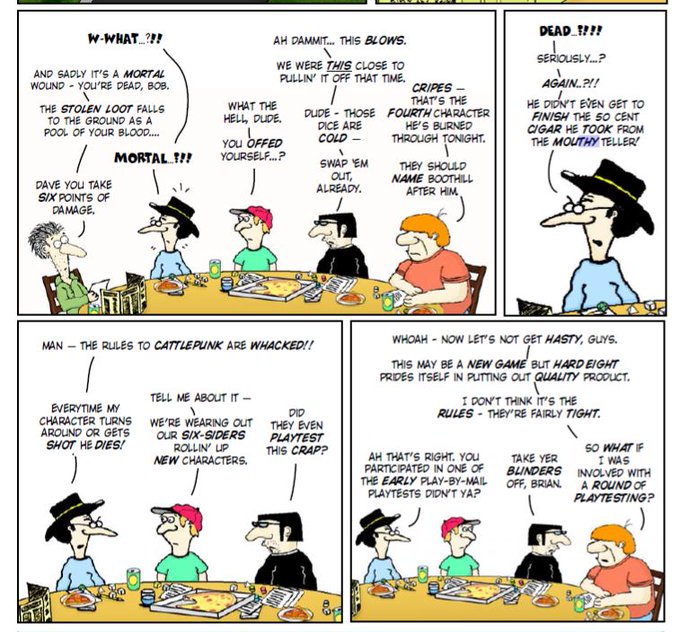
Incidentally, the Knights have been playing an in-universe Western RPG called Cattlepunk for ages.


I'm sure that there will be times in the review to come where I call something out as broken, ill-conceived, poorly worded, or just plain bad - it happens. But I really have a lot of respect for the company and the creatives there. There's no doubt that they've made the lives of Gamers better, and I've been a regular buyer/subscriber of their comics for decades. There's no doubt in my mind that everyone there is a lovely person, and I'm thrilled that they've been able to 'live the dream' and turn slinging dice into a full-time career. In their comic, the publisher of all the games the Knights play is called Hard Eight and run by Gary Jackson (a portmanteau of Gary Gygax and Steve Jackson) and they frequently publish/republish the same game with minor errata and/or without adequate play testing. While Hard Eight is a parody of gaming publishers, sometimes I wonder where Kenzer and Co draws the line between what they do and what Hard Eight does - they've been publishing Hackmaster (the D&D knock-off of KODT) for a long time. The point is, I like the company and as difficult as critical reviews can be, nothing I say is intended as a personal attack or a dig at the company.

My personal history with Aces and Eights is very limited. I went to GenCon in 2008 and I attended a playing session. We spent 1-2 hours making characters, then they decided that time was short so we just went into a combat. At first everyone was sitting behind cover and shooting at each other, and it was not fun. With some encouragement of one of the people running the game my character broke cover and bolted down the only street in town. A couple of counts later 'Alamo' Joe Wilkins took a shotgun blast to the face and was killed instantly. It was, without a doubt, the worst ratio of time spent character building to time spent character playing that I've ever had. I never used my skills of deception, hiding, riding or chemistry!

I recently had to renew my subscription to KODT and noticed that there was a second edition of the game. I bought it and it's going to be delivered today. Then when I pulled out my 1st edition book I found out that I had seen it and bought it before - I already have the 2nd edition version of the book. The webstore only has orders going back to 2021, and if it had been listed on my web orders, I certainly wouldn't have bought it again, considering that I've had it for at least 3 years and hadn't even taken a serious look. On the other hand, I like the company well enough and I could have looked on my bookshelf before submitting the order, so I won't begrudge them the $70 bucks that they're getting from me. Merry Christmas, Mr. Jolly Blackburn!


Appearance

Image


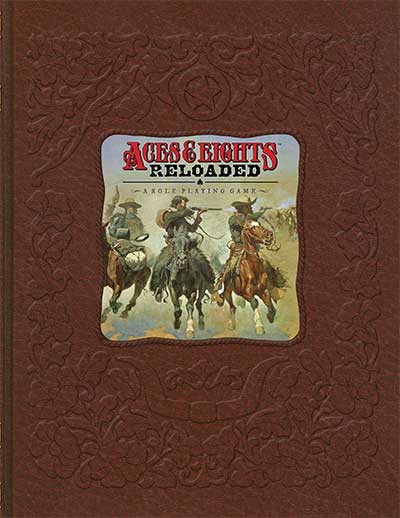
Both books are bound in faux leather and are embossed (see image above), but the 2nd edition is more pronounced. Both have a small image in the cover with the same size and shape. The original shows Cavalry fighting a Native American warrior; the newer one just has cowboys firing at an unseen pursuer as they ride toward the viewer. Both evoke the feel of a western. The original is 400 numbered pages; the revised version comes in at 386. Tucked in the cover loose both include a pair of acrylic sheets that are used in combat. The original sheets are much thicker which is better. The revised version they curl and don't lie straight. Mine came with an extra two sheets that I believe were included by mistake. There are two different versions of the combat sheet and mine had 3 of one and one of the other. Still, from a 'feel' perspective, they feel like solid books with fun things to pull out and look at - from a tactile perspective this is a treat.

The book spines are printed with gold foil and are laid out in the same style. Sitting on a shelf the two books look like they belong together. They're numbered, 5000 and 5100 respectively. In the reloaded book the number of authors was reduced significantly, as were the number of expert consultants; since the revised book draws a lot on the earlier version that might not be fair. Also, perhaps unsurprisingly the new book doesn't include a fax number to contact K&Co.


Image
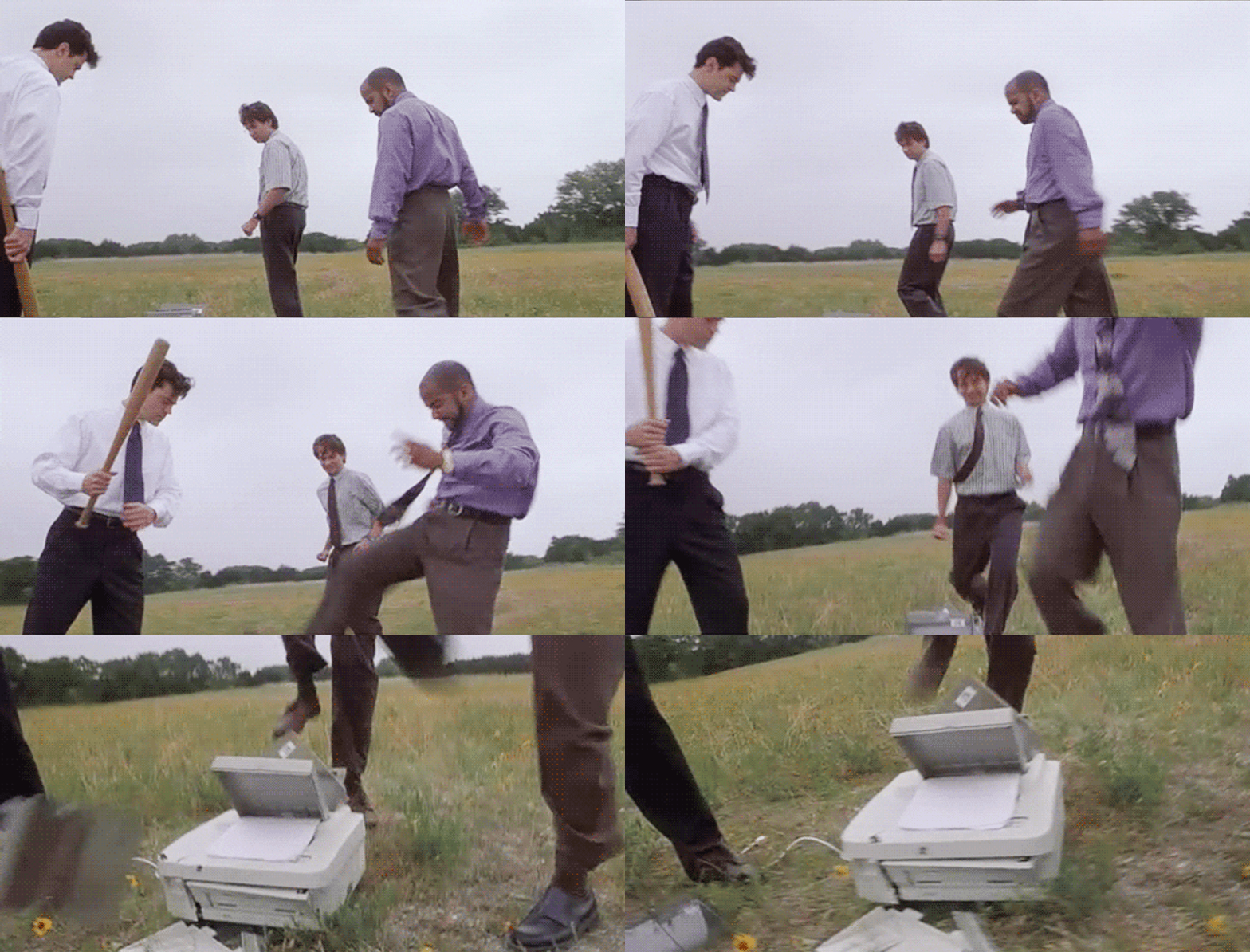
Yeah, I know this is a copy machine, but don't take this from me


Going forward we're going to focus on the Reloaded Book with the assumption that they made revisions that make the game better, and we want to look at the best version of their product. There's no point in harping on about mistakes they recognized and corrected and going back and forth isn't fun to write OR READ. I will say that the revised book follows a more familiar format - all the character creation rules appear together, rather than portions of them relegated to the appendix.

In our Reloaded book, the game is divided into 2 sections; the basic game (2 chapters) and the advanced game (16 chapters). The original limited it to 6 chapters with sub-chapters; most of the new chapters could probably be organized that way. Seven of the new chapters are directly related to things you choose in Character Creation, but are given their own chapters (things like ability scores, skills, and quirks and flaws).

Saddle Up, next we're going to cover the Introduction and the Basic Game (16 pages).
-This space intentionally left blank
User avatar
deaddmwalking
King
Posts: 5352
Joined: Mon May 21, 2012 11:33 am

Re: [Review] Aces & Eights (1st and 2nd Edition Showdown)

Post by deaddmwalking »

Listening To: Big Iron (Johnny Cash)

Before getting started at the beginning, I decided to go to the REAL beginning - the history of the world. I didn't even realize that Aces and Eights took place in an alternate timeline, but it does! Having a fractured frontier with contested 'big power politics' makes sense for creating a world for adventure and for extending the campaign window. If you want the wild west to stay wild, the prairie needs to stay open and the powerful bureaucracies of a single dominating government need to remain distant and unseen.

What you don't want to do is provide a textbook that isn't really relevant to the setting you provide today, especially if it starts with factual information and then gradually incorporates fake information and is almost entirely focused on diplomatic entreaties between various consuls and ambassadors. There are some really interesting historical characters that are involved, and a moment here and there to talk about some of them might be worthwhile.


Image
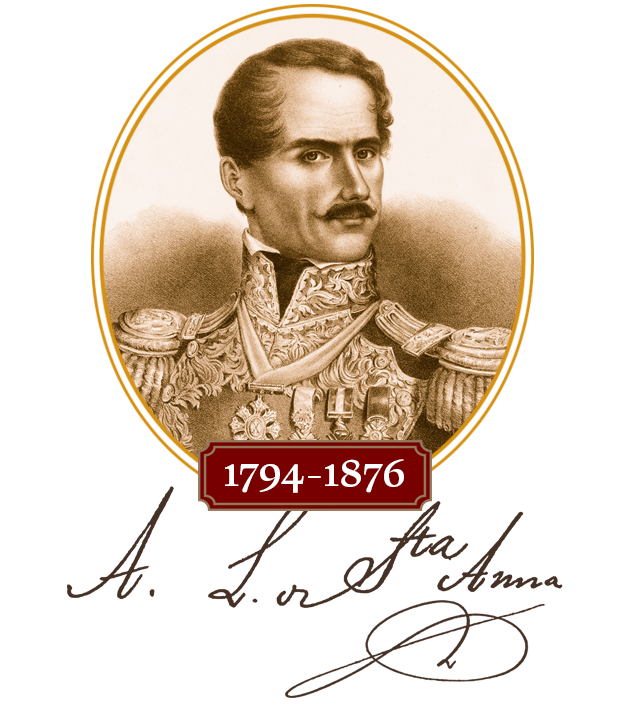
This man lost a leg to a cannon and had it buried with full military honors, and that's not nearly the wildest thing he got up to.


Instead we get a detailed explanation of which three people President Houston wanted to succeed him and the reasons that they couldn't. If your sentence ends with 'but in late July he fell overboard in Galveston Bay and drowned' I don't need to know his name. If I even need to know about the different policies of the Houston versus Lamar presidencies in Texas (I don't) it's enough to just say 'Following President Houston's term, Lamar was elected promising to repudiate all of Houston's decisions'. Providing plausible explanations for the results of your alternate history can help ground your world and the players.

In the real world, in 1844 James Polk (Democrat of Tennessee) narrowly defeated Henry Clay (Whig of Kentucky). In the real world, the United States annexed Texas in 1845. In the real world Polk authorized an invasion of Mexico that took place from 1846-1848 and ended with the United States taking possession of a vast amount of territory that we think of, today, as most of the Western United States. Obviously, that didn't happen. After a lot of mind-numbing information about back-channel political maneuvers and rejected treaties we get to a different election in 1844 where Polk doesn't run and Clay wins. Texas stays independent. The Cherokee create a nation in what we think of as Oklahoma (called Sequoyah). The U.S. Civil war happens much earlier and ends with the Confederate States of America (losing most of Louisiana to Texas, and most of Arkansas and Tennessee to the Union). The Mormons create their own nation around Salt Lake called Desert, and Mexico controls big chunks of California, all of Arizona and Nevada. Most of what we think of as 'the west' is split between Texas and Mexico. Finally, New Orleans is controlled by France.

Now getting there could be done in a paragraph, so there's really no reason to have done 36 pages of detailed historical analysis. There's also the potential issue that while there's conflict and reason for lawlessness in the west, you've effectively taken the United States completely out of the picture.

I'd certainly have done it differently. Instead of getting into the nuances of presidential elections in 1844, you let everything proceed up until the Civil War. Alternate history starts there. As the war approaches the end, Abraham Lincoln is assassinated. Johnson, someone who didn't support the war as fully becomes president and orders an end to hostilities. Sherman violates orders and ends up creating a new country based around Georgia, a massive slave revolt creates a new nation in Alabama/Mississippi, the French are occupying Mexico (true story!), and Santa Ana leads Cuban mercenaries to take over Texas. Now you have a recognizable post-war wild west with lots of sources of conflict without glorifying the Confederacy or slavery.


Image
If you're going to play a Western, you want to be able to make this true


Anyways, the long, boring history lesson appears to be verbatim the same in both editions, and both include the same countries and maps, just organized differently (the reprint makes more sense). Still, it's crazy that they spent 10% of the book on this crazy history stuff and it doesn't matter to the game. If you're a game designer and you fancy yourself to be a Tolkien style world-builder, save it for the novel and for the love of all that's holy, make it interesting!

I'll wager you right now that none of the political dispositions as described above are going to matter at all in the rest of the book.

Now that's that out of the way, the actual introduction is one page and explains dice, nomenclature, and what a role playing game is. None of it is very interesting or surprising and there's absolutely NO CHANCE that Aces and Eights is your first role-playing game. Again, I'll wager that's true and look forward to someone trying to prove me wrong.

Chapter 1 Basic Characters

The idea here is to create a character without any depth - just to have the ability to jump right into a scene and be ready to shoot 'em up if it comes to that. Basic Characters have two attributes, Speed and Accuracy. Both scores are generated rolling 2d6. To determine your score you have to do a table lookup. You have a 3% chance of having either a -3/+3, a 5% chance of having a -2/+2, a 20% of having a -1/+1, and a 44% chance of having a +0. Odds being what they are, you're going to have as many 'bad characters' as 'good characters', and most of your characters will be bang-on average. Unfortunately, having a high speed score means you're slow, while having a low speed score means you're fast - not intuitive. And the Accuracy scores are reversed, having a high score is good (more accurate) and a low score is bad (less accurate). Later I'll see if we can't figure out how you could make that consistent (positive numbers being good, or the reverse - doesn't matter), but we'll move on to hit points. You get 20+1d6 hit points. For the record, my doomed character had 25 hit points to start.

Next you randomly determine starting equipment by rolling a d6 twice. 2-5 is a pistol. 1 is a pocket pistol and a 6 is a rifle. That means you have a 1/36 chance of having double rifles or double pocket pistols, which doesn't seem like the best load-out. 45% will have double pistols and the rest will have a choice. The bigger the weapon, the more damage it does. But also the slower you use it. Now, you might expect to see a weapon speed on the firearms table, but you don't. Instead you'll find a table of the actions you can take and how much time they take. Be prepared to turn to page 10 a lot.

Following the weapons are random name/profession tables. With 10 first names for men/women, 20 last names, and 20 professions, you're going to get a lot of similar characters if you use this a lot. At least there's a good mix of surnames, but nothing to tie them together. Your Fernando or Juan (the only two Latino first names) are just as likely to be paired with Sawyer or Smith as Martinez or Santos. As is often the case, you're better with an online tool if you have trouble deciding on a name for your character.

And that's it - you have Speed, Accuracy, random weapons, a random name and profession, and you're ready to ride! Wish that's what we did at the Convention.

Now, compared to the prior edition, surnames are on a separate table (so you roll for a first name and a last name, as opposed to rolling once and just getting one of 10 male or female names). More variety, less sense. The first edition only had 2 weapons, this one has three. Shotgun isn't one of them, so once again, too bad we didn't do this at the Con. I'm not bitter. Anyway, moving on!

Chapter 2 - Scrapes
By scrapes they mean fighting. And by fighting, they mean shooting. And by shooting, they mean pistols or rifles. Even though they added Pocket Pistol, it isn't referenced in any of the action charts directly, so I assume it's part of 'pistol'. That means it does less damage, needs to be reloaded after every shot, but is otherwise just as fast (or slow) as a pistol. That is to say, you don't want one of these unless you can convince your GM that you always have it drawn because it's hidden in your sleeve.

The game doesn't use 'rounds'. Everything is resolved in 'counts' which are 1/10 of a second long. If you say you're going to walk a mile (15 minutes) you'll spend the next 9,000 counts walking a mile. Drawing a pistol takes 1/2 a second (5 counts) and drawing a rifle takes 1 second (10 counts). In order to determine when you go, roll a d10 and modify with your speed (negative is faster, remember). Now, the SLOWEST person declares an action, and so on, until finally the FASTEST person declares an action. Now we start counting up. When the fastest person goes, he takes his action and declares a new action.

For example, I'm standing in front of the mirror, practicing my quick-draw. I roll a 7 and let's say I have no modifier, and I'm the only person around, so I declare I'm drawing my pistol (5 counts). The GM starts counting and when we get to 12, I draw my pistol. I declare a new action (aim my pistol, 4 counts) and the GM continues counting until 16 when I resolve that action, but now I need to fire (1 counts) so the GM continues counting to 17 when I can discharge my pistol at my cheeky reflection.

You might wonder when the count resets, because otherwise we might get to some really big numbers. The Gun Fight at the OK Corral took about 30 seconds which seems to be what they're going for here, but that's still 300 counts. Holstering my pistol doesn't seem to be an action, but let's say it's 5 counts, too. Draw, aim, fire, holster - that's 15 counts so by the time I run out of bullets I'm at 90.

Now, hitting something is really different. Those acrylic sheets I mentioned earlier - they're called the Shot Clock. They're a series of concentric circles that determine how accurate my shot is. There are a number of silhouettes in the book that represent cowboys in various poses. I declare where I want to shoot (like 'your gun hand' or 'your head'). For the sake of ease, I'm going with 'the center of your chest'. To determine if I hit, I roll a d20. I add my accuracy. Aiming doesn't give me a bonus, but removes penalties. If you're within 15 feet, I get a +2 with my pistol. If I get a 25, I hit you dead center. With this silhouette, a 19-20 is going to hit 'in the area', and if I miss high a 17 could blow your brains out. To determine which direction I'm off, draw a card, and use one of the 52 lines emanating from the center to determine which direction I was off target.

Obviously, the smaller a target I am (say by laying flat on my stomach) the more likely you are to miss. On the other hand, if you hit, you're almost certainly going to hit my head since that's the only thing that'll appear in your shot clock. If you hit, roll the damage for the weapon. All weapons are 'penetrating' which means they use exploding dice. Weirdly, you subtract 1 from the exploded die value, but if you roll maximum you keep adding, so if you roll 6, 6, 6, 1 it's treated as 6 + 5 + 5 + 0. Why not 6 + 6 +6 +1 ? Does that extra step actually add ANYTHING WORTHWHILE to the game?

Even though weapons do extra damage on a 'headshot' that wasn't defined or explained here. We'll probably get back to that in the advanced scrapes 180 pages from here. But before that we have the full character generation.


Image
It's going to be a mite more complicated than this, I reckon


Thoughts So Far

So, in my example of a character repeatedly holstering and drawing his weapon, the game uses a 1d10(+/-1 to 3) to determine speed to act. After that, everyone is exactly the same speed. If you're a fast person, and I'm a slow person, you should be able to perform that action more times over a given period of time (say a minute). The game eschews 'game rounds' to allow for more dynamic action, but outside of the initiative roll to start combat speed doesn't matter (there's a good chance that some traits later modify this, but we're not there yet), and that isn't consistent with reality. If a fast person performs the same action as a slow person, they take less time per iteration, not just starting faster. And if the slow person 'gets the jump', they'll still fall behind the longer the race lasts. This game doesn't support this - if the slow person wins initiative they'll keep that lead indefinitely.

The counting initiative beats is also repetitive and boring unless there's a lot of participants. When I'm the only one taking actions and I have a 5 count calling out numbers where no action takes place is a waste of table time. It's also a lot for players to track - they need to know how long each of their desired actions takes and keep adding to larger and larger numbers. Think about when you're counting out loud to play hide and seek - calling out 'twenty five, twenty six' isn't fun, even if it is important.

The goal is to keep the action fast-paced, and to distinguish between reckless actions like shooting from the hip versus more careful actions like drawing a bead and firing. A reckless shot should resolve first, and even if it's 'off-target' may strike the opponent. Giving everyone a 'full turn' would enable people to carefully aim and fire even if they won initiative. In 3.x and derivatives, real power comes from breaking the action economy - if you and your opponent do the same things, but you can do more of those things, you'll win. This game says it's in favor of realism but it actually ends up maintaining the idea that every character can do the same actions in the exact same amount of time - a classic fluff versus crunch dilemma.

I'll be coming back to this after the 'advanced scrapes' chapter, but feel free to put on your designer cap and lay out how you'd approach this in a satisfying way.

'Til next time!
-This space intentionally left blank
User avatar
deaddmwalking
King
Posts: 5352
Joined: Mon May 21, 2012 11:33 am

Re: [Review] Aces & Eights (1st and 2nd Edition Showdown)

Post by deaddmwalking »

Listening To: My Rifle, My Pony, and Me by Dean Martin

The next chapters cover character creation in-depth. The 'basic characters' are designed to get you into a shooting match ASAP, but it turns out that they don't really represent characters as they exist in the game very well. Real character creation involves rolling attributes and spending Building Points. While it's broken out into seven chapters, it really makes more sense as sub-sections. Chapter 4 explains the process, and the chapters following provide the details.

It is not simple. It is so not simple that there's a flow-chart. It is so not simple that it's difficult to explain why it's complex, but let's start with Building Points generally. Lots of games use building points (BPs) to create characters - Shadow Run famously. In Shadowrun (at least some editions) you prioritized certain things like a race or class and you got less points for other categories. Choosing from a limited menu is good design - it allows players to make choices (good!) without being overwhelmed by considering all of the possibilities at once (good!). Aces & Eights doesn't give you a certain number of Building Points for each category - you get one big pile to start and you get to decide how you spend them. The one caveat is that only the first BPs you get (40 for everyone, plus a bonus depending on some ability score placement) can be spent to raise attributes.

You can spend your BPs on raising attributes, purchasing skills and talents, re-rolling certain bad random options that may occur in character creation, and converting to starting money. How many skills is 'appropriate' for a starting character? Is it better to raise your stats? You get BPs when you adventure, so how important is it to buy things up front versus waiting until later? Oh yeah, you can bank them!

Ability Scores
You generate 7 ability scores by rolling 3d6. With each ability score you roll a d%, so your Strength might be 10.76. The first number represents your actual Strength score, the second number how close you are to raising it to an 11. If you keep your stats in the order you roll them you get 50 BP (enough to add +2.5 to your attributes if they're between 10-16; it costs less if they're low and more if they're high). Unlike 3.x where attributes provide a consistent bonus, you have to look up each ability. Most ability modifiers range from -3 to +3, but some range from -5 to +7. Most ability scores only care about a full +1 bonus, but some care bout .50 bonuses.

For example, a Strength of 13 and 13.50 are both +1 on damage, but the 13.50 gives you an additional bonus on 'feats of strength', as well as higher carrying capacity. The fact that you can get a +7 on damage from a high STR but you're limited to an accuracy of +3 for high Intelligence may be a recognition that some ability scores are more valuable - instead of making one less expensive on the front end, they're making the benefit of raising it higher on the backend, and that's more confusing, really. The one thing is that once you have your scores on a character sheet, you don't have to look back at the charts for reference - but for people with 3.x experience you're going to long for a consistent bonus for each attribute.

Even worse, modifiers may be either positive or negative. High Strength and Intelligence give you positive numbers, but Wisdom, Dexterity, and Constitution give you negative numbers (which are good when they apply).

The Attributes
I mentioned that you had seven ability scores, and the reason is that you have the six attributes you think of from D&D (Str, Dex, Con, Int, Wis, Chr) plus looks. Since Charisma is obviously the most important ability score it had to be broken up into two separate abilities.

In addition to the abilities helping when you take an action that uses that abilities, having a high score for Intelligence, Wisdom, and Charisma give you bonus BP. A high looks gives you a bonus to Charisma (but later if you get disfigured your Charisma drops).

These types of things reward system mastery. It's possible to figure out where the good deals are, but it's not easy or intuitive. Raising Wisdom from a 14 to a 15 costs 20 BP, but it gives you an extra +5 BP, so the net cost is only 15; raising it from a 15 to a 16 costs 20 but gives you an extra 6, but it doesn't increase your Speed Modifier.

Your most important attribute is Dexterity. Dexterity has a major impact on your Speed and Accuracy. Wisdom has a lesser impact on Speed and provides a BP bonus; Intelligence has a lesser impact on Accuracy and provides a BP bonus; Constitution affects how you heal; Looks has a major impact on your Charisma and Reputation, Charisma has a lesser impact and provides extra BP.

Example Characters
Character 1: S12.09; I10.42; W7.05; D8.83; C12.23; L13.78; Cha9.26
Character 2: S13.96; I15.64; W10.85; D14.10; C14.80; L7.59; Cha13.21

In this case, Character 2 is definitely the better character. Focusing there; if I keep the scores as rolled I get 50 bonus BP. The only score that's bad is Looks, raising that to a 10.04 costs 25, leaving me with 65. I get 10 Bonus BP for my Int*, and I'm going to spend 8 of them to raise my INT to 16 (giving me 5 more BP), so I'm at 73. My wisdom doesn't qualify for bonus BP, while raising it to 11 would give me +1 BP it doesn't increase any modifiers, so I leave it. My Charisma gives me +3 BP, and raising it to 14 would cost me 16 BP and give me an extra 3, I leave it so I now have 74 BP. I definitely want to raise my Dex to 16 which costs me 38. My character stats now appear as:

S13.96; I16.04,; W10.85; D16.00; C14.80; L10.04; Cha 13.21. I still have 21 (of the 40 original BP), plus 15 'bonus BP'. The next increase for Dexterity modifiers is at 17.50 which would cost 50 BP. Note: I can't spend BP I get later (for example from quirks and flaws on ability scores. I also can't spend bonus BP for high Int here, they have to be spent later on Int skills. That's a pretty good reason to spend them all now and worry less about other things I could buy - more on that as we get into those other options. Now, skipping ahead, your Reputation is also going to give you BPs that can be used for things other than attributes. Your Reputation is based on the average of your abilities. Add them all up and divide by 7. For me that's a 14.12. If I was just shy of 14 (like 13.99) it would probably be worth it to make sure I bump them enough to cross the line.

More Point Shenanigans
I opted to keep my ability scores in the order I rolled them for the 50 extra BP. If I had swapped two scores but left everything else where it was rolled I would have gotten 25 BP (ie, if for Character 1 I swapped Looks for Dex). If I decide to arrange as desired I qualify for no extra BP.

I can also burn ability scores to generate BP; dropping an ability be 1 point earns me 7 BP. Since raising a Stat costs 20 BP it's a bad trade. A slightly less bad option is directly trading between ability scores. Like so much else, there's a chart. If I'm raising a score that's between 8 and 10, I can subtract 2 from any other ability for a +1 (ie, Character 1 could take a -2 STR for a +1 Dex.

Ability Checks
So Ability Scores modify things like Speed and Accuracy, but only Strength and Dexterity have a real 'modifier'. That is, sometimes you make a Strength Check (feat of Strength) or a Dex Check (feat of Agility) and you roll a d20 and add your modifier. Most checks don't work like that. Instead you roll UNDER your ability score. If you make a CON check, you roll a d20 and I'm looking to get under a 14. A particularly difficult check might be 1/2 CON, meaning I have to roll a 7 or lower. That's a lot to keep straight!


Image
And we haven't even decided how anachronistic we're going to be


Reputation
With my average ability score of 14 and a +1 Reputation Bonus for my Charisma, I have a Reputation of 15, which gives me 35 BP. I can't use them to raise my stats, but I still have 21 BP from character creation, plus 15 Int Bonus BP. Since they have to be used differently, I basically have to keep them separate. Basically from this point on I'll spend my 'new BP' and then if I have anything left at the end from my 'original BP' I can invest them in bumping my attributes by a few tenths of a point.

Covered in the Advanced Scrapes is the effects of Reputation. With a Reputation of 15, I'm 'low reputation'. If I'm in a gunfight and I lose 25% of my hit points, I must take cover, and if I'm shot at I must flee. Telling players how they need to play their character usually doesn't go over well. In order to get out of Low Reputation, I need to get to 20 - now I flee if I lose 50% of my hit points. To have full choice about whether to stay or run, I need to get to a Reputation of 70.

There's a whole lot of things that gain or lose reputation. This is the primary method of enforcing genre conceits. If you allow an opponent to pick up a dropped weapon, you get +3 Reputation. If you shoot a man in the back, you lose 5 reputation. Since you want to have enough Reputation to control your character, you mostly want to do things that give you Reputation.

You can opt to spend Reputation for a reroll. At 10 points per re-roll (and you're not guaranteed a better result) spending Reputation is foolish and you should never do it. At least not until you've attained 'Great Reputation' of 70+. At that point you get a free re-roll once per session that doesn't cost you, and if you're enough above 70 you could buy the re-roll without dropping a category.


Image
When you have to shoot, shoot! Don't talk


If you get negative reputation, it becomes infamy. It works basically the same way, where the ABSOLUTE VALUE of your score matters. Taking the absolute value of a negative number isn't a particularly difficult mathematical concept, but it's a little more figurin' than I figured to do in my cowboy shooting game.


Fame
While it's covered in the same chapter, and accumulates in the same way (but some things that lose you reputation gain you fame) it works a little more like level. If you fight someone that has a low reputation (below 20) or average reputation (below 70) your fame differential gives you an advantage over them. Essentially, your fame awes them and they suffer a penalty to accuracy and speed based on the difference. It's a +2/-2 for every 25 points of fame DIFFERENCE for low-rep and +1/-2 for every 25 points of fame DIFFERENCE for average-rep. Again, with a Reputation of 70+ you don't have to worry about Fame causing you a problem. Unlike reputation, fame fades (-1 point per game month) but never goes away completely.


Image
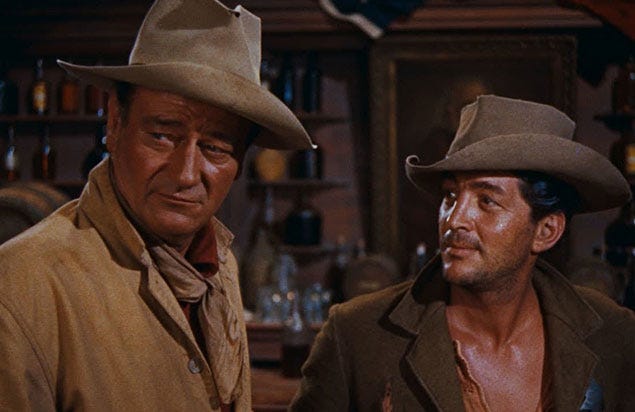
And here he is, the most famous cowboy of them all, with Dean Martin in the movie where he sang our starting song


Priors and Particulars
Chapter 6 is background information like height and weight. There are 27 tables that you'll be rolling on, and most of them don't matter. If you don't like a result, you can re-roll for 1 BP. One of the tables is birthplace, and it does include the countries they made up, so TECHNICALLY it came up again, but since it doesn't do anything, I'm not sure I should count it. You probably have siblings, and most of them are probably dead, but if you were lucky enough to have been born first you get bonus starting money. Upbringing is probably the first table worth spending a BP for a re-roll. There are 3 good results (+1 BP, +3 BP, +5 BP), 1 neutral result, and 2 bad results (get a quirk but get fewer BP than usual for them). I got the +1 BP result, so I won't re-roll and risk a worse result. That leaves me with 72 BP (half that can be used for attribute bonuses).

Social class is a d100 roll with an 80% chance of a bad result, a 27% chance of a neutral result, and a 3% chance of a good result. My first roll would have reduced my reputation by 3 and resuced my starting money, so I spent on BP for a re-roll and ended up Middle Middle Class, which doesn't give me any bonuses or penalties and lets me roll on an occupation table that has generally good options - I got Civil Engineer so I get Engineering, Design, and Mathematics for free. I got a decent roll on Starting Money, so I get $35 to start. I can convert 1BP to $5, so once I know whether $35 is enough I'll go back and increase that as necessary.


Quirks and Flaws

Choosing a quirk or flaw gives you an in-game penalty, but rewards you with extra BP. The game assumes you're going to roll randomly for quirks and flaws. If you prefer, you can choose a flaw (one that you think won't impact you too much) but you don't get as many BP. Abstaining from something (sex or alcohol or some others determined randomly) is worth 30 BP if you roll it randomly, 15 if you pick it, or 10 if you've already selected a different quirk/flaw.

A random roll is a d1000 and there's roughly 100 quirks/flaws you can get saddled with, giving you between 10-60 BP. Since you will get more BP for successfully adventuring and you can't spend these BP to raise your stats, I don't see much reason to bother with them. 'Cherry Picking' for the half-BP might be fun if you wanted to play a character that was 'honest to a fault' anyway, but otherwise you could randomly roll something really unhelpful, like Blind-in-one-eye for a -2 on accuracy. There's no reason you would take these at this point, though, because you haven't spent your BPs on Skills and Talents. After you get the full buffet of options, maybe you'll be tempted to go point-whoring.

We'll look at ways to spend BPs outside of attribute re-rolls next time when we hit Skills and Talents.
-This space intentionally left blank
User avatar
deaddmwalking
King
Posts: 5352
Joined: Mon May 21, 2012 11:33 am

Re: [Review] Aces & Eights (1st and 2nd Edition Showdown)

Post by deaddmwalking »

Listening To: Mr. Shorty by Marty Robbins

Hopefully all my edits about BPs worked out. The fact that the BPs you get for a high intelligence can only be used for Intelligence skills and they don't go into a big bucket makes sense. They totally said that under Intelligence, but having many different buckets of BPs (starting BPs that can be spent on anything, Bonus BPs that can only be spent on skills from the ability that provided them, bonus BP from flaws that can be spent on anything EXCEPT starting attributes) - it's almost not worth going after.


Image
This follows a famous camera sequence where the camera crawls on the floor so you can see life from a drunk's perspective


Like Attributes, skills are going to be needlessly complicated. It would be nice to say something like 'this character has 200 BP' and is thus roughly equivalent to another character that also has 200 BP. But this game like to randomize things. And be inconsistent with roll high or roll low. And variable DCs. I'm not sure that I could think of a more complex and less satisfying way to do skills. So how do they do it, exactly? Hang on tight, this is going to be a wild ride.

Skills are d100, roll under. That means that you want your skills to be as close to 100 as possible, because it's easy to roll under a big number and hard to roll under a low number. So how likely are you to be good at a skill right out the gate? Not very!

When you first buy a skill, you get ranks in it equal to your relevant attribute (Ie, if I have INT 15, I start with a 15 in an Int based skill). Then I get a random bonus to that skill added to that base (1d12 to start). As I get closer to 100 in any skill, the random bonus I get gets smaller. When I first get a skill I added my Attribute; when I IMPROVE a skill I add my attribute bonus (which is 3.x attribute minus 10 divided by 2, round down). So I rolled a 3 on my d12, my initial INT skill is 18. When I next improve it I roll another d12 and add +2 for my INT, plus my d12 roll (1). These dice explode, so potentially I could add 24 or more with a particularly lucky roll.

Now, how bad is an 18 for my Int based skill, anyway? Do I really fail 82 of the time? I do not. You see, the GM decides if a task is trivial (-90), easy (-80), Average (-40), Difficult (0), or Very Difficult (+10). For my first skill check I roll a 21 - if it's easier than difficult I'd succeed.

Now many skills actually have two (or even three) attributes to determine success. In that case, you always use your LOWEST attribute to determine how likely you are to succeed. A task that takes Strength and Intelligence (like Blacksmithing) would use my STR (13) instead of my INT (15). Might go back and bump that from 13.96 to 14.01.

Useless skills (like weaving) cost 1 BP to initially learn and to improve. Tracking (9) and Setting Traps (10) are much more expensive. Like 3.x there are some skills that can be used untrained but most require training to roll at all. Consequently, you want to take trained only skills and think carefully about what you can afford.

Roughly every 25 points in a skill is a mastery level. Every skill description explains what someone with that mastery level can do. If you're an accountant with a skill between 1-25, you can monitor profitability of a small business; if you are a Master (88-100) you can manage the financial affairs of a nation-state. Now, you might want to invest in accounting, but hold your horses, partner. You can't learn how to be an accountant unless you learn mathematics (in fact, you need a 15 or better). Fortunately, I got Mathematics for free based on my background, so I could invest 3 BP and get 15 + 1d12.

There are 50 pages of skill descriptions, and none of them do anything directly combat related - like there's no 'trick shot' skill that you might leverage to hit someone behind cover - gambling and mining and a ton of other professional skills exist.


Image
I should probably start listening to Kenny Roger's The Gambler


Talents

These are like Feats - these actually give you abilities that modify your attacks, and they're all pretty expensive. For 75 BP you can get +1 damage on every attack; for 50 BP you can increase the severity of wounds you deal to your opponent. I don't know what severity is, yet, but I bet that's good. There are 37 of them listed and they range from 10 to 75.

I may come back to talk about these, but they're hard to evaluate because most of them interact with advanced rules that we haven't learned yet. They're also expensive enough that you can't really afford them without taking a random quirk or flaw or spending your starting BP on those instead of stat increases.

Professional Paths

Everyone in the west has to do something to get by. There's roughly 60 professions listed like Author and Whore. Cowboy, Gambler, Gunfighter, and Lawman seem like the ones most likely to appeal to players. Whatever path you choose, there are BP rewards for 'milestone events'. If you're a cowboy and you work a long cattle drive, you get 5 BP.


Image
It doesn't say if you can write ad-copy and be a cowboy, and by rule that means you can't. Mitch gets nothing for bringing in the herd


I could tell you about Gunfighters and Lawmen, but I think telling you about whores is more fun and just as illustrative. If you turn a trick you get 1 BP. Incidentally, I believe that's a one-time thing - you get it for your first one, not EVERY one. When you turn pro you get +2 BP. Active for a month, get +3 BP. Building a brothel gets you another +5, but first you have to buy the land (+2). Hire on (+5 BP). Franchise by building 2 additional locations and get +10 BP.


Image
Miss Lorena Wood only got 5 by my count
-This space intentionally left blank
User avatar
deaddmwalking
King
Posts: 5352
Joined: Mon May 21, 2012 11:33 am

Re: [Review] Aces & Eights (1st and 2nd Edition Showdown)

Post by deaddmwalking »

Listening To: The Man Who Shot Liberty Valance by Gene Pitney


Goods and Services

I'll tell you that I'm hoping my character kills someone with a good weapon, because they don't come cheap. Some of the shotguns cost more than $100 dollars.

Back in the beginning, we were given a couple of weapons with pistols doing 1d6p (p means exploding), but it turns out that a lot of pistols do 1d4 or 1d5, and depending on their barrel length they may be faster or slower to draw and more or less accurate. Rifles shoot farther and do more damage, but they're slow to draw and aim. Pro tip: walk with a rifle in hand at all times.


Image
This one can shoot a mite further than that


The fact of the matter is that all the weapons do relatively similar damage. There's some tradeoffs with some having higher costs and more bullets or a slower draw speed - you can spend a lot of time trying to determine the best weapon for your needs, but once you've figured out what you can get with the money you have, you're good.

Now, I mentioned that they have two 'shot clocks' - these are the acrylic sheets that you lay over a silhouette to determine what you hit if you hit. The shotgun clock is a little more complicated; it has a scattering of various color dots spread out. Depending on how far away you are from the target, each dot could be a hit, and each hit could do damage separately. From 10 feet away you might get 9 hits (and more from closer), each dealing 1d4p. And that is why Alamo Joe died. It's not exactly 'spray and pray', but you can hit a lot more with a shotgun than with any other weapon up close. Pro-Pro-Tip: Get the $150 Baker Drilling Shotgun/Rifle combo and walk with that drawn and ready at all time. Best you go loaded for bear.
-This space intentionally left blank
User avatar
deaddmwalking
King
Posts: 5352
Joined: Mon May 21, 2012 11:33 am

Re: [Review] Aces & Eights (1st and 2nd Edition Showdown)

Post by deaddmwalking »

Advanced Scrapes

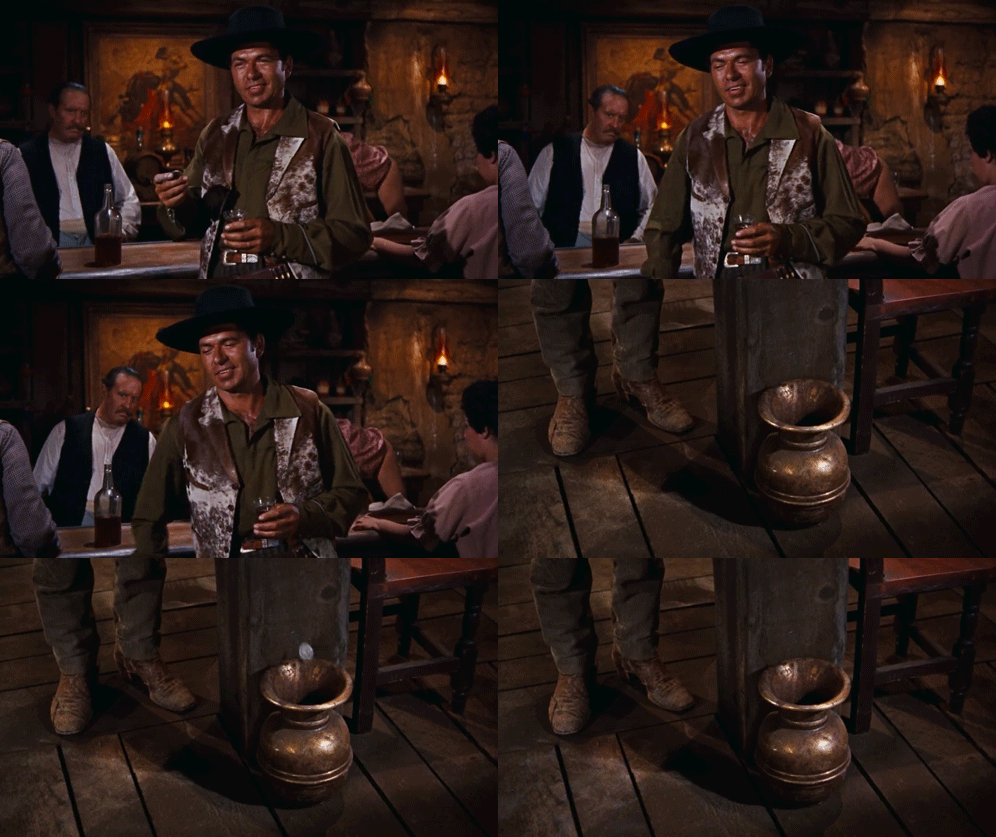
So now we're into the real fighting, and hoo-boy, we got a lot of table look-ups to be doing. Officially you can take any action you can think of - you want to kick the spittoon into the air then shoot it with your pistol so it turns upside down pouring tobacco spit all over someone? Have at it! The problem is that every bit of that requires adjudication. How many 1/10ths of a second does it take for a kicked spittoon to launch into the air? How high does it go? What kind of check do you make?

All of the 'regular things' that someone might do, like 'drawing two guns at once' are listed in a relatively compact table


Image
What about firing whilst jumping through the air? Sadly, no


The book tells us we don't need these rules, and we shouldn't even TRY to use them the first time we play. It adds a lot of complexity and therefore confusion. The idea is to add the more complex actions over time to make the game more interesting. For the most part, these SUPERSCEDE the basic rules.

For example, we no longer declare actions based on Initiative (slowest person declares first). Lowest wisdom person declares first, highest wisdom declares last. Wounds no longer just do hit point damage, they also reduce speed and accuracy. Wound locations matter, too. Taking any wound in the head is a +5 to speed (remember, that's a penalty) and a -2 to accuracy (also a penalty).

I had done a look-ahead and covered fame and reputation on fights, there's something similar with gunfights. A newly created character has speed and accuracy penalties that decrease and become bonuses as they get more fights under their belt.

Cover in this game isn't absolute. If you are shooting from inside a covered wagon the wood reduces the damage by 1 hit point (which isn't much). There's rules for flinching (near misses might make you pause) and facing (you shoot to your front with your normal speed/accuracy but take a penalty to the sides and back.

Optional rules for artillery and shooting dynamite ... and then we're to a play example.

This is two characters fighting, and just as I expressed, there are big stretches where you're counting off seven numbers in a row with no action. And there's a lot of accounting. The book lays out the actions that each character plans to make, but as they take penalties from hits, the actions take longer and keeping track of when your action will occur is something that you might need Mastery level in Accounting to handle well.

Three chapters left - wounds and healing, brawling (more fighting not covered in advanced scrapes) and campaigns (I already did history). We're getting close to the end.
-This space intentionally left blank
User avatar
deaddmwalking
King
Posts: 5352
Joined: Mon May 21, 2012 11:33 am

Re: [Review] Aces & Eights (1st and 2nd Edition Showdown)

Post by deaddmwalking »

Listening to: The Good the Bad and the Ugly Soundtrack by Ennio Morricone

Wounds and Healing

So it turns out that if you're being attacked, you don't just track how many hits you've taken - you track EACH hit you've taken. You see, each one heals independently of the others, and it is based on how much damage it did. And to explain that they use factorials. You see, however much damage you took, it takes that many days to reduce by 1 point. So if you took 5 damage, in 5 days it will heal one point so you have 4 damage. It will take 4 days to heal 1 point, etc, so your healing time is 5+4+3+2+1 or 15 days. If you also had a 2 hit point wound it would have healed in 3 days (2+1).

From a realism standpoint, that's actually a relatively reasonable way to do things. More damaging wounds take longer to heal. From a playing game, that's some extended recuperations.


Image
Sometimes Genre appropriate

Having a high Constitution matters here (and apparently only here). If you have a modifier to your healing (like a -2) it applies to the number of days for each step. A 5 point wound would heal the first point in 3 days (5-2), then the next point in 2 days (4-2), then the next in 1 day (3-2) and then 1 day for the 2nd (because you can't reduce below 1) and 1 day for the last point (same reason). With a -2, instead of 15 days it takes 8.

Fortunately for this game, it doesn't care what happens when you shoot a buffalo - only people. There are detailed tables for the wound effects from 1-12 for every location on the human body. If you take a gunshot to the groin for 9 damage you fall prone and drop all held items, no walking (or moving faster), internal bleeding, -5 STR, bullet lodged, STR permanently -1, 1/2 CON check (that's the hard one, roll under, remember) or unconscious.

At least it wasn't a 12+ - in that case you would be neutered.

I guess it's true what they say - there are old gunfighters, there are bold gunfighters, but there are no old, bold, gunfighters.


Image
I beg to differ, punk.


There are explanations of the specific injuries that are included on the tables. Now, the tables themselves have a lot going on. Do you know what the difference is between a wound to the hip/buttock versus the thigh? Well, if it's a 7 damage gunshot it does the same thing except if it's your hip you're also at a -1 penalty to STR. It's also the same effect if you're hit with a slashing weapon, a piercing weapon, or a bludgeoning weapon (with the exception that you get a save to avoid falling prone and dropping all your items).

Pro-Tip - in a gun fight, stand behind another gun fighter and let him take all the damage to his body parts. Unlike a wooden barrier that would reduce the damage by 1, he'll stop that bullet cold.

This chapter ends with some diseases and poisons. Funny fact, when someone could have been exposed to a disease you roll a percentile and 71+ means they were exposed. Then you roll a d20 plus their entire Constitution against a TN between 25-31 to determine if they fight it off. These are 'bespoke rules' - there's no other place where you roll a d20 and add your entire attribute and I'm going to have some more to say about when this review is over.

Image
People call me Crazy Cora and even I wouldn't do that


Diseases have 4 stages. If you fail the initial roll, you might be stuck with going through the whole thing, or you might get a new check before advancing to the next stage. Sometimes Stage 4 is something like 'you die'. Sometimes it's like 'roll a percentage die, and if you roll low, you die, if you roll high you remain sick for some amount of time then get better'. As brutal as it all is, the thing that bothers me is that Tuberculosis didn't make the list.


Image
So I don't have to die, then?


Poison uses the crazy disease con resistance rolls, but all poisons just do damage, and mostly not enough that you'd care. And that's Wounds and Healing, though I think it should be renamed A Thousand Ways to Die in the West (it's definitely shy of a million).
-This space intentionally left blank
User avatar
deaddmwalking
King
Posts: 5352
Joined: Mon May 21, 2012 11:33 am

Re: [Review] Aces & Eights (1st and 2nd Edition Showdown)

Post by deaddmwalking »

Listening To: The Cowboy in the Continental Suit by Marty Robbins

Chapter 14 - Brawling

We've had Scrapes, and we've had Advanced Scrapes. While I didn't really discuss it earlier the Advanced Scrapes chapter has a section on Clow Quarter Combat. In Advanced Scrapes weapons (like fists and bayonets) have a ready speed in counts, an attack speed in counts, and a recovery speed in counts, so resolution is MOSTLY like gun fighting. The difference is that opponents get a dodge roll that works as a penalty to the attack roll (1d12+Dex Mod). Your attack at 1d20+Dex is always going to get a +8 for 'within 5 feet' and all the other accuracy bonuses you normally get. Damage is resolved based on the weapon. Better weapons deal penetrating damage, but many small weapons don't.

Wrestling also involves making an attack roll and using the shot clock. You're always aiming for a specific part of a person, so you could 'wrestle their arm' to take a weapon, or you could 'wrestle their chest' and throw them down. If you squeeze them you make opposed STR checks (using the whole strength score added to your roll, rather than the modifier).

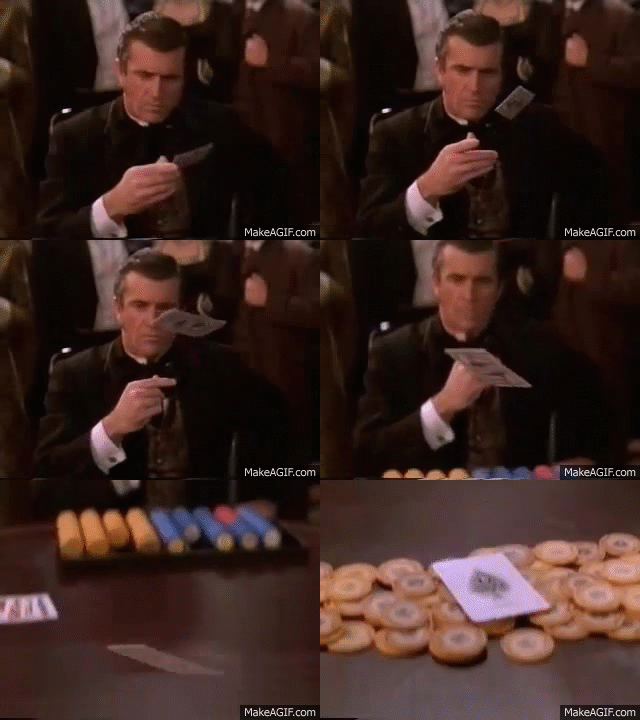
Like Advanced Scrapes replaced the 'basic rules' for scrapes, Brawling rules can replace the 'advanced scrape' rules for close quarter combat and wrestling. And it's a whole different thing. Like all good fights, it starts with breaking out the poker chips.


Image
Resolving a Brawl using Aces and Eights Rules


Each participant receives a pile of chips based on their attributes. Red Chips are used to represent damage, bule chips to represent accuracy, and white chips the ability to absorb blows. Characters place chips into a 'bet' and they're used on their actions. There's a limit to how much you can bet, and if you bet your limit you'll run out of chips in 4 rounds. Unlike the earlier hand-to-hand combat you no longer get the +8 bonus for attacking within 5' and your opponent no longer gets their defense roll that subtracts from your roll; instead you make opposed dexterity checks (with the attacker getting a bonus from his chips bet); if the defender wins or ties its a miss, if the attacker wins it's a hit. 'Damage' isn't applied to the character as hit point damage, instead it removes chips from the opponent's pile. Running out of chips represents losing the fight.

But there's more! Chips 'wagered' may not be lost. Whoever rolled the highest d20 on their brawling attack in the round 'wins the pot' less a 'rake'. So if you're fighting someone and you hit them and remove chips from their pile, they might get those chips back.

Being stronger and tougher give you more chips than your opponents to start, and having a higher Dexterity gives you an advantage at every stage of the game, but all the differences in Renown and Fame go out the window.

With three different piles of chips in front of, and some going 'to the pot' and some going 'out the window' this is again a lot to keep track of. And there's MORE! Special actions like a head butt cost you a specific combination of chips, and if it works, your opponent has a chip penalty to their next attack. It's not clear if they spend those chips but lose the benefit, or simply take a penalty on the attack EQUIVALENT to what those chips would provide. Some attacks have a cost and then provide a benefit like extra damage. It's referred to as 'extra chips', but I again presume that these don't come out of your stack and exist as virtual chips.
-This space intentionally left blank
User avatar
deaddmwalking
King
Posts: 5352
Joined: Mon May 21, 2012 11:33 am

Re: [Review] Aces & Eights (1st and 2nd Edition Showdown)

Post by deaddmwalking »

Listening To: Main Theme from the Magnificent Seven
Edit - Chapter 18 is sometimes referred to as Chapter 16 so there are two more very small chapters after this Awards and Gambling


Chapter 15 - The Aces and Eights Campaign
This is about 75 pages of material, so it represents a hefty chunk of the book. And this is important stuff! If you've watched a western you might have ideas for a scenario, but traditionally the protagonist rides off into the sunset, and then what?


Image
Why?


Unlike their fantasy role-playing counterparts, western role-playing games have traditionally been limited to one-off adventures, with players getting together, rolling up some characters and quickly finding an excuse to fire their guns and shoot things up. Robbing a bank, taking on the evil cattle baron and his men, or ambushing the payroll stage can be great fun, but usually lead to the death of several (if not all) characters. When the session is finished so is the adventure.

This is unfortunate. As a setting, the Old West provides an abundance of untapped adventure opportunities. And although Aces & Eights lends itself well to one-off adventuring, it has primarily been designed with the on-going campaign in mind.
Toward that end, this chapter references the shattered frontier, but it doesn't explain what INTERESTS each political group has in the area, or why their map creates conflicts, so I'm not giving them full points for referring back to their setting. That's followed by maps of a suggested starting region, several detailed scenarios (like encounters), ten pages of adventure hooks, and a page of broad events that might guide the campaign events like the coming of the railroad.

That's followed by a couple of town maps, with copious explanations of who lives and there and their occupations. Then we get a dozen or so fully developed NPCs, a page of 'generic NPCs'. That's followed by a table with famous names and Speed/Accuracy/Hit Point totals. The 'best' have a speed around -15, an accuracy around +15, and around 38 hit points. But Warren Earp is a -5/+7/24 - no too far off from a starting character.

This is followed by a suggestion for what players ought to do to settle themselves in the world.

Awards
Turns out you can have multiple career paths. I was serious - if the player asks and it would be to his favor the default answer is no - but since the book says it's okay then the answer is yes. In any case, you get Renown for following the code of the west, you get fame for many of the same actions, and you get more BP by being successful in various business operations.

Chapter 17 - Gambling
This talks about games played in the west, how to simulate them at the table, and how to incorporate cheating by characters into those results.

And we've already talked about the alternate history, so we're done with the book itself. Next up a serious discussion of the Good, the Bad and the Ugly.


Image
Not the movie. Just the mechanics
-This space intentionally left blank
User avatar
deaddmwalking
King
Posts: 5352
Joined: Mon May 21, 2012 11:33 am

Re: [Review] Aces & Eights (1st and 2nd Edition Showdown)

Post by deaddmwalking »

The Knights of the Dinner Table are infamous for making the game the center of their life to the expense of everything else. It's expected that they'll spend hours between game sessions reviewing the rules of the game, memorizing the modifiers, and seeking every advantage they can get. The Kenzer folk run a successful business, and I know they're not gaming all of the time, but they're certainly STEEPED in gaming to a degree that's impossible for regular gamers. Aces & Eights makes some judgements that I think are mistakes - not because of their specific implementation, but because it creates a lot of unnecessary confusion.

Bonuses should be Positive and Penalties should be Negative
What does it mean to have a -45 bonus on a check? What about a -45 penalty? If you're trying to roll low, a -45 could subtract from your roll. For example, if you need to roll under a 50 on d100 and you roll 73, subtracting 45 from your roll makes it a success. For the penalty if you need to roll under a 50 on d100, you could subtract that from the target, so now you need to roll under 05 on a d100. These things CAN EXIST, but they shouldn't.

I'm not a fan of d100 roll under because it lends itself to this type of confusing nomenclature, but even if you use this system, having a bonus consistently raise your skill and a penalty consistently lower your skill is possible.

Personally, I prefer a roll-over system. In d100 roll under, if you have a 25% in a skill, you need to roll a 25% or lower to succeed. If you make the TN 100 and add your skill to the roll, you need a 75%+ on the dice. Your odds of success are still 25%. I acknowledge that some people that determining if your roll is above or below a fixed number is the easiest operation, and adding two numbers together is slightly more complex, but if you're frequently applying a skill check modifier anyway, addition is easier than subtraction.

In some d100 systems, you care about degrees of success (though not Aces & Eights). If your skill is 76% and you roll a 37%, a lot of people can quickly determine that they succeeded, but they struggle to determine how many degrees of success that is. Typically 37 is your first success, 47 is +1, 57 is +2, 67 is +3, so you achieve 3 degrees of success. If you use d100 roll over TN 100, 76+37=114 the middle digit shows how many full degrees of success you have. Even if you don't go that way, keep bonuses as positive numbers and penalties as negatives.

Consistently using High Roll = Good Roll is easier to grok
The Knights have a ton of superstition regarding dice. Not only do they train them, they perform rituals to impart luck to them. As a player, you always want to roll well, but if sometimes that means rolling a 1 on a d20 and sometimes it means rolling a 20 on a d20, it's needlessly confusing. If the game cares about a 1% chance, there's no difference between asking for a 01 or a 100 - when you're DESIGNING the game is the easiest time to do the math, so the players won't be worrying about the math - knowing that rolling high is always good gives them enough to feel like they control their destiny when making the die roll.

Aces & Eights falls down here. A higher number for accuracy is good. A lower number for speed is good. The thing is, people struggle thinking about negative numbers. 14 is 'bigger' than 6. -14 looks bigger than -6 (it's a bigger number and the absolute value is more) so it's confusing to talk about these. Saying 'who has the lowest speed' to mean 'who is the fastest' might make sense mathematically, but it doesn't really make sense in plain English. 'His speed is the lowest, so he's the fastest' sounds like someone who doesn't understand what words mean.

In Aces & Eights, you roll 1d10 and add (subtract) your speed, then add action costs. For example, if I roll a 6 on the d10, have a -12 speed, and want to take an action that takes 5 counts I act on count -1 (though the GM will start the count on 1). Note that starting at 1 creates an issue where some actions should occur before the first count. My opponent rolls a 2 (remember low is good), adds his speed (+4, remember positive is bad), and his action (+5) so he'll take his first action at count 11. Since I'm so fast I could take multiple other actions.

If we flip to the other side of the equation, my speed is +12 and I'm going to add 1d10, with a high roll being GOOD. I have 12 + 6 = 18. My opponent has a 2, -4 (now bad), so his initiative is -2. We can start with 18 and count down and it works the same way - the fast guy takes a bunch of actions before the slow guy even has a chance to do his first action. If I had adjusted the rolls to reflect similarly good or bad rolls, it would be EXACTLY the same in terms of how many counts between the first actions of each person.

Now, I'm not thrilled with counting to infinity as Aces & Eights implies you should, and I'm equally disinclined to count to negative infinity. I also pointed out earlier that while faster people get to do more stuff FIRST, after the two take actions they are exactly the same speed. For example, if Speedy, the fastest gun in the West draws on four other guys, his huge advantage in speed lets him shoot 3 of them dead before the 4th one takes his first shot. But from that point on, they'll match each other draw for draw, shot for shot. The simple solution is that you add an initiative amount regularly. In this case, we count down to 0, but our second person hasn't gone yet. No problem! We roll again and as long as he has a number above 1 he'll go before we 'add in some speed again'. The specific number of how much initiative you add can be played with, and I promise that the number of people with NEGATIVE initiative modifiers would be something I address (see next point).

Designers should minimize penalties as much as possible
I've already mentioned that you can play with both sides of the equation. d20-4 versus TN 14 is the same as d20+0 versus TN 18. You can move the -4 from the character to the TN to succeed without making any other changes. Skills are probably the most egregious example of failing to do this - an AVERAGE challenge is at -40 (which is +40% success rate). Why would you apply an adjustment there? It's much more standard to make the Average the +0, then adjust things that are more or less difficult from there. Instead, Difficult challenges get no adjustment. Who does that? But since it's d100 roll under, it's whacked anyway.

The one that actually matters is ability scores. All of them have negative values and positive values. Like I said in my Dungeon Dwellers RPG review, you can start the modifier at +0 and work from there, and as long as you adjust the DCs based on this change, the game works exactly the same. When you do the work in advance, it does mean some bigger numbers added to your d20, but it puts very little onus on the players.

Minimize Table Lookups
If something can be known easily in advance because it follows a standard pattern, that's good. This book is full of inconsistent patterns and complex formulas. You have to know your Renown, and your opponents renown, which tier you're both in, the relative difference, and then apply a multiplier (either 1 or 2) for each 25 points of difference.

Outside of individual tables that are complex, having multiple sources of adjustments that are situationally becomes a problem.

If my accuracy is +4 (pretty good for a starting character), I have to consider distance which is dependent on which weapon I'm using (say +4 for using a Colt Dragoon within 10'), any wound penalties (which includes a general penalty for lost hit points and specific penalties for serious wounds to specific locations), fame, how many gun fights I've already survived, visibility, which direction I'm firing (in front or to the side), my movement, my targets relative movement, actions related to aiming, whether I'm laying prone, whether I have a solid object to rest the weapon on, and apparently whether I've already shot at them before (and how many times in the last 2 seconds).

Most of those ALSO have speed adjustments - usually the things that make me more accurate also make me slower. That's a lot to track!

That doesn't mean the game can't have complexity, though! The first thing is consistency. Is shooting at the same target repeatedly more likely for you to hit, or miss? The table has a +1 for your second shot at the same target, but a -2 if it's your second shot within 2 seconds. That's needlessly confusing - and since 2 seconds is 20 counts and cocking/shooting is less that that (3, 5, I'm not looking it up) shooting multiple times at the same target without moving your gun appreciably.

Recognize the Difference Between Reality and the Source Material
In a fantasy RPG, we have knights running around saving princesses, and it's all loosely based on RenFaire aesthetics and medieval society. And real knights often died when they got hit with a mace in the face because life was nasty, brutish, and short. But we don't have our characters die when they get hit in the face. If we're trying to make an interesting game that resembles western movies, recognize that people don't die every time they probably should. You can give 'plot armor' and it doesn't have to sacrifice realism. In this game being famous automatically makes people less likely to be able to hit you - it just gives them a straight penalty to attacks against you. That's not realistic - but it does make it so that someone that's a grizzled veteran mechanically is more likely to win against a greenhorn. There's no limit to those types of decisions. Maybe a shot that should go through your head miraculously shoots the hat off your head instead. Maybe you moved just in time without realizing the shot was coming, or maybe the wind deflected the bullet more than expected, maybe a guardian angel invisibly pushed you away, or maybe the bullet strikes you dead in the chest but your lucky medallion of Saint Barbara takes the bullet for you and you realize you should be dead but you're not, and the game goes on.

If you get in a shootout with the local law enforcement and you're holed up in a bank firing out the windows, there's a narrative element that death needs to be on the line. But it doesn't necessarily mean a single lucky hit should end someone's day.

Consistency in Systems is Good
There's a lot of different systems in Aces & Eights. Sometimes you roll a die and add your entire Attribute. Sometimes you roll a die and you add an attribute bonus. Sometimes an attribute bonus is +4 at 15 and sometimes it's +4 at 22. Sometimes you roll a die and you are trying to roll under your attribute. Sometimes you don't roll a die and you get a pile of poker chips based on your attributes then pass them around the table. There's a lot of ways to do things, and unless the way you do things is adding a lot to the game play, think very carefully about if they're all needed.

A 'normal character' has an attribute of 11. They have no bonus or penalty for that attribute. Rolling under their attribute is 50%. Rolling against a TN of 11 is also 50%. That doesn't mean they're equivalent. If the attribute is 16, rolling under is successful 75% (1-15 on a d20), and if you add a 3.x style modifier of +3 they need an 8 or better, so only succeed 65% of the time. The thing is, the attributes and success rates are up to you as the designer. If it really matters whether a 16 succeeds 65% or 75% of the time, and sometimes it HAS TO BE ONE and other times it HAS TO BE THE OTHER, you can have both systems in your game. I mean, you can do whatever you want because I'm not the boss of you. But you SHOULDN'T have both systems unless they're both bringing something worthwhile.

Some opposed rolls have characters rolling 1d20+attribute and others have characters rolling 1d20+attribute modifier. In cases where the modifier is a portion of the attribute (like a 16 is a +3 and a 10 is a +0), there's a 6-point advantage to the higher statted character in one, and a 3 point advantage in the other. Again, if you need both because sometimes it needs to be a 3-point advantage and other times it needs to be a 6-point advantage, you can use both, but you really have to justify why. You're not limited to 3.x style bonuses. Maybe splitting the difference and always calling it +4 is close enough.

Final Thoughts for the Moment
I've got some houserules kicking around my head for how to apply these thoughts to this game - bigger changes than I've outlined here. A game, like an airplane, isn't finished when there's nothing left you can add, but when there's nothing left you can take out. Again - that's not an argument AGAINST complexity - a common airplane has more than 6 million parts - but it still needs to be streamlined and simplified as much as possible.

There's a lot of meat on that bone!
-This space intentionally left blank
User avatar
deaddmwalking
King
Posts: 5352
Joined: Mon May 21, 2012 11:33 am

Re: [Review] Aces & Eights (1st and 2nd Edition Showdown)

Post by deaddmwalking »

Listening To: Main Title to 'the Big Country'


Tinkering with Aces & Eights

So here's my extensive outline for what I would change and why. You could argue that it's a completely new game - you can argue that it's a demonstrably WORSE game - that's up to you. But since I've been thinking about it I'll lay out the extensive changes.

Building Points
Building Points are a useful conceit, but if you use them, it should mean that you should be able to build two characters with an identical point total to be identical. If you start with random abilities, and then reward people with higher scores with extra BPs, you exacerbate the differences between them. There's something fun about 'winning' in character creation, and regardless of the character player choices are going to matter, but vast differences between starting characters out the gate isn't usually desirable - and if it is, you can give players different amounts of starting BP.

When used in the broadest sense, when BPs are fully interchangeable players can create any character - someone who has the lowest stats you've ever seen but mastered every skill, to characters with the highest stats possible but no abilities. Neither one is particularly desirable - games need to determine what a viable character should look like and encourage players toward those types of builds. If the game has attributes, skills, and talents, having separate pools of points is the easiest way to ensure characters get enough of everything. Aces & Eights has some BP that can be used for attributes, some that can only be used for particular skills, so to some degree they're already doing that. But tracking separate piles of BPs all with different flavors is needlessly confusing.

So BP are out. We get a budget for everything.

Attributes
Aces & Eights cares about two derived values more than anything else - Speed and Accuracy. Speed is based on Dexterity and Wisdom and Accuracy is based on Dexterity and Intelligence. There are a number of systems that have linked abilities or derived stats. This is a Western, and we should be able to define what attributes a character NEEDs and whether that's an innate physical ability or something that is based entirely on experience. We know that sometimes we're going to throw a right hook and smash someone's jaw - so Strength (how hard you hit) is going to matter to some degree. And when someone does sucker punch you it's important to know whether you're knocked back across the bar or stand their stoically and invite them to punch you again before you hit them again, so Toughness is something we need. And if when they throw that punch, if you plan to lean left to avoid it before you counter-punch, we're going to need some type of Agility. Then there will be times when bullets are whizzing all around and anyone with any sense would head for the hills, so courage or mental Grit is something to consider. You're going to be drawing a bead on someone, combining the keenness of your senses with your ability to account for distance, wind direction, etc, so Accuracy is something we need. That doesn't account for general intelligence - reading, writing, 'rithmetic - you can be a sharpshooter and still be dumb as a brick. That implies an unfilled need for Intelligence. Physical attractiveness is highly subjective, but oftentimes people don't shoot because you have some type of Presence - even before you start talking people want to hear what you have to say, just by lookin' at you. And since so much of this game depends on whether you clear leather, Speed is probably important enough that it's worth making an attribute.

That gets us to eight: Strength, Agility, Speed, Accuracy, Toughness, Grit, Intelligence, and Presence. We could make arguments for combining some of them, but the goal is to make them balanced enough that you want to have high abilities for all scores and are afraid to having low abilities, and when you make choices or trade-offs, there isn't any one right answer. Is a point of speed better or worse than a point of accuracy? If you emphasize those at the expense of Toughness are you going to survive?

In the Heartbreaker I play we use STR for modifying attack rolls with large melee weapons, AGI for light melee weapons, and INT for ranged attacks. Even breaking it up, AGI tends to be a bit 'uber' since it also makes you harder to hit and affects how quickly you act, along with a bunch of skills. In a game where everyone is expected to be wielding ranged weapons, I think you need to break it out more finely. We use WIL to represent mental fortitude, and it's also used for most interpersonal interaction; but if I want a character like Rooster Cogburn who has 'true grit' even though he doesn't get along well with people, I think it's worthwhile to divide that up.


Image
I do want characters like this!


Ability Scores
In Aces & Eights both Dexterity and Wisdom affected Speed, so you could argue that they might have different relative contributions so having different modifiers for the same score might be justified. But that's unnecessary complexity. And since I've talked about how avoiding negative numbers is a worthwhile goal, there are no negative modifiers. Ability scores range from 1 (representing a range that encompasses minimum human potential) to 6 for most starting characters. We don't want superheroes so we might go with a cap of some sort around 8. That would make 3-4 'average'. I can always adjust these numbers later. Maybe 12 becomes my cap and 6 my average. That's what playtesting is for. Better to start low and adjust up over time.

Renown
I like the idea of this as a system for rewarding 'genre appropriate behavior'. I don't like it as an accounting system where you're constantly gaining or losing points. One of the tables relating to this was mislabeled as 'honor' and I think that's a system that comes from Hackmaster. In any case, renown and fame are basically synonyms, and I like Renown better. The thing is, you can be famous or infamous and be renowned. Instead of some things (like shooting someone in the back) decreasing renown, it just increases it. Now, in my mind, it should matter if you're highly renowned and honorable and highly renowned and dishonorable, so each time you're awarded Renown we'd tag it, and each time you advance a category you are get 'more distinguished' or 'more notorious'. Basically they're labels for white hats and black hats - if you're too distinguished you're not going to be able to infiltrate a group of train-robbers, and if you're too notorious you won't get invited to join the Texas Rangers. Details to be ironed out later

Advancement
Getting more BPs is good. But I already said that I want to make sure people advance attributes, skills, talents, etc in a balanced way. The easiest way in my mind is to use levels. And levels work really well with things like 'legendary'. I'd aim for a relatively small number of levels because I want to keep combat deadly.

Hit Points
I really like distinguishing between 'real damage' and 'bumps and bruises'. If you roll a 'hit' with a bullet, it doesn't have to actually hurt in a meaningful way. I'm leaning toward action movie physics, but also want to keep things 'gritty'. A normal character starts with a number of WP equal to 6 + their Toughness. They start with an equal number of VP. Damage is first applied to VP, and that heals quickly. Real wounds can kill you and heal much more slowly. Characters gain a bonus to their VP equal to their Toughness every time they gain a level, but only a +1 to WP. All this is subject to play testing.

Attacks
I like the idea of using poker chips in the 'brawling' section, though the implementation seems a little complex, and it's strange that it doesn't apply to gun play. Using tokens like poker chips is gimmicky, and isn't strictly required, but this is a western, and it can help enhance the theme. We also don't have 'magic'*, so having a pile of bonuses that players can add to their actions may end up being helpful. I want to make resolution easier than the game does - and putting acrylic shot clocks over silhouettes that don't represent the range of character positions and then drawing cards for each shot - well, it takes time. Even though this game wants to track where each bullet hits, and then have a table for wounds specific to that location (even though many of them do the same damn thing, anyway). We want it simple, but still to provide robust options. If you hit, you roll damage. If it does ANY wound damage (normally meaning the character is out of VP) they make a Toughness save, or pick up a random penalty associated with a body part. If the hit roll is high enough (say 5+) they can choose which body part picks up the penalty.

*I might have magic - but it would be discreet and something that people could have trouble believing was real, and it wouldn't apply to every game. But sometimes maybe a voodoo hex is something you actually do need to worry about.

Damage
While people have small amounts of hit points relatively speaking, I want people to survive a hail of bullets during a gun fight (at least most of the time). If you're shooting off a colt pistol, someone might get 'hit' 6 times in a couple of seconds. Base damage for a regular pistol will be 1d6+1d6p (subject to playtesting). The 'p' represents a die that 'explodes'. So 5/6 of the time, damage is 2d6; 1/6 of the time it's 3d6; 1/36 of the time it's 4d6 and 1/216 it's 5d6. Characters apply DR equal to their Toughness, but damage is always at least 1. Since I standardized bonuses the 'healing factor' from the original game doesn't work for me. To keep the game gritty, the idea that if you have taken 5 WP of damage it takes 5 days to heal the first WP, then 4 days to heal the next WP works for me. To reward 'tough' characters, you make a check for each wound to reduce it by 1 day, and some type of 'healing skill check' for another +day. So if you've taken 5 WP damage you could heal the 1st WP in 3-5 days, the 2nd WP in 2-4 days, the 3rd in 1-3 days, the 4th in 1-3 days, and the 5th in 1 day. That looks like something I can live with in terms of feeling like characters aren't shrugging off wounds right away. It's not super-realistic for things like broken bones, but nobody has an x-ray machine so maybe it wasn't broken after all.

Skills
I already said I didn't like d100, so I'll use d20. The game has a lot of skills that are tied to multiple attributes, and your lowest score determines which bonus you use. I'm not a fan, so I'll rewrite the skill list to make a single attribute apply. There's not going to be that much difference in attributes anyways, so losing the complexity is worthwhile. The game also has a number of skills that are 'restricted' to people who have training (like gunsmithing). I'd lean toward making everything a 'universal skill' by that definition - everyone can TRY, but the TNs should be out of reach without skill points. They have skills like 'graceful entrance' and 'social etiquette' that appear like they could be combined to reduce the list significantly. While it posits that some skills are more worthwhile than others, those also tend to be things that PCs should use, so making all the skills the same price is fine. Default start everyone gets 6+INT skills. Skills are trained/expert/master and we either do something like +4/+4/+4 or +6/+4/+2

Talents
As written, they cost BP, and they vary in usefulness. We'll tier gate them based on renown - the best talents are reserved for higher level characters. You'll start with a few (maybe 3) and then pick up 1 each level. When you go up a tier, you'll probably pick one from the new tier and one from the old tier - as long as I have enough of them.

Poker Chips
I haven't explicitly said what I'd do with them, but probably when you get in a fight you get a bundle of them (probably level + GRIT). I don't think I want to distinguish between chip colors at first - just having them as a pile that can be used for everything is fine. Later I might want to assign colors and functions (and rewrite how many you get). By default a chip is worth, say, +1d6 to a roll, and you can only spend one per level per roll. If used for damage it never counts as a penetrating die. You can also turn in a chip for +1d6 VP. All that is a rough sketch, but I think it could work.

Initiative
While I'm used to the idea of each character takes a discrete action, and play continues, I really want to try something where characters are taking a portion of their action and other characters make complete an action before they finish. Having an 'announce' phase followed by a 'resolve' phase doesn't work for me. So every player will roll an initiative (say 1d20 + speed). The fastest character announces an action that has an action cost. For the sake of getting started, assume every action has a cost of 5 counts. Abilities or stances might adjust that (ie, aiming is normally 5 counts, but if you're a sharpshooter, it costs you 3 counts), and some actions might end up being less later). So the fast character rolled a 20 for initiative and has a 5 Speed, so they announce their action on Count 25. That action will resolve on count 20, but the character with a speed of 23 will have declared an action (which will resolve on 18). I'll let characters change their actions, but they lose the action they were working on and pay the new cost. So if character 1 was 'drawing a bead' for a bonus to accuracy, but character 2 opts to 'fire blindly', character 1 might choose to do the same, but character 1's action would resolve at the same count but BEFORE character 2's action. In any case, when we get down to 0, people roll again (adding any unused portion they had).


Anyways, that's my thoughts of how I'd adjust some of these things more to my taste. Finally having worked through this in my mind, I think I'm ready to get to work writing it up and playing with my posse.
-This space intentionally left blank
User avatar
deaddmwalking
King
Posts: 5352
Joined: Mon May 21, 2012 11:33 am

Re: [Review] Aces & Eights (1st and 2nd Edition Showdown)

Post by deaddmwalking »

Incidentally, I'm back down to 5 stats. While I liked 8, it didn't really provide ENOUGH benefit. Just an example of trying to simplify.
-This space intentionally left blank
pragma
Knight-Baron
Posts: 839
Joined: Mon May 05, 2014 8:39 am

Re: [Review] Aces & Eights (1st and 2nd Edition Showdown)

Post by pragma »

Thanks for the review, Dead! This seems hopelessly baroque, but I do like some of the bits that simulate the psychology of gunfights: stare downs and flinches are iconic genre first.
Post Reply